


























































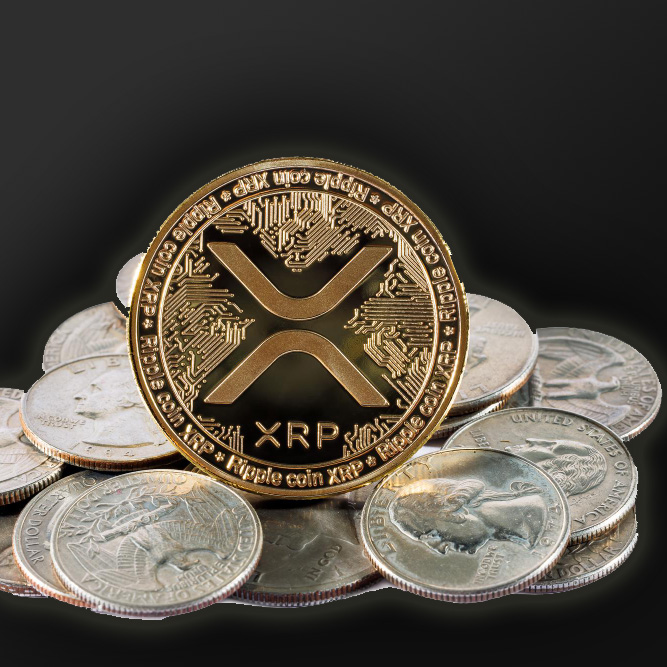
Ripple is moving at lightning speed, setting new benchmarks in blockchain finance, strategic expansion, and XRP adoption. With XRP still up over 700% year-over-year and Ripple cementing its footprint in global financial hubs like Dubai, the blockchain firm shows no signs of slowing down. From the upcoming Apex 2025 summit to a potential multi-billion-dollar acquisition of Circle, Ripple is redefining what dominance looks like in the crypto payments landscape.
Let’s break down why Ripple’s momentum could make XRP one of the most influential assets of the decade—and how Apex 2025, regulatory victories, and strategic acquisitions will shape the future.
XRP on Fire: The Token’s Unstoppable Rally
Ripple’s native token, XRP, has demonstrated exceptional resilience and growth in the past year. Despite ongoing regulatory scrutiny in the United States, XRP is still soaring. It’s up over 700% from its low in the last 12 months, proving to both critics and investors that its fundamentals remain robust.
This explosive rally isn’t just about hype – Ripple’s real-world integrations and global reach are giving the token serious utility. As Ripple’s infrastructure becomes central to global financial systems and cross-border payment frameworks, XRP stands to benefit even further.
And that’s only the beginning. XRP is deeply embedded into Ripple’s payment systems and liquidity solutions. As Ripple continues to expand into new markets and sectors, the need for a reliable, efficient digital currency like XRP will only grow.
Apex 2025: The XRP Ledger Summit That Could Shape the Future of Crypto
Set to take place in Singapore from June 10 to 12, Apex 2025 is the premier annual summit focused on the XRP Ledger (XRPL) and its rapidly expanding ecosystem. Organized by Ripple and its partners, this event is expected to make waves across the blockchain space with more than 600 attendees, 88 speakers, and over 60 sessions, including hands-on workshops and technical deep dives.
Notable speakers from Ripple, such as CEO Brad Garlinghouse, CTO David Schwartz, and President Monica Long, will headline the event alongside blockchain developers, DeFi pioneers, and institutional partners. This year’s sessions will focus on cutting-edge trends like:
- AI integration with blockchains
- Real-world asset (RWA) tokenization
- Cross-chain interoperability
- Institutional DeFi adoption
- Programmability and liquidity solutions on XRPL
With such an extensive agenda, Apex 2025 is expected to unleash a new wave of innovation and perhaps even major announcements that could further push XRP’s value proposition forward. This event is not just a conference—it’s a launchpad for the XRP Ledger’s future.
Ripple Gains Regulatory Green Light in the UAE
Ripple’s expansion into the Middle East is more than strategic – it’s revolutionary. In a landmark move, Ripple recently secured a license from the Dubai Financial Services Authority (DFSA) to offer regulated crypto payment services in the Dubai International Financial Centre (DIFC). This approval grants Ripple access to one of the world’s busiest $40 billion remittance markets and its $400 billion trade hub.
This isn’t just a win for Ripple—it’s a massive leap for the entire crypto industry. Dubai has long positioned itself as a pro-crypto financial hub, and Ripple’s entrance solidifies its role in that landscape. The DFSA license allows Ripple to:
- Operate legally under UAE crypto regulations
- Offer blockchain-powered cross-border payments
- Provide institutional-grade crypto custody services
According to Ripple’s Managing Director for the Middle East and Africa, Reece Merrick, “Dubai is the place to be for blockchain-powered payments.” Ripple is now leading the charge, becoming the first blockchain-based payments provider licensed by the DFSA – a title that not only boosts legitimacy but opens the doors for massive regional adoption.
Why the Middle East Is Ripple’s Gateway to Global Expansion
The Middle East and Africa (MEA) region is quickly becoming one of the most lucrative markets for crypto infrastructure. Home to one of the youngest, most tech-savvy populations, the region already ranks as the 7th largest crypto economy globally.
Some key statistics highlighting the MEA’s crypto potential:
- 85% of financial firms in the region say confidence in digital assets has risen in the past 6 months.
- 97% believe digital assets will have a significant or massive impact on business within 3 years.
- 40% of firms already use a digital asset custody solution, the highest adoption rate worldwide.
- 56% of enterprises plan to implement digital asset solutions within the next 3 years.
Ripple has strategically planted its flag here, starting with its Dubai office opening in 2020. Today, 20% of Ripple’s global customer base is located in the MEA region. With DFSA licensing secured, Ripple is now poised to offer secure, scalable, and cost-effective crypto payments and custody services across the region.
Is Ripple About to Acquire Circle? The $5 Billion Power Play Explained
In another bold move, Ripple is reportedly exploring the acquisition of Circle, the company behind USDC, the world’s second-largest stablecoin. According to multiple sources, Ripple has floated an acquisition offer valued at around $5 billion. While some debate whether Circle is worth that amount, the strategic implications are enormous.
Here’s why this deal could reshape the stablecoin industry:
- Control Over USDC: Acquiring Circle means Ripple could integrate USDC directly into its payment networks, bringing vast stablecoin liquidity to RippleNet and the XRP Ledger.
- Market Dominance: Ripple would immediately challenge Tether’s dominance in the stablecoin space, putting ROUSD in direct competition with USDT.
- Eliminating a Competitor: Buying Circle removes one of Ripple’s key competitors in the payment and stablecoin sector, especially following Circle’s launch of its own payment network.
Critics argue that Circle isn’t worth $5 billion, pointing out that its 2024 revenue was only $1.6 billion, with $1 billion going to Coinbase. Interest rate drops could also eat into that margin. But the real value here isn’t just revenue – it’s market influence, user base, and infrastructure.
As Ripple President Monica Long stated recently, the company is in an “acquisitive stage,” sitting on billions in cash reserves. If Ripple pulls off the Circle acquisition, it could become the JP Morgan of the crypto world—swallowing up the competition and cornering key markets before full regulatory clarity arrives.
Circle IPO and the Battle for Stablecoin Supremacy
Circle’s upcoming IPO has also attracted attention. The company is seeking a $5 billion valuation, but critics are skeptical. Many believe the IPO is a “Hail Mary” designed to inflate valuation just before a possible acquisition.
Ripple’s strategic interest in Circle could give it instant access to:
- The Circle Payments Network (CPN)
- A wide-reaching USDC user base
- A regulatory-compliant infrastructure in the U.S.
If Ripple closes this deal, the implications are massive. It would position Ripple as a top-tier stablecoin issuer, give it leverage in the U.S. regulatory system, and align it with key institutional payment rails.
However, if the acquisition price balloons beyond $5 billion, the risks could outweigh the rewards. Ripple’s play here is about acquiring dominance, not just revenue.
The Big Picture: Ripple’s Rise as the “JP Morgan of Crypto”
As Ripple scales its infrastructure, builds regulatory partnerships, and considers strategic acquisitions, it’s becoming clear that the company is no longer just another blockchain startup. It’s aiming to become the JP Morgan of crypto.
From buying up competition to establishing early dominance in emerging markets, Ripple is executing a textbook strategy for building a global financial empire, just like JP Morgan did post-2008 when it bought up failed banks and consolidated power.
Ripple’s moves, including licensing in Dubai, possible Circle acquisition, and continued XRP Ledger expansion, are laying the groundwork for its long-term supremacy in crypto-based payments and financial services.
With regulatory clarity approaching and global adoption accelerating, Ripple and XRP are entering their most explosive phase yet.
Ripple’s journey from a cross-border payments startup to a blockchain empire
Ripple’s journey from a cross-border payments startup to a blockchain empire is well underway. With Apex 2025 promising major innovations, Ripple’s DFSA licensing cementing its Middle East dominance, and the Circle acquisition looming on the horizon, the company is shaping the future of crypto finance.
Investors, developers, and financial institutions should keep a close eye on Ripple. It’s not just a crypto firm, Ripple is building the infrastructure for the next-generation global economy.









