






















































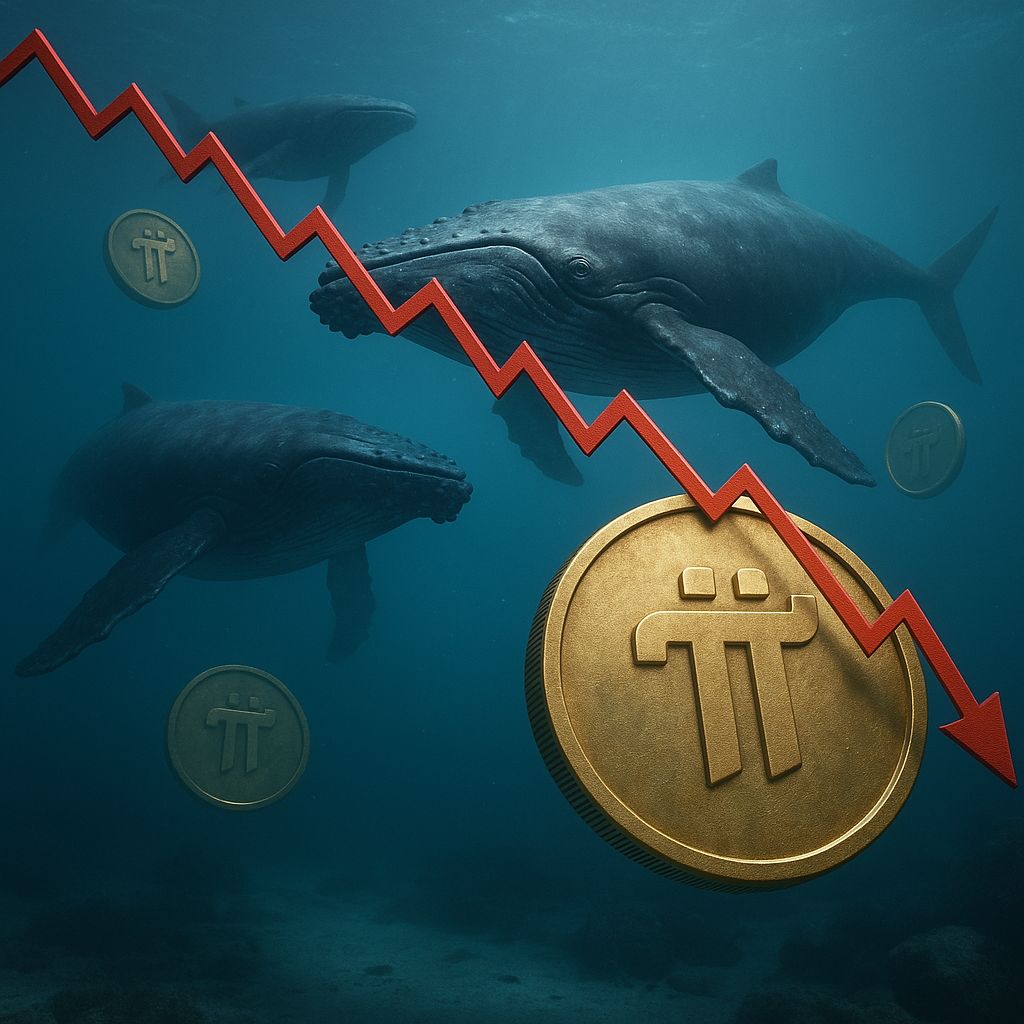
Pi Network Faces Turbulent Week With a 20% Price Drop.
Over the past week, Pi Network (PI) has experienced a significant decline in market value, plunging more than 20% amid rising concerns over its tokenomics and leadership silence. The sharp price drop is primarily attributed to an influx in circulating supply, with recent on-chain data revealing heightened whale activity. However, no official statement has been made to confirm or deny these developments.
The downward pressure on Pi’s token price has sparked waves of concern across the community, especially as the project remains in its enclosed “mainnet” phase, where trading is limited and price discovery mechanisms remain under scrutiny. Despite growing excitement around the Pi ecosystem’s long-term vision, the latest volatility has reminded investors of the project’s still-uncertain position in the broader crypto market.
Whales Buying the Dip? Unverified Accumulation Raises Eyebrows
While Pi Network’s price correction has unnerved many retail investors, blockchain analysts have observed significant token accumulation by unidentified wallet addresses. These wallets have been dubbed “stealth whales” within the Pi community—suggesting possible long-term holders or institutional entities preparing for Pi’s potential open mainnet.
Despite this notable on-chain movement, Pi Network’s leadership—co-founders Dr. Nicolas Kokkalis and Dr. Chengdiao Fan—have remained completely silent on the matter. No official acknowledgment of this accumulation, or any explanation about the cause of the price crash, has been provided by the Pi Core Team. Their focus has remained squarely on backend development updates and the continued rollout of technical milestones such as the “Tau Day” preparation and ongoing KYC streamlining.
This disconnect between internal project communication and external market movements has left many community members frustrated, calling for greater transparency, accountability, and investor engagement.
Rising Token Supply Sparks Inflationary Concerns
The most cited reason for the 20% decline is the growing supply of unlocked tokens entering the market. While Pi Network uses a unique mining model that decreases rewards over time, recent adjustments in mining rates have made more tokens available, potentially overwhelming existing demand.
In response, the Pi Core Team has encouraged users to engage in voluntary lock-ups, highlighting that longer lock-up durations could result in up to 200% higher mining rewards. However, critics argue that incentivizing lock-ups may not be enough to stabilize price action if overall market sentiment remains weak.
Some Pi pioneers have even raised alarm bells, warning that increased sell pressure from unlocked tokens could compromise the network’s future tokenomics, particularly if the mainnet goes fully live without implementing strict liquidity safeguards.
Community Frustration Grows Amid Silence From Pi Leadership
One of the biggest criticisms surfacing from within the Pi community is the complete silence from Pi Network’s founders. In a week of high volatility and increased uncertainty, many investors expected a statement or explanation, especially with whale wallets making large purchases and token values falling sharply.
Instead, the Core Team has remained focused on backend updates, failing to address the elephant in the room—the project’s token price. This has led to renewed debates about Pi Network’s internal governance structure, decision-making processes, and investor relations strategy.
Community discussion boards such as Reddit, Twitter, and Pi Chat are filled with questions like:
- Who is behind the recent whale accumulation?
- Why hasn’t the Core Team addressed the price decline?
- Is Pi Network still committed to decentralization?
- How will Pi achieve market stability before launching its open mainnet?
Volatility Persists Despite Lock-Up Mechanism and Mining Adjustments
Pi’s Engaged Lock-up system was designed to counteract the inflationary effects of increased supply by incentivizing long-term holding and reducing liquid tokens in circulation. However, recent data indicate that the lock-up mechanism alone may not be sufficient to stem the tide of sell-offs or price slippage.
The lock-up tool allows users to voluntarily commit their mined Pi coins for set durations, limiting their ability to sell and, in theory, helping stabilize the token’s price. Yet without strong demand, even these measures cannot offset market turbulence. The lack of a functioning cross-chain bridge or trading access further complicates the situation, making Pi’s current valuation hard to support through natural market forces.
Observers warn that until the Pi ecosystem can foster stronger utility and transactional use cases, short-term speculative interest will likely continue to dominate, and with it, wild price swings.
Analysts Question Pi Network’s Future Without Demand-Side Growth
While whale accumulation is usually interpreted as a bullish sign, the broader market sentiment suggests caution. Without a transparent supply management system and concrete demand-side catalysts, analysts argue that Pi Network could remain vulnerable to large sell-offs and prolonged downtrends.
More importantly, Pi’s ecosystem development has not yet reached a stage where utility-based demand could meaningfully offset speculative volatility. Even with the recent announcements regarding Pi Hackathon winners and potential future app integrations, there is still no functioning open market, no official DEX integrations, and no listings on major centralized exchanges.
Cross-Chain Influence Minimal as Pi Remains Isolated
Another critical factor compounding the situation is Pi Network’s current isolation from the broader crypto economy. With no confirmed integration into other chains like Ethereum or Binance Smart Chain, Pi’s ecosystem operates in a siloed environment. This means Pi’s whale activity and price movements do not yet influence or get influenced by external DeFi ecosystems, making its price action more sensitive to internal shifts and less resilient to volatility.
Analysts point out that until Pi is allowed to move freely across chains and exchanges, its real-world valuation will remain speculative and artificially controlled within a limited liquidity pool.
Is Pi Network’s Future Still Bright? Mixed Signals Ahead of Tau Day
Despite the rough week, many long-term believers remain optimistic about Pi Network’s mission to create a globally inclusive digital currency. The upcoming Tau Day, which marks a significant milestone in Pi’s roadmap, is expected to bring more clarity about the future of the open mainnet, app development, and ecosystem expansion.
The Core Team has hinted at deeper partnerships, infrastructure updates, and enhanced developer incentives that may be announced during or shortly after Tau Day. If executed successfully, these could reignite market interest and reverse current negative sentiment.
However, timing is key. If transparency issues persist and user confidence continues to erode, the window of opportunity for a successful transition to an open mainnet could shrink dramatically.
Whale Mystery, Leadership Silence, and Market Uncertainty Define Pi’s August Landscape
In summary, Pi Network’s 20% price dip in August 2025 has triggered a flurry of whale movements, community concern, and renewed focus on transparency. With no official statements from the project’s leadership and technical updates taking precedence over investor communication, many users feel left in the dark.
Unless the Pi Core Team actively addresses market concerns, clarifies the identity and intent behind the whale transactions, and strengthens the token’s demand side, volatility is likely to persist. Tau Day and future roadmap updates could serve as crucial turning points, but until then, the market remains cautious, if not outright skeptical.