
























































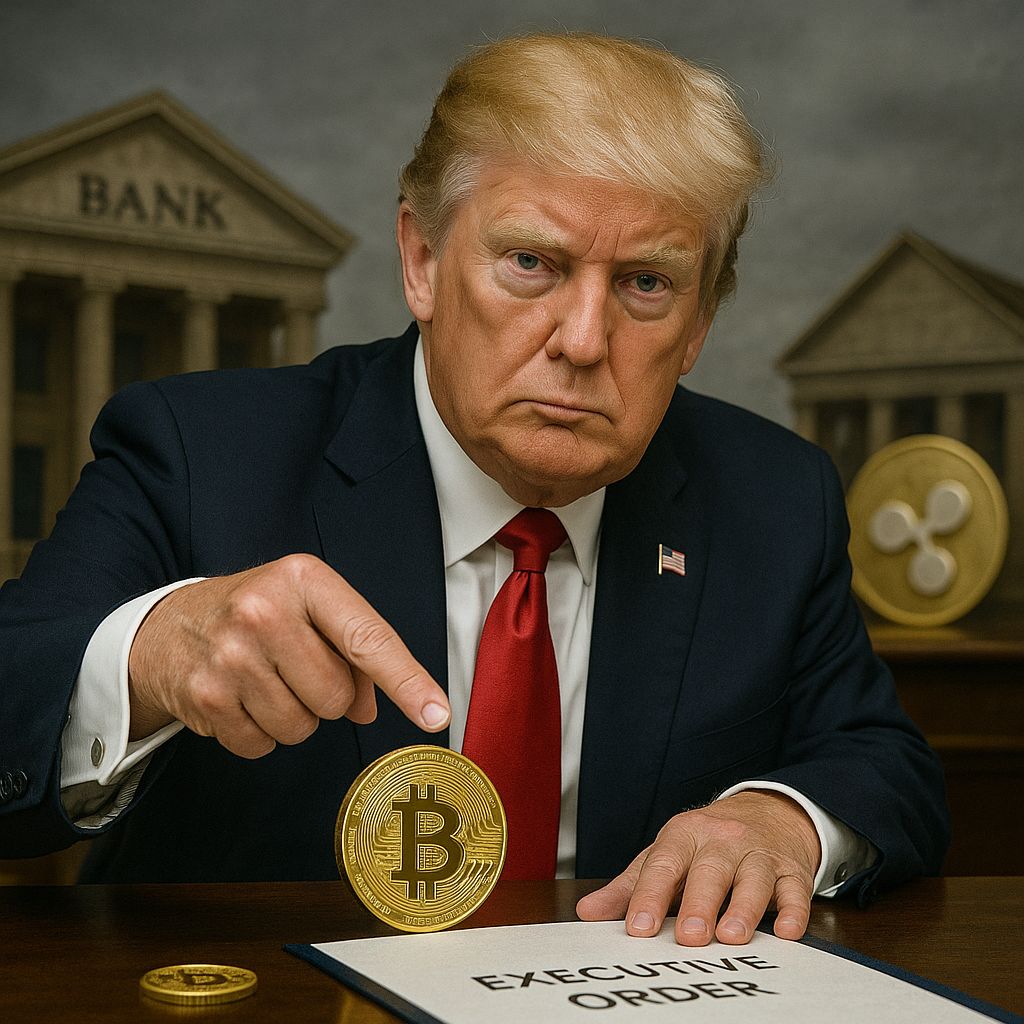
Executive Shake-Up: U.S. Banks May Be Forced to Serve Crypto Firms
The landscape of U.S. crypto policy is on the verge of a massive shift. According to recent reports, former and potentially future President Donald Trump is preparing to sign a groundbreaking executive order that could fine U.S. banks for discriminating against cryptocurrency companies. If enacted, this executive order would mark one of the most aggressive pro-crypto policies in the history of U.S. financial regulation.
This move, according to crypto insiders, is likely to be the most significant catalyst since the approval of Bitcoin ETFs, potentially opening the floodgates for institutional investors and reviving mainstream financial partnerships with digital asset firms.
As of early August 2025, crypto investors and analysts are carefully watching for Trump’s signature — a step that could transform the banking access landscape for Bitcoin (BTC), Ethereum (ETH), XRP, and thousands of other crypto-related entities.
Understanding the Executive Order: What’s in the Proposal?
Targeting Discrimination in Banking
Crypto analyst Paul Barron, in a widely shared post on X (formerly Twitter), shed light on the leaked draft of the proposed executive order. The draft outlines provisions that would penalize banks found guilty of denying financial services to crypto companies without legitimate cause.
The framework would task key regulators — including the FDIC, Department of Justice (DOJ), Office of the Comptroller of the Currency (OCC), and Small Business Administration (SBA) — to investigate potential violations of the following:
- Equal Credit Opportunity Act
- Antitrust regulations
- Federal consumer protection statutes
Banks found to have engaged in crypto-related discrimination could face:
- Hefty fines
- Consent decrees (legally binding settlement agreements)
- Operational restrictions or restructuring
- Forced audits and SBA loan evaluations
The SBA would also gain authority to review banks involved in SBA-backed lending to ensure that crypto-affiliated small businesses are treated fairly.
Why This Could Be a Turning Point for Crypto and Banks
Ending the Era of “Debanking”
One of the most significant consequences of this executive order would be the potential end of the “debanking” era. In this long-standing practice, traditional financial institutions refused to serve or close accounts linked to crypto companies.
This practice, often unspoken and unofficial, has been cited as one of the significant barriers preventing mass adoption of cryptocurrency in the U.S. Even well-established crypto businesses and regulated exchanges faced unexpected account closures, restricted access to payments, and capital movement issues.
If Trump’s order is enforced, banks would be legally obligated to treat crypto firms equally, removing one of the industry’s most significant historical hurdles.
Institutional Investors Are Watching Closely
Bitcoin, Ethereum, and XRP Could See Major Inflows
Institutional players have been warming up to crypto, especially after the SEC’s approval of spot Bitcoin and Ethereum ETFs earlier in 2025. However, the lack of secure and regulated banking access for crypto firms has remained a sticking point.
With this executive order, the domino effect could be massive:
- Bitcoin (BTC) may attract new institutional capital from banks and wealth managers.
- XRP and stablecoins such as USDC could find renewed utility in cross-border payments and liquidity management.
- Crypto startups may find it easier to access loans, merchant services, and payroll processing.
Analysts believe this executive order could normalize the presence of crypto in the U.S. financial system, similar to how internet companies eventually gained mainstream acceptance in the early 2000s.
Trump’s Crypto Policy: A Broader Vision
From Bitcoin Retirement Plans to National Strategic Reserves
The executive order is not a standalone initiative. It aligns with Donald Trump’s broader crypto-forward agenda:
- Bitcoin in 401(k) Retirement Plans: Trump’s administration has explored legislation that would allow U.S. citizens to allocate a portion of their retirement savings into Bitcoin and other digital assets.
- National Strategic Bitcoin Reserve: Similar to how countries hold gold reserves, the administration has floated the idea of a strategic Bitcoin reserve for national economic security.
- Crypto in Government Contracts: Pilot programs are being developed to test blockchain payments in federal procurement.
Together, these actions show a clear policy direction toward mainstream crypto integration, which may define a new era of financial modernization in the United States.
Investigations Into “Operation Chokepoint 2.0”
The Crypto Community’s Longstanding Grievance
Trump’s executive order also seeks to rectify alleged injustices tied to “Operation Chokepoint 2.0,” a rumored initiative where U.S. regulators reportedly pressured banks to sever ties with crypto businesses under the guise of financial risk mitigation.
While officially denied by some agencies, whistleblowers and leaked memos suggest that regulatory bodies used “backdoor pressure tactics” to marginalize the crypto industry.
Trump’s team has vowed to investigate and prevent such targeted discrimination in the future, including possible Congressional hearings and independent audits.
Changpeng Zhao (CZ) Weighs In
Former Binance CEO Sees Global Impact
Changpeng Zhao, the former CEO of Binance, noted in a recent interview that U.S. banks frequently blocked crypto transactions in the past, citing risk concerns.
However, this new executive order, if signed, could open up crypto-banking on a global scale — encouraging other countries to follow suit and rethink their regulatory stance on crypto transactions.
CZ emphasized that if America leads the way by enforcing fair treatment of crypto firms, it would send a strong message to financial institutions worldwide.
Market Reactions: Sentiment Shifts from Cautious to Bullish
What Traders and Investors Are Expecting
Although the executive order is not yet signed, market sentiment has already begun to shift. Bitcoin’s price has stabilized after a volatile July, and Ethereum has seen a slight recovery, mainly due to growing expectations of regulatory clarity.
Crypto hedge funds and institutional investors are strategically positioning themselves, anticipating the announcement to be the next bullish wave for the sector.
Crypto analyst Scott Melker remarked that “regulatory protection for crypto access is just as critical as ETF approval”, calling the executive order a potential “tectonic policy moment.”
A Lifeline for Crypto Startups and Exchanges
Operational Barriers Could Finally Fall
One of the most tangible impacts of this executive order would be felt by smaller crypto startups, which often lack the resources to fight account closures or survive long periods without banking access.
With mandatory bank compliance, crypto firms could:
- Open business checking accounts
- Access payment gateways and merchant services
- Apply for government-backed loans
- Gain access to payroll and tax processing infrastructure
This improved banking access would help reduce operational friction and could spark a wave of new startups, innovation, and job creation within the digital asset economy.
What Happens Next?
Timeline for Implementation
The executive order could be signed as early as this week, with regulatory agencies expected to act shortly after.
Key next steps include:
- Signing of the executive order by Trump
- Official publication in the Federal Register
- Guidance letters issued to banks by FDIC, OCC, and SBA
- Investigations into past violations and compliance reviews
- Public comment period for stakeholders
Crypto firms are already preparing legal teams and compliance officers to work with banks once the order goes live.
What the Crypto Community Should Watch For
Practical Tips for Startups and Investors
Here’s how crypto companies and investors can prepare for the executive order rollout:
- Start engaging with potential banking partners now
- Ensure all compliance documentation is up to date
- Educate staff on fair lending laws and banking rights
- Monitor statements from the FDIC, OCC, and DOJ
- Stay informed about public hearings or updates
The shift won’t happen overnight, but it will start fast once the order is signed.
FAQs About the Crypto Banking Executive Orde
1. What is the crypto executive order trying to fix?
The executive order seeks to prevent banks from discriminating against crypto companies, ensuring fair access to basic financial services under existing U.S. fair lending and consumer protection laws.
2. Which banks are affected?
All U.S.-chartered banks that fall under federal regulations — including those working with SBA loans — will be subject to this new scrutiny. Non-compliant banks may face fines or enforcement actions.
3. How does this help Bitcoin and other cryptocurrencies?
By removing banking restrictions, the order could lead to massive institutional inflows into Bitcoin, Ethereum, XRP, and other digital assets. It also opens the door for greater liquidity and mainstream use.
4. Will the order be challenged in court?
Some regulatory agencies or anti-crypto policymakers may attempt legal challenges, but since it relies on existing anti-discrimination laws, it is legally defensible, according to policy analysts.
5. When will it take effect?
If President Trump signs the executive order this week, regulators could begin enforcement within 30 days, making September 2025 a possible turning point for the crypto industry.
Is This the Crypto Catalyst We’ve Been Waiting For?
Trump’s proposed executive order is not just about banks and crypto. It’s about correcting structural barriers that have stifled innovation and freedom in the digital finance sector. If implemented, it could be a historic turning point — akin to the legalization of internet commerce in the 1990s.
With institutional capital on standby, public sentiment gradually shifting, and government support in motion, this executive order could very well usher in the next bull cycle not only for Bitcoin but for the entire crypto ecosystem.









