
























































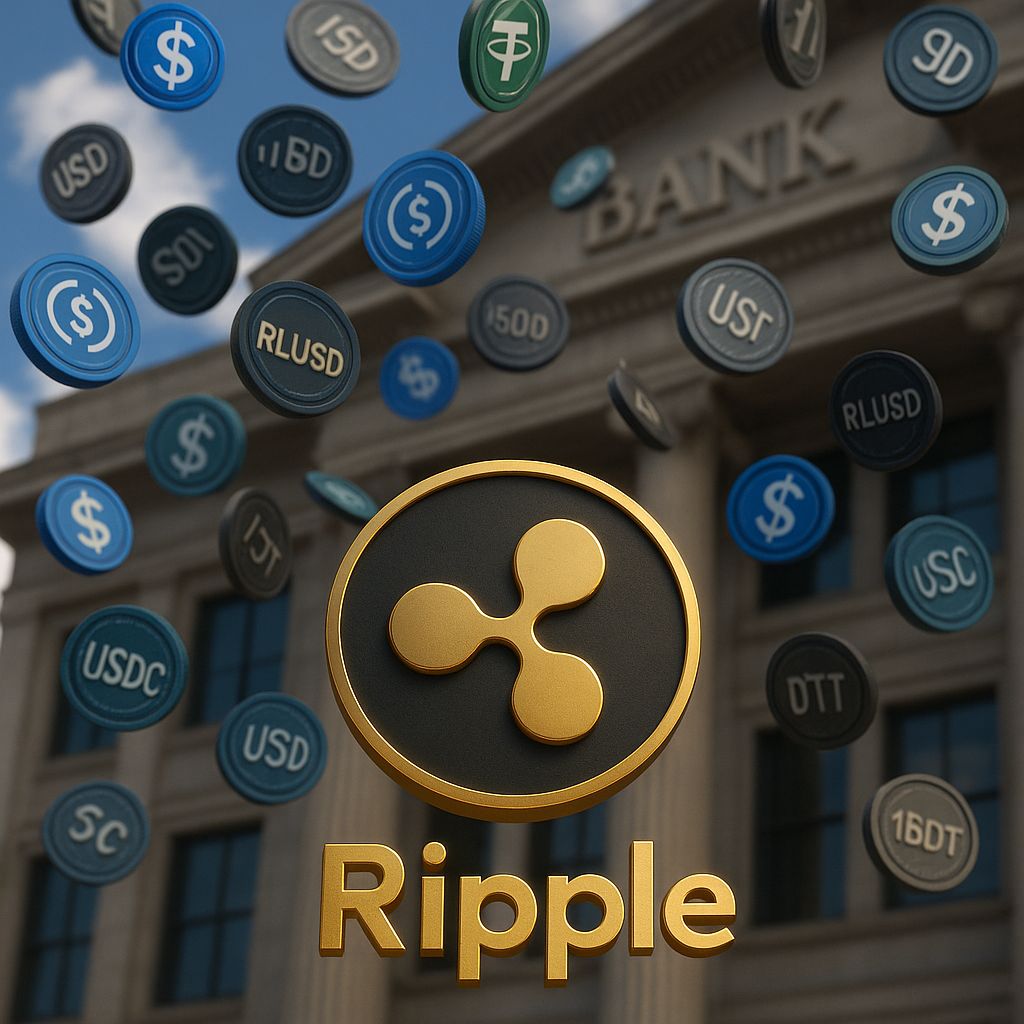
A New Era for Stablecoins and Ripple
The financial industry is undergoing a monumental shift. In a groundbreaking move, the Office of the Comptroller of the Currency (OCC) has officially given U.S. banks the green light to embrace stablecoins, marking a pivotal turning point for digital finance. This decision doesn’t just modernize payment systems; it paves the way for institutions of all sizes to integrate blockchain-powered solutions and compete with larger financial giants.
For Ripple Labs, this regulatory change is a game-changer. The company’s RLUSD stablecoin is strategically positioned to benefit from increased demand for cross-border settlements, enterprise treasury solutions, and digital dollar integration. Ripple’s timing, acquisitions, and market positioning make it one of the biggest winners in this evolving ecosystem.
In this in-depth analysis, we’ll explore how the OCC’s decision reshapes the financial landscape, why Ripple’s RLUSD could emerge as the dominant stablecoin, and what this means for banks, enterprises, and crypto investors worldwide.
1. OCC Opens the Door: Stablecoins Enter Mainstream Banking
The OCC’s latest announcement signals a fundamental transformation in the U.S. banking system. By removing the requirement for banks to seek formal approval before collaborating with crypto firms, the regulator has lowered entry barriers and effectively legitimized stablecoins as part of mainstream financial infrastructure.
Comptroller Jonathan V. Gould emphasized that stablecoins can deliver faster, cheaper, and more secure payment solutions to customers. Previously, smaller institutions lacked access to blockchain-powered tools reserved for larger financial players. Now, community banks and credit unions have a direct path to stablecoin integration, leveling the playing field across the U.S. banking sector.
This shift builds upon earlier OCC guidance that allowed federally chartered banks to:
- Hold cryptocurrency reserves
- Provide digital asset custody services
- Verify transactions on blockchain networks
However, while opportunities are expanding, officials stress that robust risk management systems remain critical to protecting both consumers and financial institutions.
With the Treasury Department’s ongoing GENIUS Act consultation process seeking to establish a unified framework for stablecoin regulation, the OCC’s approval arrives at a decisive moment for the future of digital finance.
2. Ripple’s Strategic Advantage: RLUSD Enters the Spotlight
The OCC’s stablecoin-friendly stance couldn’t have come at a better time for Ripple Labs. Long recognized as a leader in cross-border payments and enterprise blockchain solutions, Ripple has positioned its RLUSD stablecoin to bridge the gap between traditional finance and the crypto economy.
Ripple’s strategy extends beyond technology — the company recently applied for a U.S. banking license, aiming to integrate directly with regulated financial infrastructure. While regulatory approval is still pending, the OCC’s decision allows Ripple to form partnerships with community banks that can now hold RLUSD reserves even before Ripple secures full national bank status.
Furthermore, Ripple has accelerated its ecosystem expansion through strategic acquisitions. Its $200 million purchase of Rail, a Canadian platform that processes a significant share of global B2B stablecoin transactions, has supercharged RLUSD’s role in cross-border settlements and corporate treasury solutions.
Industry analysts describe this approach as “laying the pipes” for the next generation of financial infrastructure — building the backbone before the floodgates of institutional adoption fully open.
3. RLUSD’s Market Momentum: Outpacing the Competition
Since emerging from its long legal battle over XRP, Ripple has redirected its focus toward RLUSD — and the results speak for themselves.
- RLUSD’s supply has already surpassed $500 million, a remarkable achievement for a relatively new stablecoin.
- More than $150 million has been issued in just the past few months, signaling accelerating adoption.
- Its growth rate has outpaced established competitors like USDC and USDT in several institutional use cases.
What sets RLUSD apart is its compliance-first approach. Backed by cash reserves and short-term U.S. Treasuries, RLUSD aligns perfectly with the regulatory expectations outlined in the GENIUS Act. Ripple’s New York trust license further enhances its credibility, making RLUSD an attractive choice for enterprise clients seeking digital dollar integration with minimal regulatory risk.
In a rapidly evolving stablecoin market, institutional trust is everything – and Ripple is leveraging its regulatory alignment to position RLUSD as the preferred enterprise-grade stablecoin.
4. The GENIUS Act: Building a Nationwide Stablecoin Framework
The OCC’s decision coincides with the Treasury Department’s public consultation process under the GENIUS Act, a landmark piece of legislation designed to establish nationwide rules for stablecoins.
Key provisions include:
- 100% reserve requirements for stablecoin issuers
- Approved holdings limited to U.S. dollars and low-risk assets
- Enhanced auditing and transparency mandates
This framework strengthens institutional confidence in digital assets by ensuring that stablecoins are fully backed and secure for integration into payment systems.
For Ripple, these regulatory guardrails validate its approach. By designing RLUSD to comply with these strict standards from day one, Ripple positions itself ahead of competitors like Tether (USDT) and Circle (USDC), which may need to adjust reserve structures or reporting practices to maintain compliance.
5. Ripple’s Expanding Role in Cross-Border Payments
Cross-border transactions remain one of Ripple’s core strengths. Traditional SWIFT transfers are slow, costly, and outdated – but Ripple’s blockchain-based solutions streamline global payments, cutting settlement times from days to seconds.
By combining RLUSD with RippleNet’s payment infrastructure, banks and enterprises can achieve:
- Instant cross-border settlements
- Reduced transaction costs
- Improved liquidity management
- Real-time treasury solutions
Ripple’s acquisition of Rail amplifies this advantage, enabling RLUSD to function as the settlement currency of choice for multinational corporations.
6. Institutional Adoption: The Next Big Catalyst
With OCC approval and GENIUS Act clarity, institutional adoption of stablecoins is expected to accelerate dramatically.
Community banks, fintech firms, and corporate treasurers are already exploring RLUSD integration to:
- Facilitate B2B settlements
- Manage on-demand liquidity
- Simplify cross-border invoicing
- Enable programmable payments via smart contracts
Ripple’s partnerships with financial institutions are poised to multiply rapidly, giving RLUSD a first-mover advantage in the enterprise stablecoin sector.
Ripple’s RLUSD Poised to Lead the Digital Dollar Revolution
The OCC’s decision marks the beginning of a new era for U.S. banking, where stablecoins are no longer fringe innovations but mainstream financial tools. Ripple’s RLUSD stands at the center of this transformation, uniquely positioned to leverage its regulatory compliance, cross-border expertise, and institutional partnerships.
For banks, RLUSD offers an enterprise-grade digital dollar backed by trust and transparency. For Ripple, it represents a chance to dominate the stablecoin ecosystem and drive the next wave of financial innovation.
As regulatory clarity improves and institutional adoption accelerates, Ripple’s RLUSD could become the cornerstone of the digital payments era.









