





















































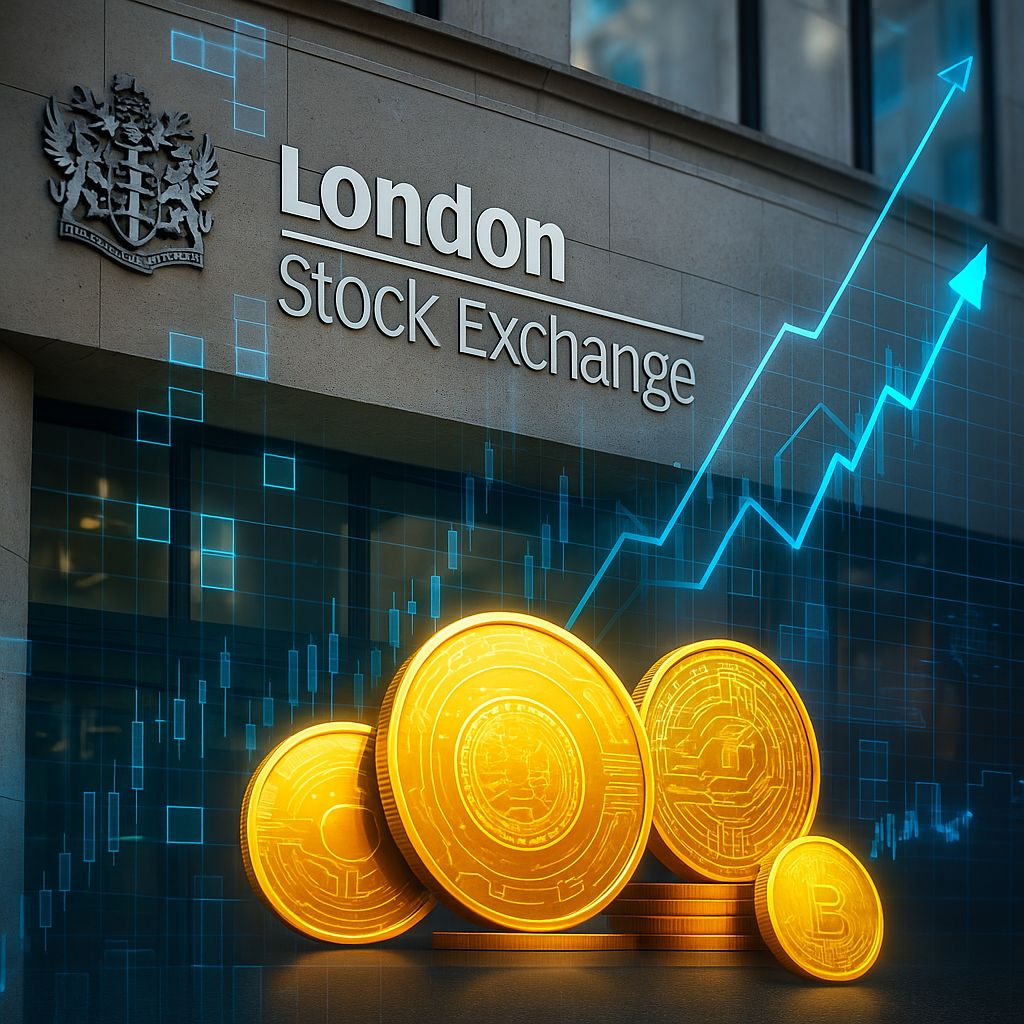
A Bold Step Toward Tokenized Markets
The London Stock Exchange Group (LSEG) has taken a groundbreaking step into the future of finance with the launch of its new blockchain-powered platform designed for private markets. This Digital Markets Infrastructure (DMI) marks one of the first large-scale efforts by a major global exchange to integrate blockchain technology into traditional finance at the institutional level.
The platform is already being hailed as a transformative innovation, not only for private fund managers but for the entire global financial ecosystem. By enabling issuers to design, operate, and redeem tokenized assets under existing regulatory frameworks, the LSEG is laying the foundation for a new era of tokenized finance.
With MembersCap, a Bermuda-based investment manager, already utilizing the platform to raise capital for its tokenized MCM Fund 1, the stage is set for broader adoption. At the same time, competitors such as Nasdaq are advancing their own blockchain-based proposals, signaling a race among major exchanges to redefine how securities and private assets are managed and traded.
This article will explore the details of the London Stock Exchange’s blockchain platform, its early applications, institutional and regulatory responses, and what the rise of tokenization could mean for global finance in the years ahead.
LSEG’s Digital Markets Infrastructure – How It Works
The LSEG’s new blockchain system is built on Microsoft Azure, leveraging cloud technology to ensure both scalability and compliance. Known as Digital Markets Infrastructure (DMI), the platform provides a regulated environment for issuers in private markets to launch tokenized assets without breaking existing rules.
By digitizing private market funds and other assets, DMI enables:
- Tokenized Issuance – Private fund managers can create digital representations of traditional securities.
- Operational Efficiency – Automated processes on the blockchain reduce back-office costs and manual reconciliation.
- Liquidity Options – Tokenization makes it easier for investors to trade otherwise illiquid private assets.
- Compliance Integration – The system ensures tokenized products remain aligned with financial regulations, a crucial factor for institutional adoption.
MembersCap’s recent use of the platform to issue its tokenized MCM Fund 1 highlights the practical viability of LSEG’s system. The fund was launched in partnership with Archax, a London-based digital securities exchange that acted as the nominee for the issuance.
This early application is expected to be the first of many as LSEG prepares to expand tokenization into other categories of assets, including real estate, commodities, and eventually even equities.
The Rise of Tokenized Assets – From Niche to Mainstream
Tokenization has quickly moved from being a buzzword in crypto circles to a practical solution embraced by some of the world’s largest financial institutions. The process of representing real-world assets (RWAs) on a blockchain creates several key advantages:
- Faster Settlement: Blockchain eliminates the need for multiple intermediaries, reducing settlement times from days to minutes.
- Lower Costs: By automating record-keeping and compliance, tokenization cuts administrative expenses.
- Fractional Ownership: Tokenization allows investors to buy smaller portions of traditionally expensive assets, widening access.
- Transparency: Blockchain records ensure immutable, transparent ownership histories.
Leading asset managers like BlackRock and Franklin Templeton have already begun issuing tokenized versions of their money market funds on public blockchains like Ethereum. These experiments, backed by billions in assets under management, showcase rising institutional confidence in tokenization.
Analysts predict that the RWA sector could grow from $13 billion today to over $30 trillion by 2034, as tokenization spreads across financial markets.
Regulatory Hurdles – Challenges Facing Tokenization
Despite rapid advancements, tokenized finance faces significant challenges. Institutions like JPMorgan acknowledge that the large-scale execution of tokenized assets remains in its infancy. The major obstacles include:
- Scalability Issues: Current blockchain infrastructure may not yet handle the volume of global capital markets.
- Regulatory Uncertainty: Governments are still drafting comprehensive rules for tokenized securities, leaving gaps in clarity.
- Interoperability: Tokenized assets launched on different blockchains may face compatibility issues, limiting liquidity.
- Adoption Speed: Traditional institutions often move cautiously when integrating new technology, slowing the pace of change.
Nevertheless, the fact that exchanges as established as LSEG and Nasdaq are pushing forward indicates that tokenization is no longer theoretical. It is becoming a practical necessity for modern markets.
Nasdaq’s Parallel Blockchain Proposal
The LSEG is not alone in its pursuit of blockchain-enabled markets. Nasdaq has submitted a proposal to the U.S. Securities and Exchange Commission (SEC) to allow tokenized securities to trade alongside traditional stocks. If approved, the model could be operational by 2026, creating one of the most direct integrations of tokenized finance with public equities.
Such a move would reshape how investors interact with securities, offering the possibility of trading tokenized assets in the same environment as stocks, ETFs, and other financial products. This would blur the line between traditional finance and blockchain-powered finance, accelerating mainstream adoption.
With both LSEG and Nasdaq pushing ahead, it appears that global exchanges are preparing for a future where tokenization is embedded at the core of financial markets.
Why Tokenization Is the Future of Global Finance
Tokenized finance is more than a technological upgrade – it is a paradigm shift that could redefine how capital markets operate. The advantages are too significant to ignore:
- Liquidity Expansion: Tokenized funds make private markets more accessible to investors.
- Cost Efficiency: Blockchain automation reduces settlement times and lowers administrative costs.
- Global Reach: Investors worldwide can access tokenized securities without the traditional barriers of geography.
- Innovation Gateway: Tokenization lays the groundwork for hybrid financial products that combine traditional and decentralized finance.
For institutional investors, tokenization also provides new revenue models. By fractionalizing and digitizing assets, firms can reach new demographics of investors who were previously priced out of private funds or alternative markets.
The Dawn of Tokenized Markets
The London Stock Exchange’s blockchain initiative is a powerful signal that the world of finance is entering a new era. By providing a compliant, regulated platform for tokenized asset issuance, LSEG has placed itself at the forefront of financial innovation.
As institutions like BlackRock, Franklin Templeton, and Nasdaq also embrace tokenization, it is becoming clear that the transformation of global markets is no longer a question of if but when. While challenges remain around scalability, regulation, and adoption speed, the long-term trajectory is undeniable.
For investors, regulators, and financial institutions alike, tokenized markets represent both opportunity and disruption. The next decade will likely see trillions of dollars in assets migrating to blockchain-powered platforms, reshaping finance as we know it.









