




























































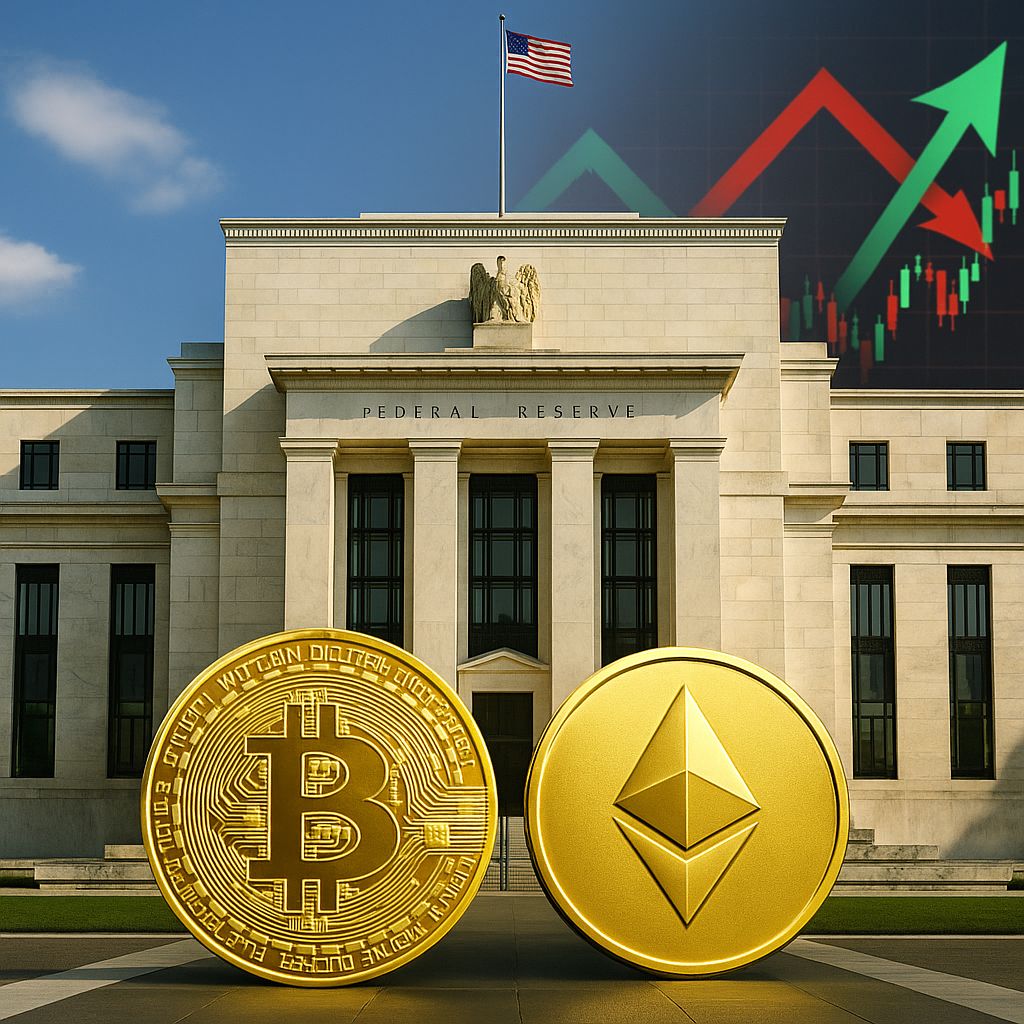
The First Cut of 2025 and Why It Matters
The U.S. Federal Reserve has taken a critical step in 2025 by cutting interest rates for the first time this year. On Wednesday, the Federal Open Market Committee (FOMC) voted to lower the target range by 25 basis points, bringing it down to 4% to 4.25%. Investors widely expected this move but still marks a pivotal moment for the economy, signaling the Fed’s concerns over a weakening labor market and slowing growth.
Fed Chair Jerome Powell emphasized that while unemployment remains historically low, job gains are softening and downside risks to employment are rising. Inflation, meanwhile, has climbed back above target, reaching 2.9%. This mix of higher inflation and weaker labor data places the Fed in a difficult position as it tries to balance growth with price stability.
For businesses, investors, and households, the implications of this rate cut stretch far beyond the bond market. It could shape everything from mortgage costs and consumer spending to corporate investment and even the performance of cryptocurrencies.
A Growing Divide at the Federal Reserve
Who Wanted More Aggressive Action?
While most FOMC members supported the 0.25% reduction, the vote revealed a deeper divide within the central bank. Stephen Miran, a recent Trump appointee to the Fed and considered a frontrunner for Powell’s successor, advocated for a more aggressive 0.5% cut.
This disagreement highlights a policy rift within the Fed, where some officials are urging caution while others argue that bold cuts are necessary to prevent a sharper downturn.
The Kobeissi Letter reported that nine Fed officials expect at least two more cuts in 2025, while six see no additional easing. This internal split underscores the uncertainty in economic outlooks and the difficulty of predicting the Fed’s next move.
Economic Growth Slows Sharply
The U.S. economy grew just 1.5% in the first half of 2025, a significant slowdown from 2.5% in 2024. Powell attributed much of this decline to weaker consumer spending, a critical driver of U.S. GDP. The housing sector remains particularly fragile, with high borrowing costs continuing to weigh on homebuyers and builders.
Michael Pearce, deputy chief U.S. economist at Oxford Economics, explained:
“The decision to cut was all about guarding against downside risks to the job market, so the October decision will once again come down to which way the incoming labor market data break.”
Inflation and Employment – The Fed’s Dual Mandate Tested
Inflation Stays Stubbornly Above Target
U.S. inflation currently sits at 2.9%, above the Fed’s 2% target. Even more concerning, it has risen for four consecutive months. Inflation has not met the Fed’s 2% goal since February 2021, fueling fears that sticky prices could limit the Fed’s flexibility in further rate cuts.
Despite this, Powell stressed that the Fed remains committed to bringing inflation back to target while ensuring maximum employment. He also reiterated that the Fed will keep long-term inflation expectations well anchored, signaling confidence that policy adjustments can manage both sides of the mandate.
Employment Risks Rise
Although unemployment is still relatively low, the pace of job creation is slowing. Economists warn that the U.S. labor market may be approaching a turning point. If layoffs rise or job growth continues to weaken, the Fed may be forced to cut rates more aggressively in upcoming meetings.
CME futures markets currently assign an 87.7% probability of another 0.25% rate cut at the October 29 meeting, showing that investors expect the Fed to maintain a cautious easing cycle.
Market Reactions to the Fed’s Rate Cut
Stock Market and Bond Yields
Initial market reactions were muted, reflecting the fact that a 25-basis-point cut was already priced in. U.S. stock index futures rose modestly, while 10-year Treasury yields fell by around five basis points to 4.00%.
Investors now face the challenge of determining whether further cuts will stimulate growth or whether the Fed is behind the curve in addressing economic weakness.
Crypto Markets Respond Differently
Cryptocurrency markets showed more volatility following the Fed’s announcement.
- Bitcoin (BTC): Prices spiked toward $118,000 during early Asian trading hours but later retraced slightly to $117,500.
- Ethereum (ETH): ETH outperformed Bitcoin, gaining 3% on the day and breaking above $4,600.
- Altcoins: Solana, Dogecoin, Cardano, Hyperliquid, and Avalanche all saw modest gains, with stronger upward moves compared to BTC.
While the immediate reaction was limited, the bigger question for crypto investors is how prolonged monetary easing will shape liquidity, investor sentiment, and risk appetite.
What to Expect From the Fed in the Coming Months
October 29 Meeting Outlook
With an October meeting on the horizon, traders are watching labor market and inflation data closely. If job growth continues to soften, the Fed may feel compelled to deliver another rate cut to cushion employment risks.
However, if inflation remains elevated or accelerates further, the Fed could be forced to pause cuts, risking a slowdown in economic growth. This delicate balancing act defines the policy dilemma facing Powell and the FOMC.
Longer-Term Fed Strategy
Looking beyond 2025, the Fed faces a challenging landscape:
- Balancing Growth and Inflation: The risk of cutting too much and reigniting inflation versus cutting too little and triggering a recession.
- Political Pressure: With elections approaching, political scrutiny of Fed policy will intensify.
- Global Headwinds: Geopolitical uncertainty, supply chain disruptions, and shifting global trade dynamics may all weigh on Fed decision-making.
Crypto, Stocks, and the Broader Economy – Key Takeaways
The Fed’s first rate cut of 2025 marks more than just a policy adjustment; it is a signal of uncertainty in the economic outlook. The slowing economy, softening labor market, and persistent inflation create a complex environment for policymakers and investors alike.
For crypto, the move reinforces the narrative that monetary easing could drive liquidity into risk assets. Ethereum and altcoins appear better positioned than Bitcoin in the immediate aftermath, although macroeconomic uncertainty will continue to drive volatility.
For stocks, modest optimism remains, but much depends on whether the Fed can thread the needle between controlling inflation and supporting growth.
For households and businesses, borrowing costs could gradually ease, offering some relief for mortgages, credit cards, and corporate loans. However, lingering inflation pressures mean that relief may not feel immediate.
The Fed’s Path Will Define 2025
The Federal Reserve’s 25-basis-point rate cut in September 2025 is a watershed moment. While largely anticipated, it raises more questions than answers about the future of monetary policy, economic growth, and inflation.
As the October meeting approaches, the spotlight will remain firmly on employment data, inflation trends, and political dynamics. Investors, businesses, and households should prepare for continued uncertainty, as the Fed’s every move will have ripple effects across global financial markets.
The divide within the Fed suggests that 2025 could be a year of contentious debate and unpredictable policy moves, with profound implications for stocks, bonds, crypto, and the global economy at large.









