





















































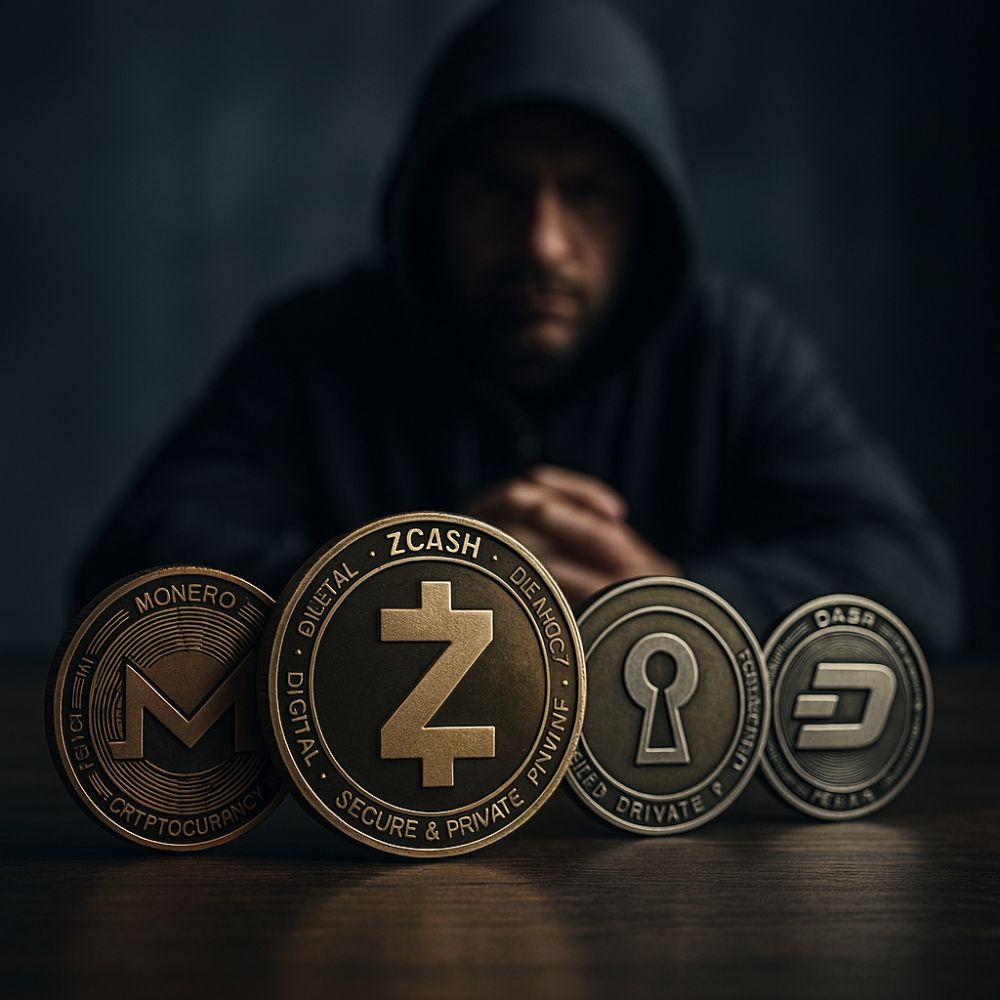
The cryptocurrency landscape has entered a pivotal new phase as privacy coins surge while mainstream digital assets slow down. A powerful rally across the privacy sector signals a potential shift in investor priorities toward financial anonymity, asset protection, and off-grid wealth sovereignty. As regulation intensifies and centralized exchanges tighten requirements, crypto users are rediscovering the original mission of digital currency: self-custody, censorship resistance, and transactional privacy.
Last week alone, privacy-focused cryptocurrencies saw market capitalization expand nearly 80 percent, briefly exceeding 24 billion dollars before stabilizing near 23.7 billion dollars. This significant outperformance unfolded even as the broader crypto market declined more than three percent. The timing and magnitude reflect a growing belief that personal privacy and control over wealth are rapidly becoming strategic necessities rather than optional features.
Major privacy projects like Dash and Zcash led the charge, posting impressive multiday gains. Zcash soared to an eight-year high near 388 dollars and temporarily surpassed Monero in total valuation. The surge gained additional momentum after industry figure Arthur Hayes projected the possibility of Zcash reaching 10,000 dollars in the future. Investors appear to be positioning early for the role such assets may play in a world where financial surveillance expands and privacy becomes scarce.
This emerging narrative suggests that privacy coins are developing into a unique hedge against government oversight, centralized financial control, and inflationary monetary systems. As crypto becomes more regulated, privacy-enabled tokens offer the closest path to original blockchain principles.
Why Privacy Coins Are Surging While the Broader Market Cools
The rise of privacy coins runs counter to the broader crypto performance trend. Bitcoin and leading altcoins faced selling pressure through the same period, giving investors reasons to reassess diversification strategies. The privacy segment instead capitalized on global concerns surrounding data transparency, centralized financial monitoring, and compliance control within regulated crypto environments.
Analysts highlight several drivers behind the privacy-coin breakout:
- Growing belief that financial privacy is a basic human right, not a niche crypto feature
- Expanding global regulatory frameworks pushing users away from centralized platforms
- Increased interest from institutions exploring privacy-preserving financial rails
- Evolution of zero-knowledge technologies enabling true anonymity with security
- Decline in trust for centralized financial custodians after exchange failures and enforcement actions
As global markets become more surveillance-oriented, crypto users may increasingly prioritize assets that defend individual autonomy. Zcash, which operates with a fixed supply of 21 million coins similar to Bitcoin, uses zero-knowledge proofs to maintain private transactions while proving network security. This combination of scarcity, proof-of-work architecture, and deep privacy capabilities is attracting a new wave of long-term holders.
Dash also recorded substantial appreciation, benefiting from renewed focus on decentralized payment systems. Analysts note that privacy technology is evolving rapidly, allowing coins of this category to mature alongside next-generation decentralized finance innovations.
Governments Tighten Controls and Exchanges React
While privacy coins surge on market enthusiasm, regulatory bodies continue reinforcing oversight structures on digital assets. This dual trend is creating a dramatic divide in market dynamics. Some commentators argue this divergence will shape the next era of cryptocurrency adoption as investors decide between compliance-friendly assets and privacy-optimized alternatives.
Reports indicate a 34 percent rise in regulatory scrutiny targeting privacy coins during 2024, followed by sweeping enforcement actions in 2025. Nearly one hundred nations have adopted stricter frameworks for privacy-enabled cryptocurrencies. Dozens of centralized exchanges delisted privacy tokens globally, citing compliance demands from authorities. This growing list includes major North American, European, and Asian platforms.
For exchanges operating within strict regulatory environments, handling privacy assets introduces heightened compliance risk. The Financial Action Task Force requires full disclosure and tracking for transfers above certain thresholds. Privacy coins, by their design, obscure such information. As a result, exchanges like Poloniex removed Monero following inquiries from United States authorities, while Switzerland and Liechtenstein now maintain more selective yet compliant trading options.
Despite the tightening regulatory landscape, decentralized and peer-to-peer platforms have seen accelerated demand. Trading volume in the privacy sector grew by nearly twenty percent after major delistings, as users explored alternative rails for private asset exchange. Data suggests that large investors are steadily building long-duration positions in these systems.
Institutional Interest Builds as Corporate Demand for Private Transactions Grows
While privacy coins originally appealed mostly to tech-savvy retail users, institutional players have begun exploring strategic integration. Surveys indicate that nearly one quarter of newly created wallets for privacy assets are owned by institutions testing private settlement systems or exploring secure treasury models.
This shift suggests that privacy preservation is not only a retail-driven trend but also a core consideration among corporate actors, especially those operating across borders or safeguarding high-value transactions. Specialized Layer-2 solutions and enterprise-grade zero-knowledge networks are helping reshape how privacy can function in regulated settings.
Corporate treasuries appear interested in secure and discreet transactions without fully exposing operational flows. As companies experiment with tokenized payments, private audit trails and selective transparency tools emerge as critical features. Zcash supports optional view keys for auditors, though adoption remains modest.
If the transition toward digital settlement continues and governments enhance monitoring systems, institutions may embrace privacy-preserving blockchain features to protect strategic financial information.
Macro Trends Raise the Value of Financial Autonomy
Macro-economic shifts are intensifying the demand for privacy-focused digital assets. Rising inflation pressures, central bank digital currency pilot programs, and geopolitical tensions contribute to the desire for financial systems that offer freedom, control, and discretion. Analysts argue that privacy coins are evolving into a hedge not only against surveillance but also against monetary instability and centralized intervention.
The privacy coin rally occurred while overall crypto prices weakened and global market volatility increased. This divergence demonstrates a growing preference for assets that can offer independence from centralized restrictions. Historically, phases of regulatory escalation have coincided with rising decentralization demand.
A number of privacy-enabled networks are now testing hybrid governance approaches that blend open blockchain transparency with optional private transaction capabilities. If privacy capability equals competitive advantage, the market may continue rewarding projects that offer robust anonymity tools.
DeFi, Layer-2 Networks, and the Future of Privacy-Preserving Digital Markets
Advancements in decentralized financial networks and Layer-2 architecture introduce new possibilities for privacy-enabled applications. Zero-knowledge rollups and on-chain confidentiality protocols allow users to interact with decentralized markets without revealing personal identity or full transaction histories.
Some privacy-focused protocols are migrating toward modular architecture, enabling private transfers across systems while preserving compatibility with standard defi tools and liquidity pools. This evolution may allow privacy coins to benefit from mainstream decentralized finance without requiring compromise on anonymity.
Developers are constructing hybrid systems with the ability to provide legal compliance options without defaulting to full transparency. These innovations support audit pathways without exposing sensitive information to unnecessary scrutiny.
As markets evolve, privacy-enhanced defi may become a cornerstone of digital wealth systems, offering investors the ability to operate securely within regulatory frameworks while maintaining financial independence.
Will Privacy Tokens Take the Lead in the Next Crypto Cycle
Privacy coins have moved from a niche speculative sector into a strategic category of digital finance. Investors appear to recognize that financial privacy is increasingly scarce in traditional markets and that blockchain may be the most effective tool to preserve it.
With regulatory pressure intensifying, the market divides between transparent and private digital assets may expand further. Analysts forecast continued growth in privacy-focused projects as new users turn to self-custody systems, decentralized infrastructure, and anonymous settlement layers.
If privacy coins maintain momentum while developing scalable and compliance-optional ecosystems, they could emerge as foundational assets in the next phase of crypto adoption.
Investors and industry observers will watch closely as privacy networks evolve to balance innovation, autonomy, and regulatory realities in the global digital economy.