


























































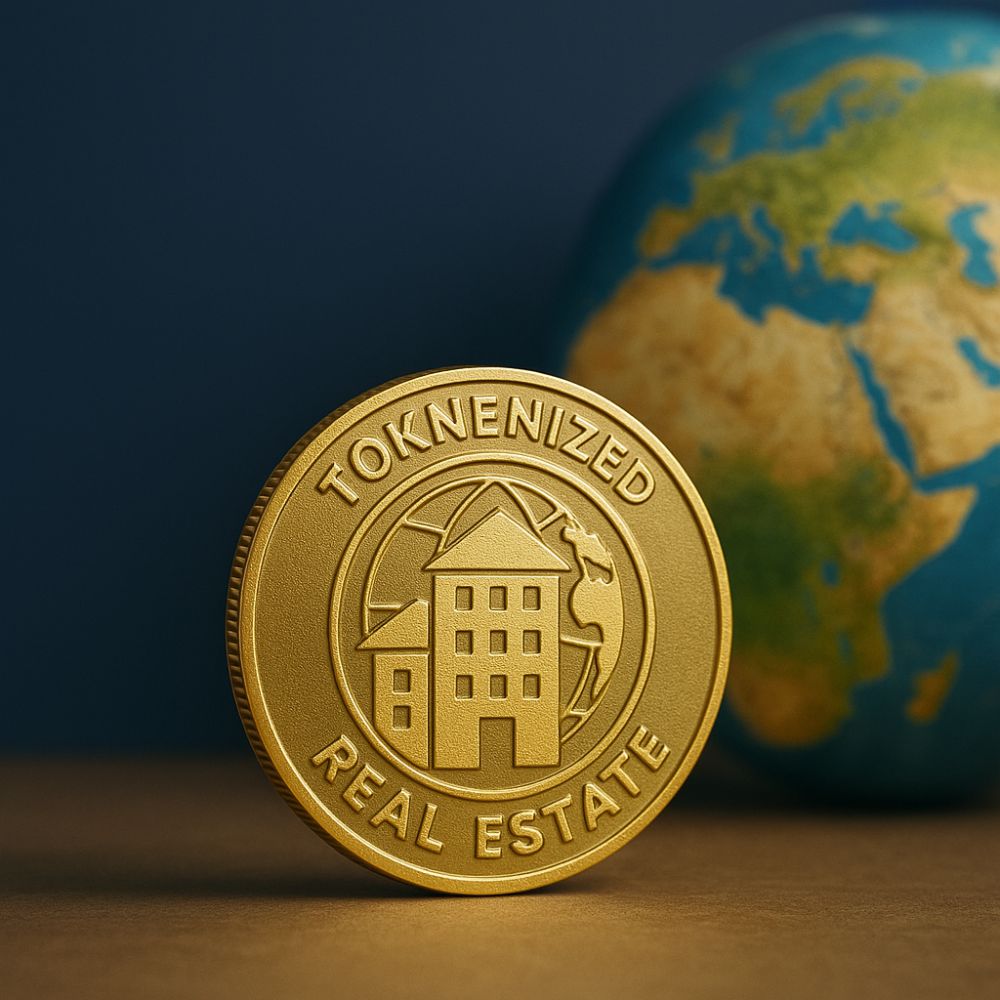
The global financial system has entered a powerful period of digital evolution. What once seemed like an experimental phase in blockchain development has now become a major structural shift in how assets are owned, traded, and managed around the world. One of the most disruptive developments of this transformation is the rise of tokenized real estate. What was once limited to physical transactions, traditional contracts, and local capital is now becoming a global, digital, and borderless investment class.
Tokenized real estate combines several powerful components that were never unified before. It carries the stability and long term value of the real sector, the flexibility and security of blockchain technology, and a level of global accessibility that traditional finance could never achieve on its own. Major institutional investors, developers, global funds, and technology companies are now seriously investing in this sector as they prepare for the next era of financial architecture.
This article explores the evolution and impact of tokenized real estate and its relationship with new intelligent asset management systems, regulatory changes, international development, and the rise of real world asset tokenization. It also examines how companies such as BlackRock, Vanguard, and emerging platforms like Hilter are shaping a global digital property market.
The Rise of Intelligent Asset Management and Algorithmic Control
One of the most significant forces driving tokenized real estate is the advancement of intelligent asset management. Modern financial systems increasingly rely on artificial intelligence to manage risk, optimize portfolios, and analyze global market signals in real time. The most notable example is Aladdin, the highly advanced system developed by BlackRock. Aladdin manages trillions of dollars and is considered one of the most powerful financial AI platforms ever created.
The core principles behind systems like Aladdin are now being applied in the tokenization sector. AI driven platforms analyze asset behavior, economic conditions, risk exposure, and long term value projections. These systems operate at speeds and levels of accuracy that traditional asset managers cannot match.
One of the new players in the tokenization space is Hilter, which uses its proprietary intelligence model called Hilter AI Core. This system works on principles similar to Aladdin class technologies. It analyzes risk, forecasts multiple scenarios, tracks capital flow, and optimizes asset allocation across digital real estate portfolios.
Such systems solve one of the biggest challenges of tokenizing real estate: managing complex assets in a fast moving digital environment. With intelligent automation, tokenized portfolios become dynamic, adaptable, and scalable in ways that traditional real estate funds could never achieve.
Understanding Tokenization Through the Evolution of Gold ETFs
To understand the magnitude of the shift now taking place in real estate, it helps to look at the historical example of gold. Before the launch of gold exchange traded funds, investors dealt only with physical gold bars and coins. Holding physical gold was expensive, inconvenient, and difficult to transport. Liquidity was limited, and the security risks were significant.
When gold ETFs such as GLD and IAU entered the market, everything changed. Gold became a digital financial instrument. It became liquid, easy to integrate into portfolios, and accessible to the global public through simple brokerage accounts. Transparency improved dramatically, and gold trading volume increased.
The transformation of gold through ETFs was so powerful that it reshaped the entire global gold market.
The same digital revolution is now happening with real estate. However, the impact could be far greater because real estate plays a central role in every economy. Whereas gold is a valuable commodity with limited functional use, real estate generates income, supports jobs, provides infrastructure, and remains an essential part of human life. Tokenization is unlocking this massive asset class and bringing it into the digital era.
Why Tokenized Real Estate Could Have a Greater Impact Than Gold Tokenization
Real estate has always been one of the world’s largest and most stable asset classes. Unlike metals, real estate is an active component of the economy. It houses communities, supports businesses, creates economic activity, and remains in demand for decades. Each property generates rent, creates employment opportunities, and contributes to urban development.
Tokenizing this asset class allows investors to access real estate in ways that were never possible before. Instead of buying entire buildings, investors can buy digital shares of property value. Real estate becomes liquid, divisible, and tradable in global markets 24 hours a day. The tokenization model removes geographic limitations, lowers entry barriers, and opens doors for global investment flow.
While gold ETFs revolutionized the commodity market, tokenized real estate could reshape the foundation of the global economy. This shift may lead to entirely new investment models, new financial products, and new digital infrastructure supporting global property ownership.
Global Development Examples: Dubai and Singapore Enter the New Phase
Cities like Dubai and Singapore are widely recognized as symbols of rapid economic growth and global ambition. Their skylines represent years of intense construction, foreign investment, and forward thinking urban development. Yet both cities were built during a time when tokenization did not exist. Their development relied on traditional financing methods and institutional capital.
Now imagine a future where cities are developed with global digital capital from millions of investors worldwide. Tokenization makes this possible by allowing individuals, funds, and corporations to purchase digital shares of new developments. Capital becomes available instantly, with no geographic boundaries.
This new model could accelerate urban development, increase transparency in real estate projects, and make international investment faster and more efficient. Tokenized development allows for global participation and instantly produces liquidity for developers. It unlocks a future where cities are financed not by a few institutions but by worldwide markets.
Major Global Players Enter the Tokenized Asset Market
The tokenization wave is spreading quickly, and global companies are already positioning themselves for leadership in the real asset digital market.
Large international brands and financial institutions are showing significant interest in tokenized property. For example, a development project between the Trump Organization and Dar Global in the Maldives is considering tokenizing ownership shares of the resort. This demonstrates how major real estate brands are beginning to integrate digital ownership solutions into their strategies.
Digital platforms such as World Liberty Finance are also highlighting tokenization as a foundation for future financial products. They view tokenized ownership as the next major trend in global investment.
Financial giants like BlackRock and Vanguard are actively preparing infrastructure for real world assets. They are developing frameworks to bring real estate, bonds, commodities, and other real asset classes onto blockchain networks. Their involvement signals that the largest institutions on the planet view tokenization as an unavoidable future.
Hilter’s HRS Token and the New Standards in Tokenized Real Estate
The HRS token presents one of the earliest specialized products for large scale real estate tokenization. It operates on the Tron network and is built on standards that support property rights, securitized assets, and regulated digital ownership. Standards such as ERC 3643 and ERC 1400 enable compliant tokenization of both equity and debt obligations.
One reason the HRS token stands out is its foundation on the Tron blockchain. Tron is known for high speed, low transaction costs, and massive transaction capacity. These features are essential for a market built around frequent trading of tokenized property shares. The network also offers long term reliability and strong global adoption.
Equally important, the HRS token is pegged to stablecoins, which significantly reduces volatility and makes it easier for international investors to operate across markets. This model offers predictable costs, stable settlements, and protection from sudden price fluctuations.
Liquidity is another central component. HRS is designed to integrate easily with exchanges, wallets, and decentralized finance platforms. This flexibility allows investors to move capital, trade tokenized assets, and participate in global markets without friction.
All these elements make HRS an example of how tokenized real estate products can be constructed for stability, accessibility, and long term scalability.
A New Financial Architecture Is Emerging
The financial world is moving toward a model where real assets acquire digital characteristics. The new architecture introduces instant liquidity, global accessibility, automated AI driven management, and transparent ownership systems.
Real world assets, once limited by geography, regulation, and local capital constraints, are becoming digital instruments available to investors globally. Markets that were previously closed or slow moving are becoming dynamic and interconnected.
The tokenization of gold transformed global markets two decades ago. Today, the tokenization of real estate appears poised to create an even larger transformation because it affects a fundamental part of the economy.
What is emerging is a completely new era. It is an era of digital cities, digital investment platforms, digital assets, and intelligent financial systems capable of operating at global scale.
Tokenization is not simply a technological trend. It is the foundation of a new financial architecture that will reshape how assets are owned, managed, and traded for decades to come.