

























































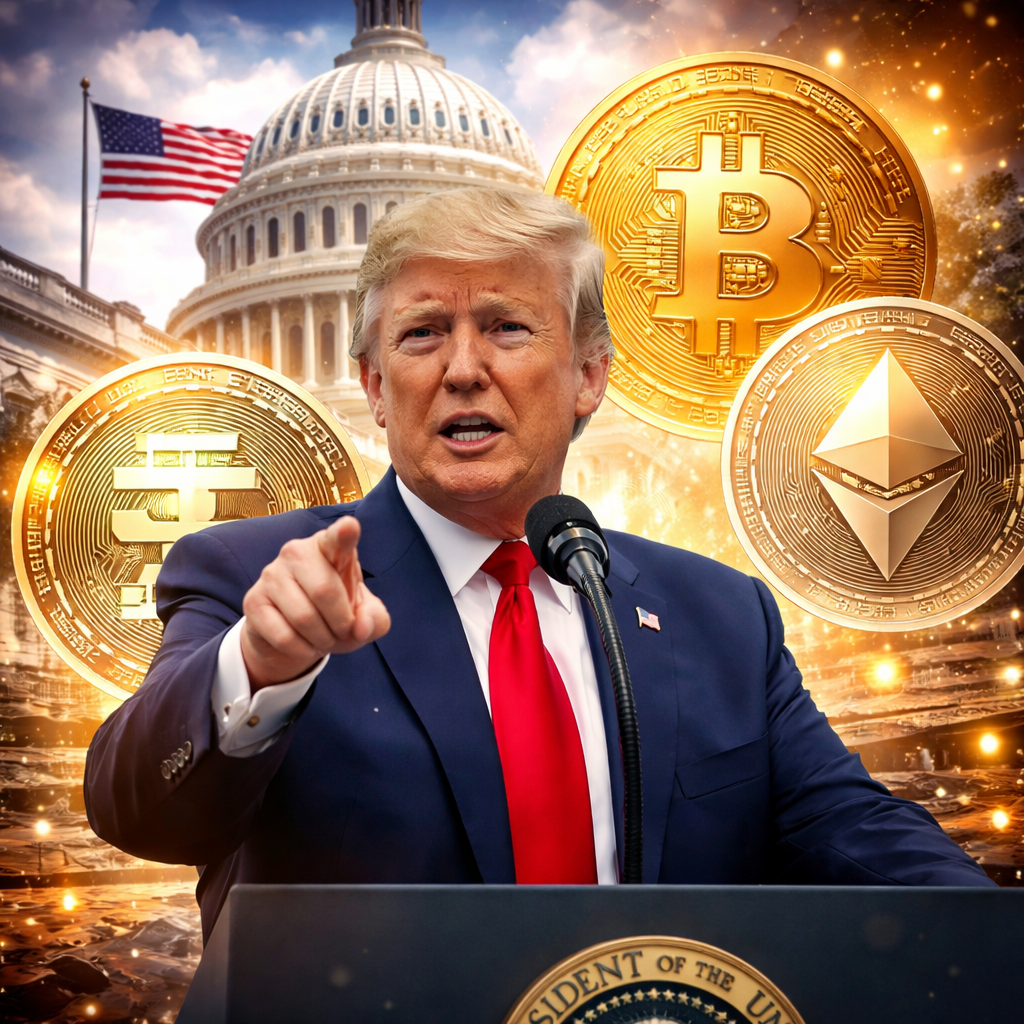
The United States may be approaching a decisive turning point in its relationship with digital assets. In recent public remarks, Donald Trump confirmed that he intends to sign a comprehensive crypto market structure bill very soon, a statement that immediately reignited debate across political, financial, and technology circles. His comments signal a renewed effort to position the United States as the leading global hub for cryptocurrency innovation, investment, and regulation at a time when international competition in both crypto and artificial intelligence is rapidly intensifying.
Speaking before global political and business leaders at the World Economic Forum in Davos, Trump framed crypto legislation not as a niche financial issue, but as a strategic priority for the future of the American economy. According to his remarks, providing regulatory clarity for digital assets is not only politically advantageous but also economically necessary if the United States wants to remain competitive in next generation financial infrastructure. By highlighting early support for initiatives such as the GENIUS stablecoin act, Trump emphasized that clearer rules could unlock innovation, attract capital, and offer new forms of financial participation to American citizens.
This renewed focus on crypto regulation comes at a critical moment. Lawmakers, regulators, banks, and technology companies are all navigating uncertainty over how digital assets should be defined, supervised, and integrated into the broader financial system. Trump’s assertion that Congress is working very hard on crypto market structure legislation, and that he hopes to sign it soon, has placed additional pressure on lawmakers to deliver a framework capable of balancing innovation with consumer protection.
A Strategic Vision for Making the United States the Global Crypto Capital
Trump’s comments reflect a broader vision that goes beyond passing a single bill. He has repeatedly stated that his goal is to transform the United States into the global capital of cryptocurrency. In this context, crypto regulation is viewed as an enabling tool rather than a restrictive one. The underlying idea is that predictable and transparent rules will encourage companies to build, innovate, and invest domestically instead of relocating to more accommodating jurisdictions abroad.
From Trump’s perspective, regulatory uncertainty has been one of the biggest obstacles holding back the American crypto industry. Startups, institutional investors, and even traditional financial institutions have long complained that unclear or inconsistent guidance from regulators creates unnecessary risk. By contrast, countries that have established clearer frameworks have been able to attract talent, capital, and infrastructure at a faster pace.
At the World Economic Forum, Trump linked crypto policy directly to national competitiveness. He argued that as artificial intelligence, blockchain technology, and digital payments converge, countries that fail to modernize their regulatory environments risk falling behind. Supporting crypto legislation, in his view, is not just about financial markets, but about securing long term leadership in emerging technologies that will shape global economic power.
The Role of the GENIUS Stablecoin Act in the Broader Framework
One of the most prominent legislative efforts referenced by Trump is the GENIUS stablecoin act. This proposed legislation is widely seen as a foundational component of a broader crypto market structure bill. Stablecoins, which are digital assets typically pegged to fiat currencies like the US dollar, play a critical role in the crypto ecosystem by enabling trading, payments, and liquidity.
Trump described early backing for stablecoin legislation as a key step toward creating a coherent regulatory framework. Stablecoins sit at the intersection of traditional finance and blockchain technology, making them both influential and controversial. Lawmakers have debated issues such as reserve requirements, disclosure standards, and whether stablecoin issuers should be regulated like banks or as a new category of financial institution.
Supporters argue that well regulated stablecoins could strengthen the dollar’s global role by extending its use into digital markets. Critics worry about systemic risk, consumer protection, and the potential for misuse if oversight is too lax. The GENIUS stablecoin act aims to address these concerns by establishing baseline standards while allowing innovation to continue.
Congress Continues to Work Through Complex Details
Despite Trump’s confident tone, the legislative process remains complex and ongoing. His remarks come at a time when Congress and the crypto industry are largely in a wait and see posture. Senators are currently out of session, and many leading crypto executives have been attending high level meetings in Davos. Behind closed doors, congressional staff are preparing for the next phase of negotiations that will determine the final shape of the legislation.
One of the most anticipated developments is the expected release of an updated crypto market structure bill by the US Senate Agriculture Committee. This revised draft is expected to clarify lawmakers’ positions on several contentious issues that have stalled progress in the past. Among these are the legal definition of digital assets, the classification of tokens as commodities or securities, and the division of oversight authority among federal regulators.
These questions are not merely technical. How digital assets are defined will influence everything from taxation to investor protections. Which regulator has authority will determine compliance costs, enforcement priorities, and the pace of innovation. As a result, even small changes in legislative language can have far reaching consequences for the entire crypto ecosystem.
Bipartisan Efforts and Persistent Points of Disagreement
Committee leaders have made efforts to build a bipartisan agreement, recognizing that durable crypto regulation will require support across party lines. There is broad acknowledgment that the absence of clear rules benefits neither consumers nor businesses. However, disagreements remain over several politically sensitive topics.
One area of contention involves meme coins and highly speculative tokens. Some lawmakers argue that these assets should face stricter standards due to their volatility and potential for consumer harm. Others warn that overly aggressive restrictions could stifle innovation and limit free market experimentation.
Listing standards for exchanges represent another flashpoint. Determining which assets can be listed, under what conditions, and with what disclosures raises questions about market fairness and investor protection. Funding for regulators is also a concern, as effective oversight requires resources, expertise, and technological capacity.
Ethics rules for public officials and regulators engaged with the crypto industry have further complicated negotiations. Transparency and conflict of interest provisions are essential for public trust, yet overly rigid rules could discourage knowledgeable professionals from participating in policy development.
Banking Committee Faces Ongoing Uncertainty
While progress has been made in some areas, the Senate Banking Committee has moved more slowly. A planned markup session was postponed, and there is still no confirmed timeline for when deliberations will resume. Lawmakers and staff familiar with the process suggest that much depends on whether industry participants and traditional banks can reconcile their differences, particularly around the issue of stablecoin yield.
Stablecoin yield refers to whether issuers can offer interest or returns on stablecoin holdings. Banks have expressed concerns that such products could compete directly with traditional deposits without being subject to the same regulatory requirements. Crypto companies counter that yield bearing stablecoins are an important innovation that could expand access to financial services.
This debate intensified after Coinbase withdrew its support for the bill, a move that significantly slowed momentum. Coinbase’s concerns centered on provisions that it believed could limit innovation or favor incumbent financial institutions. The decision highlighted the fragile balance lawmakers must strike between accommodating new technologies and addressing the concerns of established players.
Industry Leaders Seek to Rebuild Consensus
In the wake of Coinbase’s withdrawal, efforts have been underway to restore dialogue between crypto firms and traditional financial institutions. Brian Armstrong, the chief executive of Coinbase, has reportedly been meeting with major banking leaders in Davos to explore potential compromises. These discussions aim to identify common ground that could allow the legislation to move forward.
Industry leaders recognize that prolonged delays could be damaging. Without clear rules, companies face uncertainty that discourages investment and innovation. At the same time, lawmakers are wary of advancing legislation that lacks sufficient industry support, as this could lead to unintended consequences or rapid calls for revision.
The outcome of these negotiations will likely influence not only the final text of the bill but also the broader relationship between crypto companies and the traditional financial system. A successful compromise could pave the way for greater collaboration, while continued disagreement could prolong regulatory limbo.
White House Pressure Intensifies as Political Window Narrows
Adding urgency to the situation, senior figures within the White House have warned that delaying crypto legislation could have negative long term consequences. The Executive Director of the White House Crypto Council, Patrick Witt, has publicly cautioned that missing the current political window could result in stricter and less favorable rules under a future administration that may be less supportive of digital assets.
This warning underscores the political calculus surrounding crypto regulation. While there is growing bipartisan interest in establishing clear rules, the tone and substance of those rules could vary significantly depending on who holds power. For industry participants, the current environment may represent a rare opportunity to influence policy in a constructive way.
From the White House perspective, advancing crypto legislation now could demonstrate responsiveness to technological change, support economic growth, and reinforce America’s leadership in global finance. Conversely, prolonged inaction could allow other jurisdictions to set standards that the United States would later be forced to follow.
What Clear Crypto Rules Could Mean for Americans
Trump has repeatedly emphasized that clear crypto rules could unlock new paths to financial freedom for Americans. This framing reflects a broader narrative that digital assets can expand access to financial services, reduce costs, and empower individuals to participate more directly in the economy.
For everyday users, regulatory clarity could mean safer platforms, better disclosures, and stronger protections against fraud. For entrepreneurs, it could reduce legal uncertainty and compliance burdens, making it easier to launch and scale new products. For institutional investors, it could open the door to greater participation by providing confidence that the market operates under well defined rules.
At a national level, a coherent crypto framework could attract foreign investment, support job creation, and enhance the resilience of the financial system. By setting clear standards, the United States could shape the global conversation around digital assets rather than reacting to policies developed elsewhere.
A Defining Moment for US Crypto Policy
As Congress continues to work through the details, Trump’s declaration that he hopes to sign a crypto market structure bill very soon has raised expectations across the industry. Whether these expectations are met will depend on lawmakers’ ability to bridge remaining divides and deliver legislation that balances innovation with responsibility.
The coming months are likely to be decisive. If successful, the United States could emerge with a regulatory framework that supports growth, protects consumers, and reinforces its position as a leader in financial innovation. If negotiations falter, uncertainty may persist, and opportunities could be lost.
For now, all eyes remain on Capitol Hill as the crypto industry, financial institutions, and policymakers await the next steps in a process that could define the future of digital assets in America.