























































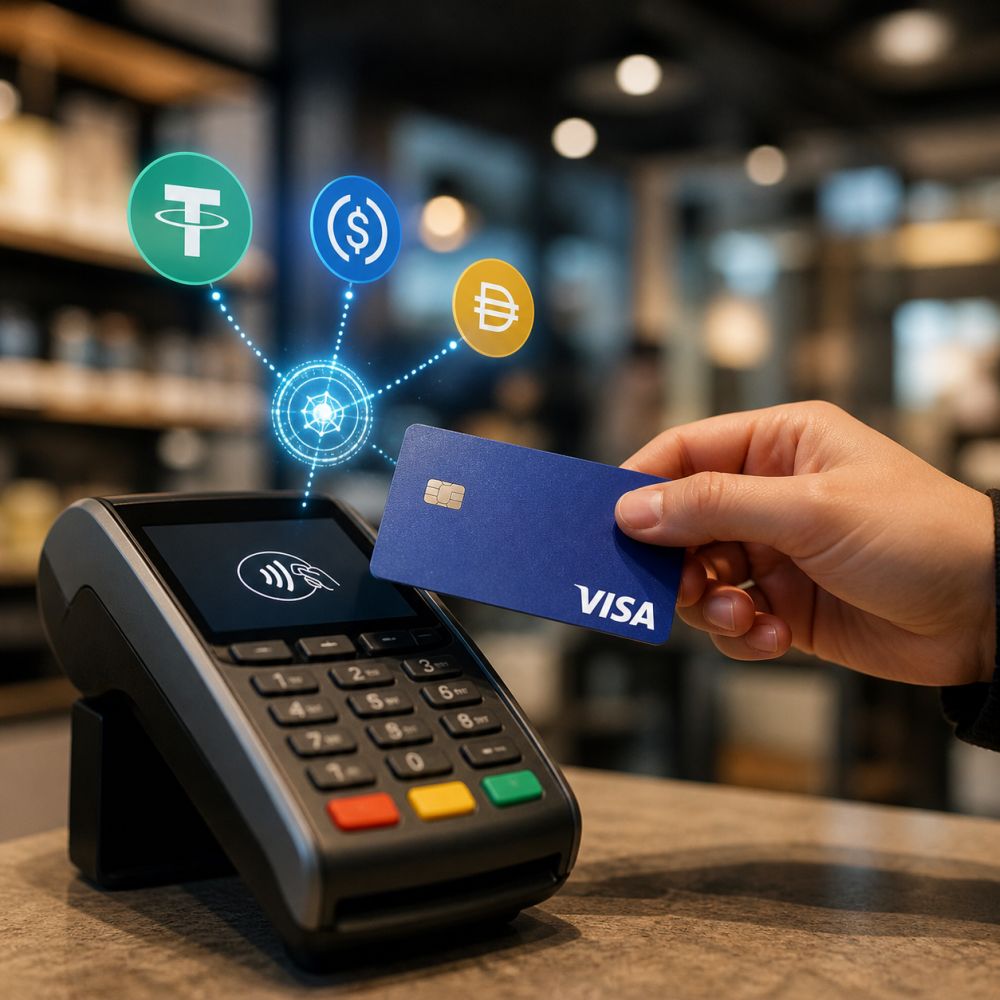
The landscape of global finance is undergoing a silent but profound transformation. While many observers remain focused on the volatile price actions of various cryptocurrencies, one of the world’s most significant financial giants is working behind the scenes to change the fundamental plumbing of how money moves. Visa, a company traditionally synonymous with credit cards and plastic payments, is now positioning itself as a primary architect for the integration of stablecoins into the mainstream economic fabric. This evolution represents more than just a new product offering; it is a fundamental shift in how value is transferred across borders and between different financial ecosystems. By quietly embedding blockchain technology into its core settlement networks, Visa is ensuring that it remains relevant in a future where digital assets are as common as traditional fiat currencies.
The Evolution of Global Settlement Systems
To understand why Visa is investing so heavily in stablecoin technology, one must first understand the limitations of the current global financial infrastructure. For decades, the movement of money across international borders has relied on a complex and often inefficient web of correspondent banking relationships. When a payment is sent from one country to another, it frequently passes through multiple intermediary institutions, each adding its own fees and delays to the process. This legacy system, while reliable, is inherently slow and lacks the transparency that modern businesses demand. Visa recognizes that the next generation of financial services will require a settlement layer that operates at the speed of the internet. Stablecoins, which combine the stability of the US dollar with the efficiency of blockchain technology, provide the perfect medium for this transition.
Harnessing the Efficiency of Public Blockchains
One of the most notable aspects of Visa’s current strategy is its willingness to utilize public blockchain networks. In the past, many financial institutions were hesitant to use public ledgers, preferring private, permissioned systems instead. However, Visa has broken this trend by expanding its settlement capabilities to include networks like Solana and Ethereum. By leveraging these public blockchains, Visa can achieve near-instantaneous finality for transactions. This is a massive leap forward from the traditional T-plus-three settlement cycle, where funds can take several days to actually move between institutions. The use of Solana, in particular, highlights Visa’s focus on high-throughput and low-latency environments, which are essential for handling the massive volume of transactions that the global payment network processes every second.
Bridging the Gap Between Traditional and Digital Finance
Visa’s role in this new ecosystem is that of a bridge. Most businesses and consumers are not yet ready to abandon traditional bank accounts and fiat currency entirely. They require a way to interact with digital assets without having to navigate the complexities of managing private keys or dealing with extreme market volatility. By integrating USD Coin (USDC) into its treasury operations, Visa allows its partners to send and receive digital payments through the same familiar interfaces they use today. This “quiet” integration means that while the underlying technology has changed, the user experience remains seamless. This approach lowers the barrier to entry for merchants and financial institutions, facilitating a smoother transition to a digital-first economy.
The Strategic Importance of Stablecoins in Treasury Operations
The internal treasury of a global payment network is a massive operation involving the management of hundreds of billions of dollars across multiple currencies. Traditionally, managing this liquidity involves significant overhead and risk. By adopting stablecoins as a settlement asset, Visa can optimize its own internal capital management. Stablecoins allow for 24-7 movement of funds, which is not possible in a banking system that closes on weekends and holidays. This continuous liquidity allows for better cash flow forecasting and reduces the amount of idle capital that must be held in various accounts around the world. As Visa continues to scale these operations, the efficiencies gained will likely be passed down to the end users in the form of lower costs and faster services.
Addressing Regulatory and Technical Challenges
The path to integrating stablecoins into mainstream finance is not without obstacles. Regulatory clarity remains one of the most significant hurdles. Visa has been proactive in engaging with central banks and regulatory bodies to help shape the standards that will govern digital assets in the future. Compliance is at the heart of Visa’s strategy, as the company must ensure that all digital transactions meet strict Anti-Money Laundering and Know Your Customer requirements. Additionally, the technical challenge of interoperability cannot be understated. With so many different blockchain networks in existence, creating a system where value can move seamlessly between them is a monumental task. Visa’s development of a universal adapter for digital payments is a key part of solving this puzzle, allowing different networks to communicate and exchange value without friction.
Enhancing Global Financial Inclusion
Beyond efficiency and speed, the integration of stablecoins holds the potential to significantly increase financial inclusion. In many parts of the world, traditional banking services are inaccessible or prohibitively expensive. However, mobile phone penetration is high, and access to the internet is expanding. By utilizing a blockchain-based payment infrastructure, Visa can help provide financial services to the unbanked and underbanked populations. Stablecoins provide a stable store of value and a means of exchange that does not require a traditional bank account. As Visa expands its stablecoin initiatives, it creates opportunities for people in emerging markets to participate in the global digital economy, fostering entrepreneurship and economic growth on a global scale.
The Role of Smart Contracts in Modern Payments
A critical component of Visa’s blockchain strategy involves the use of smart contracts. These are self-executing contracts where the terms of the agreement are written directly into the code. In a traditional payment environment, complex transactions such as escrow or multi-party splits require manual intervention and third-party verification. With smart contracts, these processes can be automated. For example, a payment could be automatically released to a supplier the moment a shipment is verified through a digital tracking system. This level of automation reduces the risk of human error and significantly speeds up the business cycle. Visa is currently exploring how to integrate these programmable features into its standard payment offerings, which would provide businesses with a new level of control over their finances.
Long-term Implications for the Payment Industry
The long-term implications of Visa’s move into stablecoins are profound. We are likely witnessing the beginning of the end for the traditional “siloed” financial system. In the future, the distinction between a “crypto” payment and a “traditional” payment may disappear entirely. All payments will simply be digital, moving across a unified global network that combines the security of established financial institutions with the innovation of decentralized technology. Visa’s early lead in this space gives it a significant competitive advantage. By building the infrastructure today, they are defining the rules of the game for the next fifty years of global commerce. Other payment processors and banks will likely be forced to follow suit or risk being left behind in a faster, more transparent financial world.
Maintaining Trust in a Decentralized World
Trust has always been Visa’s most valuable asset. In the world of decentralized finance, where “code is law,” the role of a trusted intermediary changes but does not disappear. Consumers and businesses still want the assurance that their transactions are protected and that they have someone to turn to if something goes wrong. Visa is working to bring its high standards of security and consumer protection to the blockchain space. This involves developing new protocols for fraud detection and dispute resolution that are native to digital assets. By blending the decentralized nature of blockchain with the centralized trust and support of the Visa brand, the company is creating a hybrid model that provides the best of both worlds.
Final Thoughts on the Digital Payment Revolution
The transition to a stablecoin-powered payment system is not a project that will be completed overnight. It is a multi-year journey that requires constant innovation and adaptation. However, the progress made by Visa thus far is a clear indicator of the direction the industry is moving. The “quiet” nature of this building process is intentional; the goal is to make the technology so seamless that the average user never even realizes they are using a blockchain. As stablecoins become a standard part of the global payment plumbing, we can expect a world where money moves as easily as information. Visa is not just observing this revolution; it is leading it, ensuring that the future of money is more efficient, more accessible, and more integrated than ever before.
Key Advancements
As we look toward the remainder of the decade, several key milestones will define the success of Visa’s stablecoin integration. These include the expansion of the program to more fiat-backed tokens, the inclusion of more diverse blockchain networks, and the launch of consumer-facing products that allow for direct stablecoin spending at millions of merchant locations worldwide. The infrastructure being built today is the foundation for a new era of global commerce. By embracing change and leaning into the potential of digital assets, Visa is securing its position at the center of the financial world for generations to come.









