




























































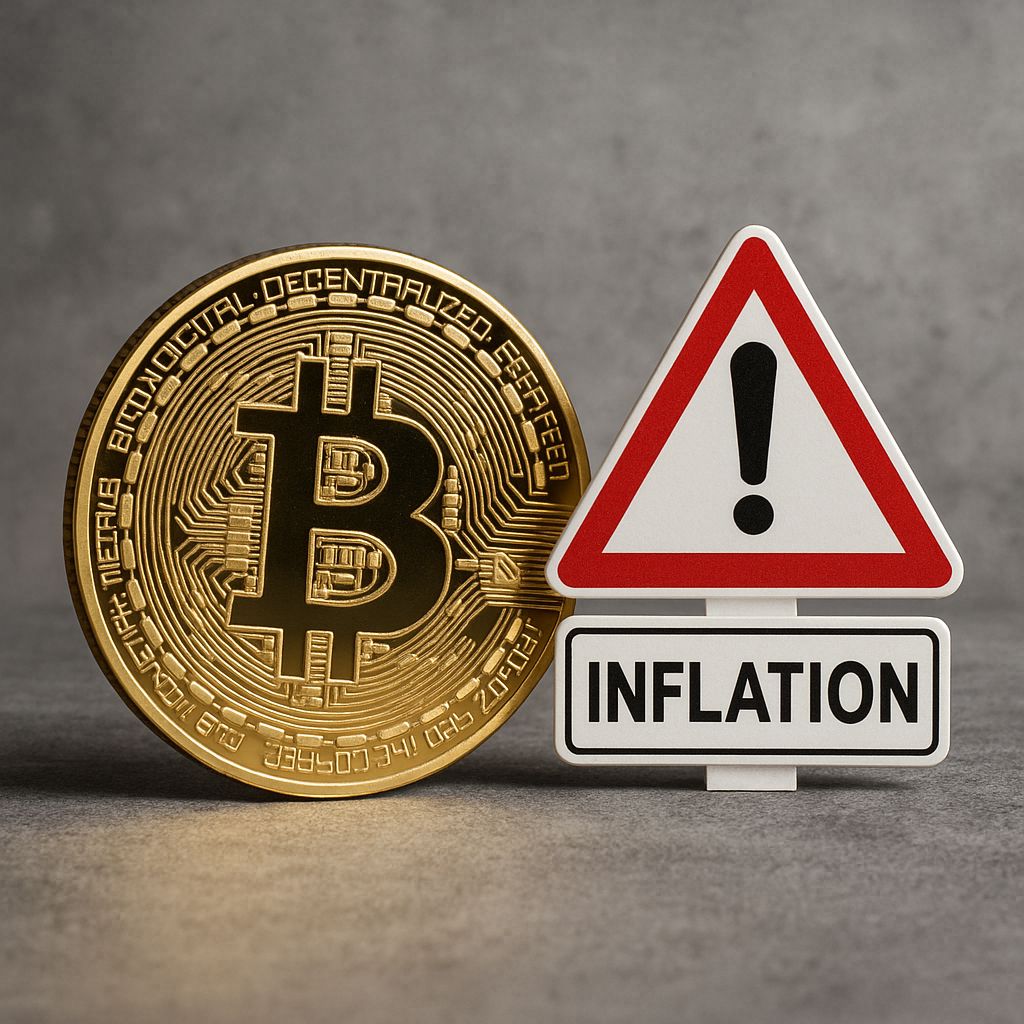
A Sudden Jolt to the Crypto Market
Bitcoin, the flagship cryptocurrency, has once again demonstrated its sensitivity to macroeconomic pressures. After recently achieving an all-time high of $124,350, Bitcoin fell by 2% this week, stabilizing around $115,000. Ethereum, the second-largest digital asset, mirrored this pattern with a 3.33% decline to approximately $4,272.
This downturn coincided with the release of stronger-than-expected U.S. inflation data, shaking investor confidence across global markets. The Crypto Fear and Greed Index sits at 56, reflecting a state of neutrality – neither overly bullish nor significantly bearish.
But is this simply a temporary setback, or could it mark a deeper structural shift in Bitcoin’s trajectory? To answer that, we must explore both present developments and historical precedents.
Inflation Shock: Why It Matters for Bitcoin
According to Vincent Liu, Chief Investment Officer at Kronos Research, the recent market pullback can be traced directly to U.S. inflation data. July’s Producer Price Index (PPI) surged 3.3% year-on-year, exceeding expectations and halting Bitcoin’s rally that was fueled earlier by softer Consumer Price Index (CPI) data.
This spike in inflation complicates the outlook for Federal Reserve monetary policy. Market participants had priced in a September rate cut, which would have injected fresh liquidity into risk markets, including crypto. Now, those expectations have diminished, strengthening the U.S. dollar and dampening risk appetite.
Cryptocurrencies like Bitcoin thrive in liquidity-rich environments. When interest rates remain high, capital becomes more expensive, and speculative assets lose some of their shine. As such, the inflation shock was more than just a headline event – it reshaped the macroeconomic backdrop that has fueled Bitcoin’s rally.
Historical Case Study: Bitcoin and Inflation in 2021
This isn’t the first time inflation has rattled Bitcoin markets. Back in 2021, when U.S. inflation figures consistently overshot expectations, Bitcoin’s price experienced multiple whipsaws.
- May 2021 – CPI data came in unexpectedly high, triggering a Bitcoin correction from $58,000 down to $35,000.
- November 2021 – Despite inflation reaching 6.2% (a multi-decade high), Bitcoin briefly surged to a then-record $69,000 before collapsing as the Fed signaled rate hikes.
The lesson here is clear: Bitcoin often reacts sharply to inflation data, but the direction depends heavily on market expectations of monetary policy. If investors believe central banks will maintain loose policy, Bitcoin thrives. If tightening becomes the narrative, corrections follow.
Bitcoin as an Inflation Hedge: Myth vs Reality
A central debate in the crypto community revolves around Bitcoin’s status as a hedge against inflation. Proponents argue that its fixed supply of 21 million coins makes it a digital equivalent of gold, immune to monetary debasement.
However, history shows a more nuanced reality:
- Short-Term Correlation with Risk Assets
- In the short term, Bitcoin often trades like a risk-on asset, closely tied to equities and liquidity flows.
- Long-Term Hedge Properties
- Over multi-year horizons, Bitcoin has vastly outperformed inflation, preserving and growing purchasing power far beyond traditional stores of value.
Thus, while Bitcoin may not shield investors from monthly inflation shocks, it remains one of the most compelling long-term hedges against currency debasement and fiat erosion.
State-Driven Demand: Why Governments Are Still Hesitant
Speculation about government adoption of Bitcoin as a reserve asset has circulated for years. Yet, U.S. Treasury Secretary Scott Bessent recently dismissed this possibility, stating there will be no strategic reserve purchases of Bitcoin in the near term.
Instead, the U.S. government will focus on budget-neutral strategies for reserve growth. While disappointing for crypto enthusiasts, this stance reflects caution from policymakers who remain wary of Bitcoin’s volatility and its potential impact on fiscal stability.
However, smaller nations like El Salvador have already taken steps to integrate Bitcoin into their financial systems. Whether larger economies eventually follow remains one of the most significant unanswered questions in the digital asset space.
Institutional Demand: The ETF Effect
Institutional investors continue to play a growing role in Bitcoin’s market structure. The emergence of Exchange-Traded Funds (ETFs) has created new avenues for capital to flow into crypto markets.
Recent ETF data paints a mixed picture:
- Outflows from Grayscale and Ark Invest’s Bitcoin ETFs suggest some investors are taking profits.
- Inflows into BlackRock’s IBIT product, however, highlight persistent institutional confidence.
The same pattern is visible in Ethereum ETFs, with investors gravitating toward lower-fee products. This reflects a consolidation trend, where efficiency and cost-effectiveness dictate capital allocation.
Institutional inflows remain one of the strongest long-term bullish indicators for Bitcoin. Unlike retail sentiment, which often fluctuates with price, institutional participation reflects strategic positioning.
Key Technical Levels: Where Bitcoin Stands Now
Technical analysis provides another lens for evaluating Bitcoin’s outlook. Analysts, including Rachael Lucas from BTC Markets, have identified crucial support zones:
- $115,000 – Current support level, tested multiple times.
- $112,500 – Secondary cushion for bullish momentum.
- $110,000 – A psychological level; a break below could trigger panic selling.
Should Bitcoin remain above $115,000, the broader bullish trend remains intact. However, if the $110,000 barrier is breached, the market could face short-term capitulation before resuming an upward trajectory.
Jackson Hole Symposium: The Market’s Next Big Test
The upcoming Jackson Hole Symposium represents a pivotal event for global financial markets. Crypto investors are laser-focused on Fed Chair Jerome Powell’s remarks, which could dictate the direction of risk assets.
- A dovish tone (suggesting patience with inflation and openness to easing) could reignite bullish momentum in Bitcoin.
- A hawkish stance (indicating stricter policy) could push Bitcoin toward lower support zones.
Historically, Jackson Hole speeches have triggered significant volatility across markets. For Bitcoin, Powell’s words may act as the short-term catalyst that decides whether $120,000 becomes achievable again or whether the market slips further.
Case Study: Bitcoin’s Reactions to Fed Announcements
Looking back at the past decade, several key Fed announcements have dramatically shaped Bitcoin’s price:
- March 2020 – When the Fed cut rates to near zero, Bitcoin surged from $5,000 to over $12,000 by year’s end.
- June 2022 – When the Fed announced aggressive rate hikes, Bitcoin plummeted from $30,000 to near $17,000.
- July 2023 – When the Fed paused hikes, Bitcoin rallied from $29,000 to $41,000 in under two months.
This pattern reinforces one truth: monetary policy is one of the strongest external drivers of Bitcoin’s price action.
Long-Term Outlook: Why Bitcoin Still Holds the Edge
Despite the short-term turbulence, Bitcoin’s long-term fundamentals remain robust:
- Scarcity and Fixed Supply – Unlike fiat currencies, Bitcoin cannot be printed endlessly.
- Institutional Endorsements – Giants like BlackRock, Fidelity, and JPMorgan are increasingly offering Bitcoin-related products.
- Global Retail Adoption – From Latin America to Asia, retail adoption is rising as citizens seek alternatives to weakening local currencies.
- Halving Cycles – With the next Bitcoin halving scheduled for 2028, supply dynamics continue to favor price appreciation.
Over the next decade, Bitcoin’s role as both a speculative asset and a digital store of value is likely to strengthen, regardless of short-term inflation shocks.
Navigating Bitcoin’s Next Chapter
Bitcoin’s 2% decline this week is a stark reminder of how closely crypto markets are tied to global macroeconomic forces. Stronger-than-expected inflation data has reshaped expectations around the Federal Reserve’s policy, dampening optimism for near-term rate cuts and reinforcing risk aversion.
Yet, beneath the surface, Bitcoin’s structural bullish narrative remains intact. Institutional inflows, growing global adoption, and its fixed supply continue to provide powerful tailwinds.
The upcoming Jackson Hole Symposium represents the next key inflection point. Whether Powell’s tone is dovish or hawkish will likely decide Bitcoin’s short-term direction. But for long-term investors, the fundamentals are clear: Bitcoin remains one of the most compelling assets in a world grappling with inflation, monetary uncertainty, and technological transformation.