


























































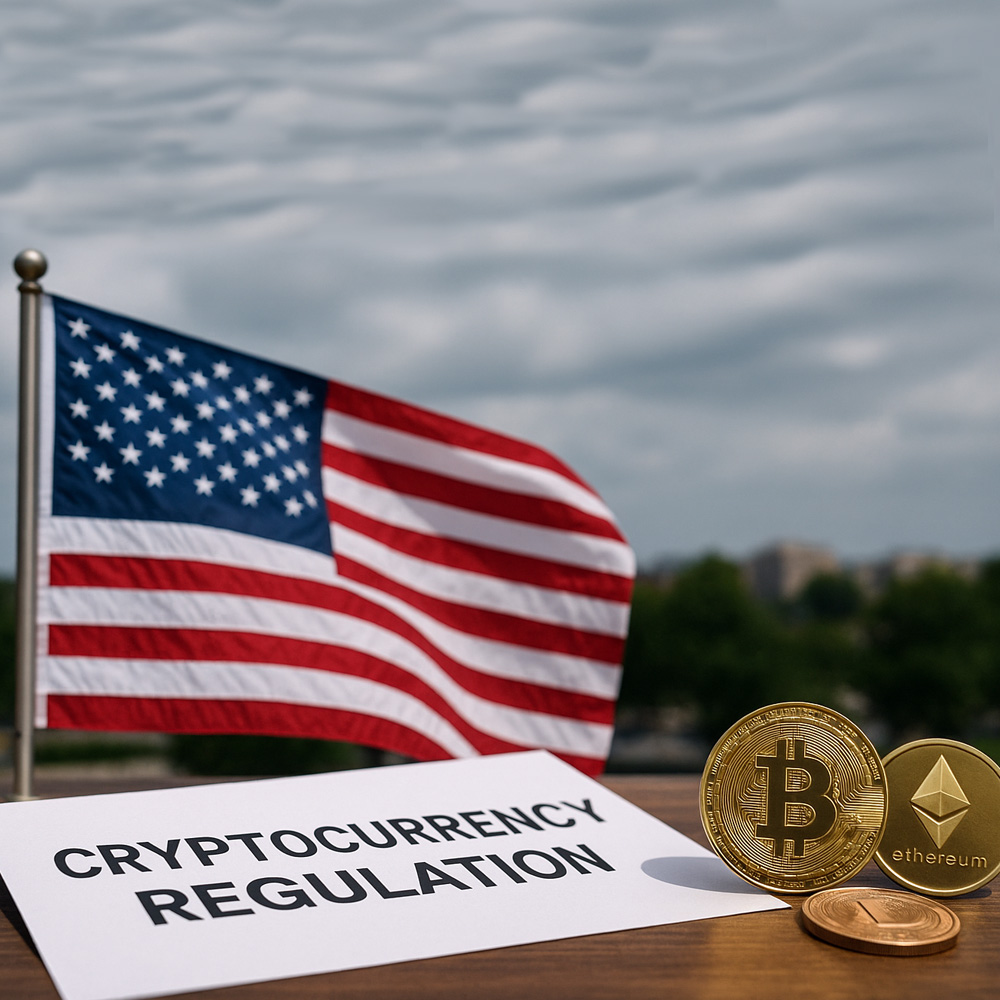
The U.S. crypto industry is witnessing pivotal changes in 2025, with fresh regulatory drafts, tokenization discussions, and stablecoin controversies heating up Capitol Hill. In this in-depth blog post, we break down the most important developments, including updates from the SEC, CFTC, Ripple, Solana, and institutional players like BlackRock and Fidelity. Whether you’re an investor, developer, or crypto enthusiast, understanding these changes is critical to navigating the digital asset space in the months ahead.
New Crypto Market Structure Bill: What’s Changing in 2025?
Congress has released a newly revised version of the U.S. crypto market structure bill, introducing sweeping updates intended to provide regulatory clarity and facilitate innovation. While last year’s Fit21 bill made waves, this new draft version sharpens regulatory definitions and attempts to unify oversight under a collaborative framework between the SEC and CFTC.
Among the most significant changes are:
- No income or wealth limitations on retail crypto buyers
- Clear decentralization criteria
- Exemptions for non-custodial DeFi protocols
- Stablecoins are defined separately from securities
- Optional early registration and dual rulemaking from both the SEC and CFTC
Crypto analysts and insiders, including VanEck’s Matthew Sigel and Paradigm’s Justin Slaughter, have weighed in positively. The consensus? While the bill isn’t perfect, it’s a substantial step toward regulatory maturity. It encourages safe innovation while protecting consumer interests, aligning more closely with the digital asset community’s demands.
Importantly, this updated bill marks a shift in tone and structure. The CFTC emerges as the primary regulator once a blockchain network achieves decentralization, while the SEC retains authority in the earlier stages of a project’s lifecycle.
This move addresses one of the industry’s loudest complaints: that regulatory bodies, especially the SEC under Gary Gensler, were using outdated frameworks, like the 1933 Howey Test, to stifle progress.
SEC and CFTC Embrace Tokenization in 2025
A major milestone is approaching: the SEC’s upcoming Crypto Roundtable on May 12 will focus exclusively on tokenization. Announced by Commissioner Hester Peirce, the event is set to feature Wall Street titans, including:
- BlackRock
- Fidelity
- Franklin Templeton
- Invesco
- DTCC
- Nasdaq
- Apollo Management
- Tokenized Asset Coalition
This lineup signals institutional confidence in the future of tokenization. The event will explore how traditional financial assets – stocks, bonds, real estate – are being migrated to the blockchain. SEC Commissioner Peirce emphasized that tokenization could transform financial markets by making them faster, more secure, and accessible.
On the CFTC side, acting Chair Caroline Pham confirmed the agency’s participation in pilot tokenization programs. These pilots will serve as live experiments to assess how tokenized assets perform under real-world conditions. It’s part of a broader push to ensure regulators are properly informed before implementing strict or outdated rules.
This growing regulatory engagement points to a digital future where blockchain underpins not just crypto but mainstream finance. From government IDs to insurance contracts, Web3 infrastructure is set to redefine ownership, identity, and data management.
Stablecoin Legislation in Limbo: Democrats Consider Walkout
Despite the progress in regulation, political tensions are boiling over on Capitol Hill. Leading Democrats are threatening to walk out on a scheduled hearing for the stablecoin bill, citing concerns over conflicts of interest tied to Donald Trump’s crypto-related ventures, particularly Royal Liberty Financial and its USD1 stablecoin.
Representative Maxine Waters is reportedly organizing the walkout, which could derail the House GOP’s crypto hearing scheduled for this week. With bipartisan cooperation on shaky ground, the future of stablecoin legislation hangs in the balance.
Ironically, the bill in question – The Genius Act – has gained support from across the industry, including a16z’s Chris Dixon. Dixon says the bill is “not perfect” but an essential foundation that protects consumers while allowing peer-to-peer digital economies to grow.
The concern from Democrats appears more politically motivated than policy-driven, possibly aiming to weaken Republican momentum. However, this kind of political infighting risks slowing the U.S. down in the global race to create responsible, forward-thinking crypto laws.
XRP, Solana, and the Rise of Blockchain as a Treasury Asset
Ripple’s first-quarter 2025 report revealed major milestones, including the acquisition of Hidden Road and the conclusion of its long-standing legal battle with the SEC. CEO Brad Garlinghouse noted growing institutional demand for XRP, particularly with ETFs being launched globally.
Ripple also announced a new approach to transparency. Instead of releasing quarterly reports, XRP-related updates will now be posted in real time through their official website and social channels. This pivot is designed to maintain openness while avoiding potential misuse of disclosed data – a key issue during their legal saga with the SEC.
Meanwhile, Solana is also seeing bullish institutional signals. DeFi DevCorp, a Nasdaq-listed company, acquired a Solana validator business with 500,000 SOL staked, worth approximately $75.5 million. The deal was completed with a mix of stock and cash, demonstrating growing interest in Solana as a corporate treasury reserve asset.
Though Bitcoin remains the dominant store of value for companies, Solana’s speed and scalability make it attractive for firms focused on rapid execution, DeFi experimentation, or NFT platforms.
Solana’s Meme Coin Economy: Risky Hype or Retail Innovation?
According to a VanEck report, meme coins accounted for a staggering 44% of Solana’s decentralized exchange volume in January 2025, and 35% by April. When combined with stablecoins and staking tokens, meme coins were involved in 99% of Solana trading activity in January alone.
While this stat has sparked criticism, it also highlights Solana’s appeal as a platform for fast, speculative retail activity. Compared to Ethereum’s enterprise-grade positioning, Solana appears to be carving out a niche in high-volume, low-cost transactions for Web3 and consumer-oriented applications.
Even though meme coins are controversial, they remain an undeniable part of the crypto ecosystem. Many in the industry argue for balanced regulation – guardrails to prevent fraud without smothering innovation or consumer choice.
As the bull market continues, meme coin speculation could resurge during the euphoria phase, driving more short-term liquidity but also exposing retail investors to heightened risk.
ETFs, Token Classifications, and the Future of Digital Commodities
While the SEC continues to delay ETFs like the Canary Funds’ Litecoin product, firms like VanEck are pushing forward. Notably, VanEck became the first to file for a U.S. ETF based on Binance Coin (BNB), highlighting the growing demand for diversified crypto investment vehicles.
Looking ahead, experts believe index-style ETFs may dominate. Instead of picking one token, investors could gain exposure to entire sectors, like smart contract platforms, proof-of-stake networks, or DeFi ecosystems.
The new market structure bill also helps clarify which assets count as securities versus commodities. For example, digital commodities sold on secondary markets will not be classified as securities unless they confer ownership rights or profits from the issuer, mirroring the arguments in the Ripple vs SEC case over XRP.
A New Era for Crypto Policy and Market Growth
The developments unfolding in 2025 reflect a maturing digital asset industry. Tokenization is moving from theory to practice. Stablecoin legislation, though politically divisive, is being prioritized. Market structure rules are evolving to fit crypto’s unique characteristics.
If passed, the updated bill could mark a turning point for blockchain in the U.S., providing companies, developers, and investors the clarity they’ve long demanded. It could also curb the overreach of regulators who used outdated frameworks to stall growth.
We must remain vigilant. The crypto industry needs to engage, critique, and help fine-tune these policies before they become law. Transparency, education, and active participation are essential.
Whether you’re betting on tokenized real estate, exploring Solana’s retail dominance, or tracking XRP’s institutional moves, there’s no denying the blockchain revolution is accelerating in 2025.