


























































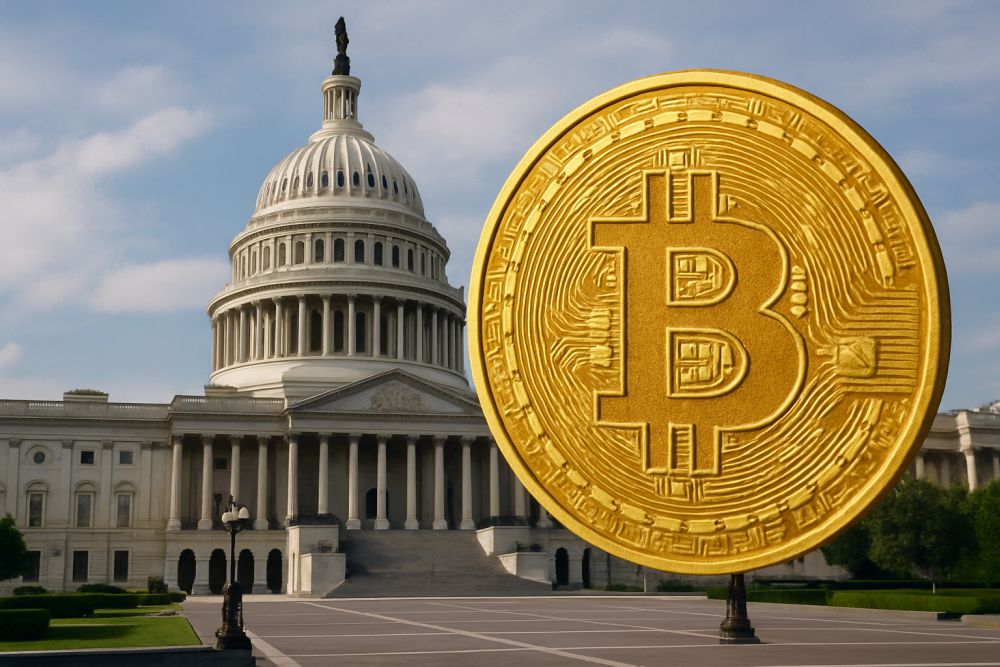
A Historic Week for Crypto Policy in the U.S.
In a sweeping and coordinated move, the U.S. House of Representatives has officially designated July 14–18 as “Crypto Week,” a period expected to mark a watershed moment for cryptocurrency legislation in America. During this tightly packed week, lawmakers are fast-tracking three major bills that aim to bring long-awaited regulatory clarity to the digital asset space: the GENIUS Act, the Digital Asset Market Structure Clarity Act, and the CBDC Anti-Surveillance State Act.
These legislative efforts could transform how cryptocurrencies are issued, traded, taxed, and integrated into mainstream finance. They also represent a rare bipartisan alignment in Washington’s deeply polarized environment. With crypto markets watching closely, this week may signal the U.S. is finally ready to lead the world in responsible crypto innovation.
Why Crypto Week Matters: Clarity After Years of Ambiguity
For years, U.S. crypto firms have been navigating a legal gray zone. Core issues like whether digital tokens are securities or commodities, and which federal agency should regulate them, have remained unresolved. The result has been a patchwork of enforcement actions, lawsuits, and conflicting guidance that created uncertainty for investors, businesses, and developers.
The Digital Asset Market Structure Clarity Act, informally known as the “Clarity Act,” aims to change that. It proposes a formal distinction between digital commodities such as Bitcoin and digital securities, which would be regulated under SEC jurisdiction. Bitcoin and similar decentralized assets would fall under the oversight of the Commodity Futures Trading Commission (CFTC).
This division would simplify compliance procedures for trading platforms like Coinbase, Kraken, and Gemini. For years, these exchanges have faced overlapping lawsuits and unclear enforcement standards. Industry leaders have long demanded clarity, warning that without it, innovation would continue to migrate offshore to more favorable regulatory environments.
The Clarity Act, if passed, would give the crypto industry a clear path forward and potentially unlock a new era of responsible growth, investment, and development in the U.S. market.
GENIUS Act: Legalizing Stablecoins with Guardrails
Perhaps the most impactful bill being discussed during Crypto Week is the GENIUS Act, short for Guiding and Establishing National Innovation for U.S. Stablecoins. Passed by the Senate in mid-June with strong bipartisan support (68–30 vote), the GENIUS Act is now heading to the House floor for a potential vote.
This bill introduces a regulatory framework for the issuance of fiat-backed stablecoins. It requires that any stablecoin be backed 1:1 with cash or cash equivalents and mandates frequent third-party audits to ensure transparency and solvency. Algorithmic or uncollateralized stablecoins like the ill-fated TerraUSD would be explicitly prohibited as payment instruments.
The GENIUS Act is not just a piece of legislation—it’s a green light to corporate America. Retail giants like Walmart and Amazon have reportedly expressed interest in launching their own stablecoins, potentially bypassing credit card fees and increasing transaction speed and cost-efficiency. Approval of this bill could catalyze a wave of stablecoin adoption across mainstream commerce.
Even President Donald Trump has endorsed the legislation, calling it a bold step toward making the United States “the undisputed leader in digital assets.” Trump’s backing also stems from his financial interests he holds a stake in World Liberty Financial, which launched the stablecoin USD1 earlier in the year.
CBDC Anti-Surveillance Bill: The Privacy Battle Heats Up
While two bills promote crypto innovation, the third is a defensive play aimed at halting government-led digital currency efforts. The CBDC Anti-Surveillance State Act seeks to prohibit the Federal Reserve from developing or issuing a central bank digital currency (CBDC).
Proponents argue that a U.S. CBDC would pose a grave threat to individual financial privacy. They fear a programmable digital dollar could be used to monitor or restrict how citizens spend their money. The bill echoes growing concerns about government surveillance and the potential abuse of centralized power in a digitized economy.
Though this proposal struggled to gain traction in 2024, it has found renewed momentum under a GOP-controlled House. Many Republican lawmakers are tying the bill to broader libertarian concerns about state overreach and the expanding role of the Federal Reserve.
However, critics, including many House Democrats, warn that banning a CBDC could weaken America’s competitive edge. China has already launched pilot programs for its own digital yuan, and other countries are advancing rapidly in this area. A total ban, they argue, might stifle innovation before proper research and debate can even take place.
The Schedule: Key Dates and Legislative Milestones
Crypto Week is packed with high-stakes proceedings. According to the congressional agenda, here’s how the week is expected to unfold:
- Monday, July 14: The Rules Committee begins formal review of all three bills.
- Tuesday, July 15: Full House votes may take place for both the GENIUS and Clarity Acts.
- Wednesday, July 16: The House Ways and Means Committee hosts a hearing focused on digital asset taxation and compliance.
- Friday, July 18: If approved, the GENIUS Act could be signed into law by President Trump by week’s end.
House Financial Services Chairman French Hill described the initiative as a “watershed moment for American financial leadership.” Lawmakers on both sides seem to agree that the time for vague interpretations and enforcement via lawsuits is over. Concrete rules are coming.
Crypto Markets React: Bullish Momentum Builds
Markets are already reacting to the momentum on Capitol Hill. On Monday, Bitcoin surged past $121,000, setting a new all-time high. Ethereum also gained, trading above $3,050. Altcoins like Solana (SOL) and Avalanche (AVAX) followed suit, recording daily gains of up to 5%.
Trading activity on U.S. exchanges spiked significantly. Analysts at Bitwise attributed the uptick to renewed confidence from institutional investors. With regulatory risk decreasing, digital assets are becoming more appealing to hedge funds, asset managers, and corporations.
Publicly listed crypto firms also enjoyed a bounce. Michael Saylor’s Strategy Inc. saw its stock price rise 4% in a single day. Coinbase, Riot Platforms, and Hut 8 all opened higher, benefiting from the rising tide of optimism.
According to IG analyst Tony Sycamore, this week could represent “one of the most structurally bullish moments in crypto’s legal history.”
Corporate Crypto Adoption Accelerates
The legislative momentum is accelerating adoption among U.S. companies. According to Blockware Intelligence, 141 publicly traded companies now hold Bitcoin in their corporate treasuries. That number could increase by 25% before the year ends.
In the second quarter of 2025 alone, corporations acquired 159,107 BTC, setting a new record for institutional accumulation. Strategy Inc. remains the largest corporate holder, with over 597,000 BTC valued at roughly $71 billion. The company recently ended a three-month acquisition pause following a $4.2 billion capital raise.
Smaller firms are also joining the wave. Meal-kit provider DDC Enterprise has partnered with Animoca Brands to manage a $100 million BTC reserve strategy. The company initiated its crypto journey in May with a modest 21 BTC purchase and plans to scale its holdings to 5,000 BTC within three years.
Animoca’s co-founder, Yat Siu, described the partnership as a blueprint for how mainstream businesses can adopt crypto with minimal operational friction.
What Will Happen If These Bills Pass?
If the GENIUS and Clarity Acts become law, it would represent the first comprehensive federal framework for digital assets in the United States. Stablecoin providers would be regulated like traditional financial entities, offering consumers safer and more transparent payment options. Meanwhile, blockchain developers would finally have clarity about how their tokens should be structured and disclosed.
In contrast, passage of the CBDC Anti-Surveillance State Act would delay or completely derail any potential U.S. central bank digital currency, thereby preserving the dominance of decentralized alternatives and private sector solutions.
Ultimately, Crypto Week could shift the narrative from crypto as a speculative asset to crypto as critical infrastructure for the future U.S. economy.
Conclusion: Crypto Week Sets the Stage for America’s Digital Finance Future
This week may be remembered as the moment America turned the page on crypto uncertainty. By tackling the most urgent legal gaps around stablecoins, token classification, taxation, and financial privacy, Congress is signaling that digital assets are now a national economic priority.
Whether these bills pass or stall, the level of attention and urgency from lawmakers is a clear message: the future of finance will be digital, and the U.S. intends to shape it.









