





















































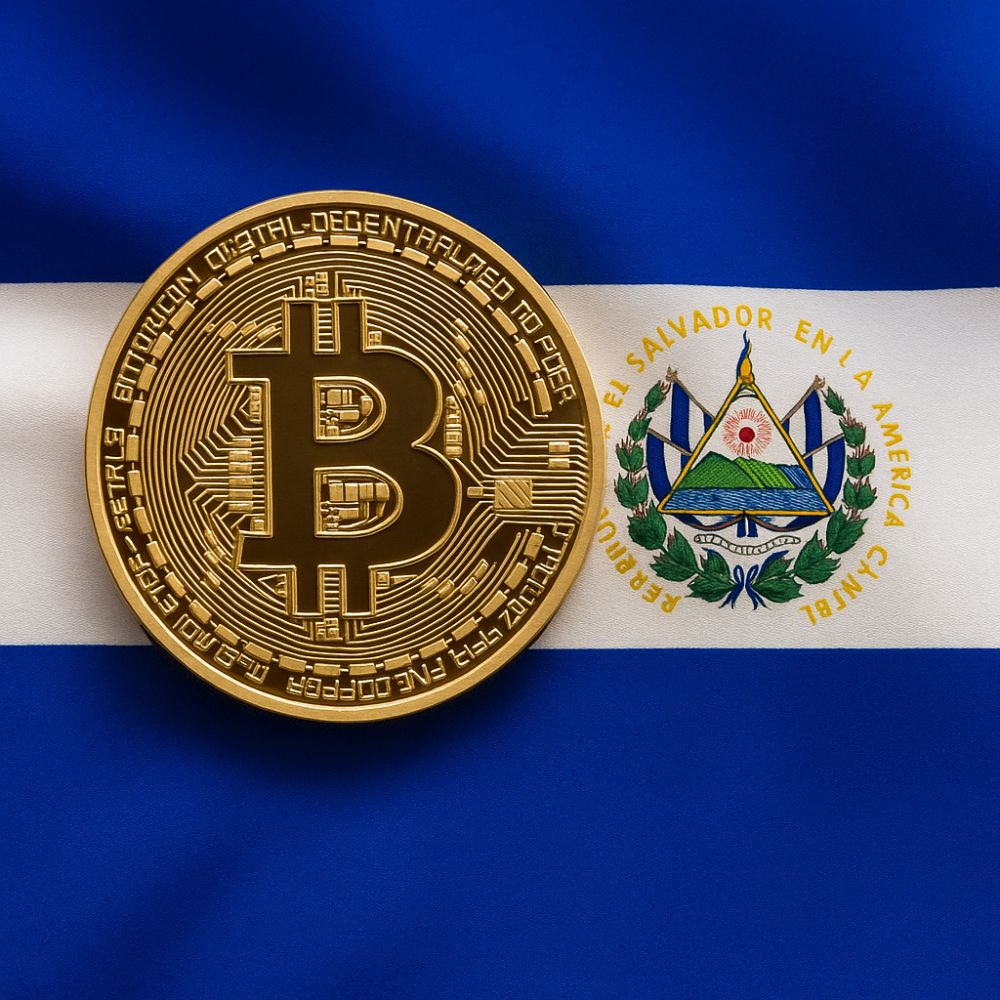
El Salvador Strengthens Its Bitcoin Position on the Global Stage
El Salvador has once again captured global attention after confirming that its national Bitcoin reserves have grown to approximately 7,500 BTC. Based on disclosures from President Nayib Bukele’s administration, these holdings are now valued at roughly 667 million dollars, depending on market conditions. This development reinforces the country’s long standing commitment to Bitcoin as a strategic financial asset and signals that its crypto focused economic vision remains firmly intact.
While many governments continue to debate the risks and benefits of digital assets, El Salvador has chosen a decisive path. The country’s continued accumulation of Bitcoin places it among a very small group of nations actively holding BTC as part of sovereign reserves. This strategy is not accidental or reactive. Instead, it reflects a calculated approach to long term economic positioning in a rapidly evolving global financial system.
The increase to 7,500 BTC highlights how El Salvador views Bitcoin not merely as a speculative asset, but as a tool for monetary diversification, technological advancement, and international differentiation. Despite market volatility and regulatory adjustments, the government continues to treat Bitcoin as a foundational component of its national financial architecture.
How El Salvador Built Its Bitcoin Holdings
El Salvador’s Bitcoin journey began in earnest with the introduction of the Bitcoin Law, which made BTC legal tender in the country. While that status was later adjusted in January 2025 to remove mandatory acceptance, the underlying strategy of accumulation never changed. Instead, the legal recalibration allowed the government to refine its approach without abandoning its broader crypto objectives.
President Nayib Bukele has remained the central figure behind this policy. Through consistent public communication and transparent announcements, Bukele has repeatedly confirmed that El Salvador continues to acquire Bitcoin on a regular basis. His well known policy of purchasing one Bitcoin per day, first announced in November 2022, remains a symbolic and practical expression of the country’s commitment.
These daily purchases, combined with opportunistic buys during market dips, have gradually expanded the nation’s holdings. The Bitcoin Office of El Salvador plays a critical role in managing these assets, overseeing custody, reporting reserve data, and coordinating strategy across government entities. This institutional framework has helped normalize Bitcoin as part of state level financial operations.
Strategic Motivation Behind National Bitcoin Accumulation
El Salvador’s decision to hold 7,500 BTC is rooted in several strategic motivations. First, Bitcoin offers an alternative store of value outside traditional fiat systems. For a country historically dependent on foreign currencies and external financial institutions, BTC represents a form of monetary sovereignty that operates independently of central banks.
Second, Bitcoin aligns with El Salvador’s broader goal of technological modernization. By positioning itself as a crypto friendly nation, the country has attracted global attention, tourism, and investment. Bitcoin themed initiatives, infrastructure projects, and educational programs have helped brand El Salvador as a pioneer in digital finance.
Third, long term accumulation reflects confidence in Bitcoin’s future role within global markets. Rather than attempting to time short term price movements, El Salvador’s strategy emphasizes patience and scale. Holding through volatility suggests that the government views Bitcoin as a generational asset rather than a tactical trade.
Financially, this approach also allows El Salvador to benefit from potential upside as global adoption increases. If more institutions and governments follow similar paths, early adopters like El Salvador could gain both economic and geopolitical advantages.
Market Impact and Global Perception
The confirmation of 7,500 BTC in national reserves has implications beyond El Salvador’s borders. It sends a message to markets that Bitcoin is increasingly being treated as a reserve grade asset, not just by corporations, but by sovereign states. This narrative shift has the potential to influence how Bitcoin is perceived by policymakers, investors, and financial institutions worldwide.
Other countries closely monitoring El Salvador’s experience may see its strategy as a case study. While not all governments are prepared to replicate this model, the existence of a working example lowers the psychological barrier to entry. As Bitcoin matures, national level experimentation becomes harder to dismiss.
El Salvador’s continued accumulation also contributes to supply dynamics. With a fixed maximum supply of 21 million BTC, every coin held long term by a government reduces available circulation. Over time, this could amplify scarcity effects, particularly if additional states begin holding Bitcoin in treasury reserves.
Despite criticism from international financial bodies in earlier stages, El Salvador has maintained its course. The absence of a forced reversal suggests that the strategy has reached a level of internal stability, even as regulatory frameworks evolve.
Adjusting Policy Without Abandoning Bitcoin
One of the most misunderstood aspects of El Salvador’s Bitcoin policy is the legal adjustment made in early 2025. Removing mandatory legal tender status did not signal retreat. Instead, it represented a pragmatic recalibration designed to reduce friction while preserving accumulation.
By making Bitcoin optional rather than compulsory for everyday transactions, the government addressed concerns raised by businesses and international partners. At the same time, it retained full authority to continue buying and holding BTC at the sovereign level.
This dual approach allows El Salvador to separate consumer level adoption from state level strategy. Bitcoin remains central to national reserves, while individuals and businesses are free to choose how they engage with it. This flexibility may prove critical for long term sustainability.
Importantly, the legal change did not affect the Bitcoin Office or the government’s purchasing policy. The one Bitcoin per day strategy remains in effect, reinforcing consistency and signaling confidence.
Bitcoin as a Long Term National Asset
Holding 7,500 BTC positions El Salvador uniquely among nations. Unlike short term fiscal tools, Bitcoin does not rely on external approval, debt issuance, or monetary expansion. Its value proposition lies in scarcity, decentralization, and global accessibility.
For El Salvador, this translates into a hedge against currency debasement, geopolitical pressure, and systemic financial risks. While Bitcoin’s price can fluctuate dramatically in the short term, its long term narrative aligns with the country’s desire for economic independence.
The government’s willingness to hold through bear markets further strengthens credibility. Rather than reacting emotionally to downturns, El Salvador has treated price weakness as ann opportunity to accumulate. This behavior mirrors strategies commonly seen among long term institutional investors.
As Bitcoin adoption expands across payment networks, financial products, and settlement layers, early holders stand to benefit disproportionately. El Salvador’s reserves could one day serve as collateral, strategic leverage, or a foundation for future financial innovation.
Influence on Other Governments and Institutions
El Salvador’s Bitcoin strategy may continue to influence broader policy discussions. As more governments explore digital currencies, reserves diversification, and blockchain infrastructure, Bitcoin increasingly appears in strategic conversations.
Some nations may prefer indirect exposure through ETFs or mining partnerships, while others may consider direct holdings. In either case, El Salvador’s experience provides valuable insights into operational, regulatory, and political considerations.
The country’s transparent communication around holdings also sets a precedent. By publicly acknowledging reserve levels and acquisition strategies, El Salvador normalizes the idea of state owned Bitcoin. This transparency could encourage similar disclosures elsewhere.
Over time, a growing number of governments holding Bitcoin could fundamentally alter how BTC is categorized within global finance. What began as an alternative experiment may evolve into a recognized reserve asset class.
The Road Ahead for El Salvador’s Bitcoin Policy
Looking forward, El Salvador shows no indication of slowing its Bitcoin accumulation. The combination of daily purchases, institutional management, and political support suggests continuity rather than reversal.
Future developments may include deeper integration with financial infrastructure, expanded custody solutions, and potential use of Bitcoin reserves in sovereign financial instruments. While the government remains cautious, it continues to experiment within controlled parameters.
As global macroeconomic uncertainty persists, Bitcoin’s appeal as a non sovereign asset may strengthen. El Salvador’s early and sustained commitment positions it advantageously in this evolving landscape.
Whether Bitcoin ultimately fulfills all expectations remains to be seen. However, El Salvador’s strategy demonstrates conviction, patience, and long term vision that few governments have been willing to embrace.
El Salvador’s Growing Bitcoin Reserves
El Salvador’s expansion to 7,500 BTC marks another milestone in the ongoing convergence of nation states and digital assets. By continuing to accumulate Bitcoin despite market cycles and regulatory adjustments, the country reinforces its role as a pioneer in sovereign crypto adoption.
This strategy reflects more than political branding. It represents a deliberate effort to redefine financial sovereignty, embrace technological change, and position the nation for a digital future.
As global interest in Bitcoin continues to evolve, El Salvador’s approach will remain under close scrutiny. Whether viewed as bold innovation or calculated risk, its growing reserves ensure that the country remains at the center of the global crypto conversation.