




















































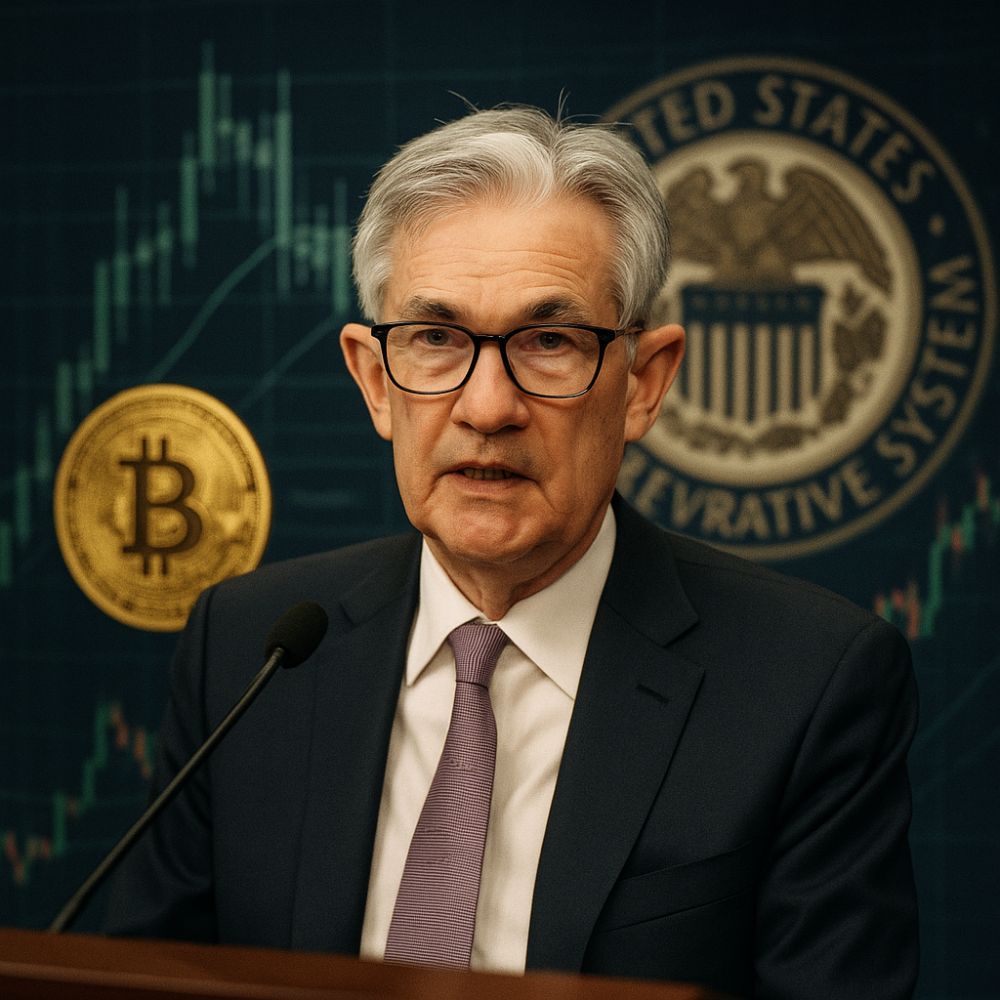
A Turning Point in U.S. Monetary Policy
In a move that signals a major shift in the Federal Reserve’s policy stance, the Fed has reduced interest rates by 25 basis points, bringing the federal funds target range to 3.75%–4.00%, and confirmed that it will end balance sheet reductions starting December 1. The decision, widely anticipated by analysts, reflects the Fed’s growing concern about slowing economic momentum and tightening credit conditions.
This marks the second consecutive rate cut in 2025, following months of debate about inflationary persistence and softening labor market data. The announcement instantly rippled through global financial markets, lifting risk sentiment in some sectors while creating uncertainty in others. Crypto markets, gold, and equities all saw heightened volatility as investors weighed the implications of easier monetary policy.
While lower rates often encourage borrowing and investment, they also raise new questions about inflation control, asset bubbles, and long-term economic stability.
Fed’s 25 Basis Point Rate Cut Explained
The latest rate decision came with clear divisions inside the Federal Open Market Committee (FOMC). Two members — Kansas Fed Chair Jeffrey R. Schmid and Director Stephen I. Miran — dissented, reflecting growing disagreement about the pace and direction of monetary easing.
In a statement accompanying the decision, Fed Chair Jerome H. Powell emphasized that while inflation has cooled compared to 2023–2024 peaks, “the path toward price stability remains uncertain.” Powell reiterated that the rate cut is designed to “support continued economic expansion amid evolving global financial conditions.”
The policy statement also announced the end of balance sheet reduction by December 1, meaning the Fed will stop shrinking its holdings of Treasuries and mortgage-backed securities. This effectively injects liquidity back into financial markets, loosening monetary conditions further.
Economists describe this dual move – cutting rates while halting balance sheet runoff – as a clear pivot toward an accommodative stance, signaling that the Fed wants to prevent a sharper slowdown as consumer spending and corporate hiring ease.
How the Market Reacted: Stocks, Bonds, and Crypto
Wall Street reacted cautiously but positively to the announcement. The S&P 500 and Nasdaq initially spiked, with investors betting that lower borrowing costs could revive corporate earnings. However, bond yields fell sharply, reflecting expectations of slower growth and potential inflationary pressure ahead.
In the cryptocurrency market, the reaction was mixed. Bitcoin (BTC) showed modest volatility immediately after the news, trading at $111,608.14 with a market capitalization of $2.23 trillion, according to CoinMarketCap. The world’s largest cryptocurrency slipped by 0.96% in 24 hours but remained up 4.41% over the week, suggesting cautious optimism among investors.
Crypto analysts drew parallels with 2019, when the Fed’s previous rate-cut cycle preceded a mid-term Bitcoin rally as liquidity improved across global markets. Historically, Bitcoin has responded positively to lower interest rates, as investors seek non-yielding assets that perform better when real rates decline.
Still, some traders remain skeptical. A stronger dollar and persistent inflation could cap crypto gains, at least in the short term.
Ending Balance Sheet Reduction: Why It Matters
The Fed’s balance sheet reduction, also known as quantitative tightening (QT), has been one of the main tools for withdrawing liquidity from the economy. Since 2022, the Fed has allowed trillions in Treasury and mortgage securities to roll off its balance sheet, reducing excess cash in the financial system.
By ending QT, the Fed is effectively returning to a neutral or slightly expansionary monetary posture, similar to early 2020 when liquidity injections stabilized markets during global disruptions.
This policy change is especially significant for risk assets like Bitcoin, Ethereum, and equities. More liquidity in the system typically means higher demand for assets perceived as inflation hedges or speculative vehicles. As a result, the crypto market could experience renewed inflows over the coming months.
Market strategist Mark Newton from Fundstrat Global Advisors commented, “The end of QT is as powerful as a rate cut itself. It signals that the Fed wants markets to remain liquid, which historically boosts both tech stocks and cryptocurrencies.”
Inflation, Employment, and Policy Dilemmas
While investors cheer looser policy, the Fed faces a delicate balancing act. Inflation has fallen from its 2023 highs but remains above the 2% target. Meanwhile, job growth has slowed, wage pressures persist, and consumer confidence has wavered.
The central bank’s decision to ease policy now suggests it believes inflation is manageable but that the risk of recession is growing. However, some economists warn that cutting rates too early could reignite inflation, forcing the Fed to reverse course later in 2026.
Political considerations also loom large. With presidential elections approaching, the Fed’s actions are under intense scrutiny from both policymakers and the public. A misstep could be interpreted as political bias or loss of control over inflation expectations.
Crypto Market Outlook Under the New Fed Policy
Digital asset markets are among the most sensitive to liquidity cycles, and the Fed’s latest decision has already sparked debate across the crypto community.
According to Coincu Research, monetary easing typically favors risk assets such as cryptocurrencies because it reduces the opportunity cost of holding non-interest-bearing tokens. The report notes that “policy shifts of this kind often precede strong inflows into DeFi protocols and stablecoin markets, reflecting renewed investor confidence.”
Key indicators to watch in the coming weeks include:
- Total Value Locked (TVL) in DeFi ecosystems, which may signal rising capital allocation.
- Bitcoin exchange outflows, often a sign of long-term accumulation.
- Stablecoin issuance trends, indicating fresh liquidity entering the crypto space.
If history is any guide, Bitcoin and Ethereum could benefit from these dynamics. After the Fed’s previous rate-cut cycle in 2019–2020, Bitcoin more than tripled in value within a year as global liquidity conditions improved.
Gold, Dollar, and Alternative Assets
Gold prices also moved sharply following the Fed’s announcement, briefly reclaiming the $3,900 per ounce level before retreating as the dollar rebounded. Investors often view gold and Bitcoin as complementary inflation hedges, and both tend to thrive during periods of monetary easing.
However, analysts caution that unlike 2020, global liquidity may not expand as quickly this time due to fiscal constraints and geopolitical risks. The interplay between gold and digital assets could define the next phase of asset diversification among institutional investors.
As market strategist Lydia Bessant observed, “The correlation between gold and Bitcoin has tightened since 2024, indicating that investors are treating both as dual hedges against currency debasement and geopolitical instability.”
Broader Implications for Global Markets
The Fed’s decision could influence central banks around the world, especially those grappling with their own inflation and debt challenges. Emerging economies may now find it easier to lower rates without triggering capital flight.
The European Central Bank, Bank of England, and Bank of Japan are all expected to reassess their monetary paths in light of the Fed’s pivot. If coordinated easing takes hold, global liquidity could expand faster than anticipated, potentially fueling another rally across cryptocurrencies, tech stocks, and commodities.
However, the underlying risks remain. Excess liquidity can amplify speculative bubbles, particularly in volatile sectors like crypto. Policymakers will need to balance growth with financial stability, a task that becomes increasingly complex in a digital-asset-driven economy.
What Comes Next
The Fed’s latest actions underscore a new phase in the global economic cycle. With rates now trending downward and quantitative tightening ending, markets are poised for a period of renewed liquidity – but also heightened risk.
For cryptocurrency investors, the environment may prove favorable in the medium term. Historically, lower rates and increased liquidity have preceded major crypto bull markets. However, investors must remain alert to inflation spikes, regulatory changes, and unexpected policy reversals.
In short, the Fed’s 25-basis-point rate cut and balance sheet halt mark the beginning of what could be a transformative period for financial markets. Whether this policy shift fuels a sustained crypto rally or introduces new volatility will depend on how global capital reacts to a world once again awash in liquidity.