


























































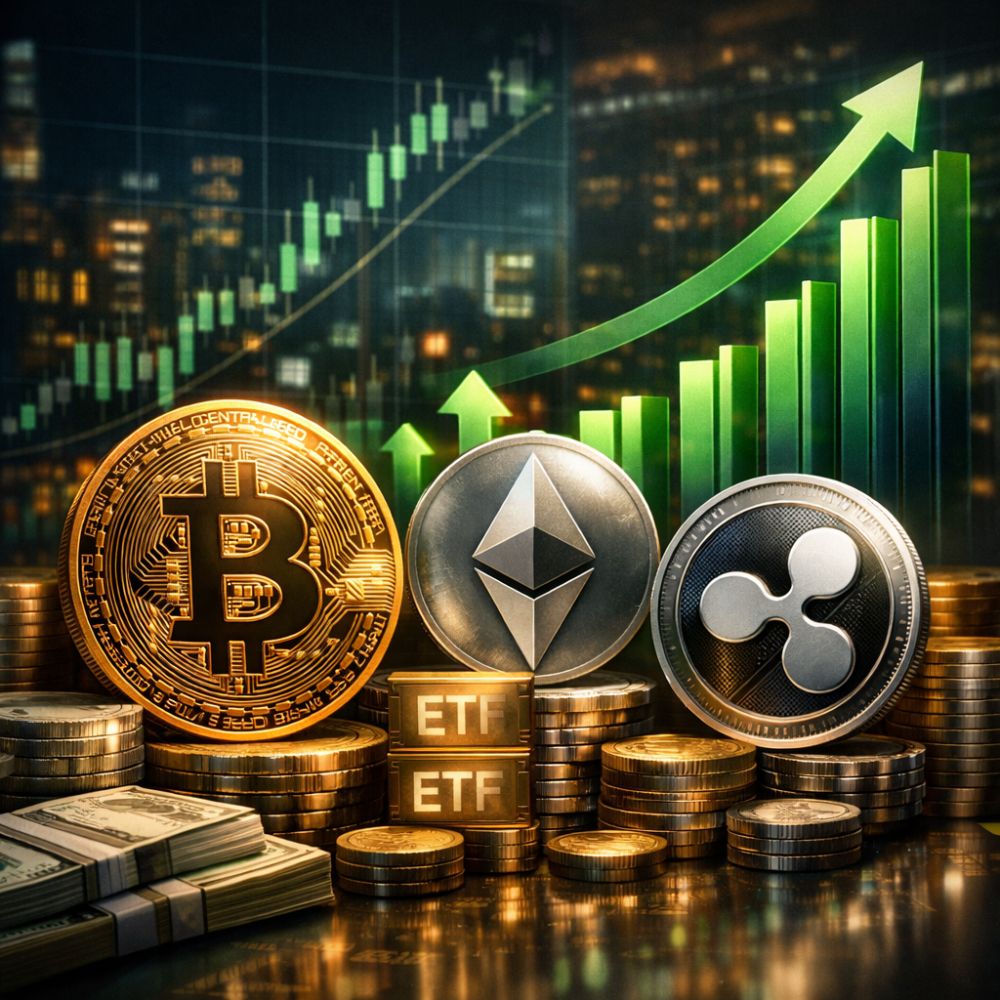
The digital asset landscape is witnessing a significant shift as institutional investors pour fresh capital into exchange-traded funds. After a period of relative uncertainty and price consolidation, the latest market data reveals a resurgent interest in regulated crypto investment vehicles. This trend is particularly evident in the spot ETF market for the three largest digital assets: Bitcoin, Ethereum, and XRP. As the global financial ecosystem continues to integrate blockchain technology, these inflows represent more than just a temporary price rally- they signal a maturing asset class that is becoming a staple in diversified institutional portfolios.
The current momentum is driven by a combination of macroeconomic factors and a growing comfort level among traditional fund managers with the crypto ecosystem. Financial institutions that previously remained on the sidelines are now utilizing spot ETFs as their primary entry point. This shift is crucial because it provides deeper liquidity and reduces the volatility typically associated with retail-driven market cycles. By funneling capital through regulated channels, these investors are establishing a more stable foundation for the next phase of the digital economy.
Bitcoin Remains the Primary Magnet for Institutional Wealth
Bitcoin continues to lead the charge in the ETF sector, reclaiming its position as the preferred digital gold for global investors. Recent reports indicate that US-based spot Bitcoin ETFs have seen consecutive days of net inflows, with hundreds of millions of dollars entering the market in single sessions. Large asset managers like BlackRock and Fidelity are at the forefront of this movement, capturing the lion’s share of new capital. This sustained demand suggests that Bitcoin’s role as a hedge against traditional market instability is stronger than ever.
The appeal of Bitcoin ETFs lies in their simplicity and regulatory oversight. For many large-scale investors, managing private keys or dealing with unregulated exchanges remains a significant barrier to entry. The ETF structure removes these hurdles, allowing pension funds, insurance companies, and family offices to gain exposure to Bitcoin price movements through familiar brokerage accounts. As Bitcoin approaches new price milestones, the steady flow of capital into these funds acts as a bullish indicator for the broader market, suggesting that the current upward trajectory is backed by serious, long-term conviction.
Ethereum ETFs Experience a Rebound in Investor Sentiment
While Bitcoin often dominates the headlines, Ethereum is carving out its own success story in the institutional space. After a period of softer demand, Ethereum spot ETFs have returned to a positive growth trajectory. Capital is flowing back into ETH-based products as investors recognize the value of the leading smart-contract platform. The recent inflow streak for Ethereum suggests that the market is beginning to differentiate between the “store of value” proposition of Bitcoin and the “utility and infrastructure” value of the Ethereum network.
This diversification is a healthy sign for the industry. Institutional players are no longer viewing the crypto market as a monolithic entity but are instead building sophisticated portfolios that include multiple assets. The renewed interest in Ethereum is also fueled by developments in the decentralized finance and non-fungible token sectors, which continue to run on the Ethereum blockchain. As these ecosystems grow, the underlying asset becomes more attractive to investors seeking exposure to the future of programmable finance. The steady rise in Ethereum ETF inflows confirms that the asset remains a cornerstone of the digital financial revolution.
XRP Emerges as a Surprise Leader in Altcoin Fund Adoption
Perhaps the most striking development in recent weeks is the surge of interest in XRP-linked investment products. Data shows that XRP ETFs are attracting a disproportionate share of new capital entering the altcoin sector. In many cases, XRP has managed to maintain steady inflows even on days when the broader market faced selling pressure. This resilience has caught the attention of analysts who now view XRP as a potential safe haven within the crypto market. The asset’s focus on cross-border payments and its established partnerships with global banking institutions provide a unique value proposition that resonates with professional investors.
The growth of XRP ETF assets, which have recently crossed significant milestones, highlights a growing demand for assets with real-world utility. Institutional investors are drawn to XRP because of its clear use case in solving inefficiencies in the global remittance industry. Furthermore, the regulatory clarity that has begun to emerge around the asset in various jurisdictions has lowered the risk profile for many conservative funds. With XRP ETFs capturing a significant percentage of all new altcoin fund capital, it is clear that this asset is no longer just a retail favorite but a serious institutional contender.
The Broader Implications of Regulated Crypto Inflows
The collective rise in Bitcoin, Ethereum, and XRP ETF inflows points toward a fundamental transformation of the global financial system. We are moving away from an era where crypto was seen as a niche interest for tech enthusiasts and toward a future where digital assets are integrated into the core of global finance. These inflows provide the necessary liquidity to support larger trades and reduce the impact of “whale” movements on market prices. This leads to a more mature and efficient market environment that is attractive to an even wider range of participants.
Looking ahead, the success of these spot ETFs is likely to pave the way for more diverse crypto-based financial products. As regulators become more comfortable with the current offerings, we may see the introduction of multi-asset funds, yield-bearing ETFs, and products focused on emerging sectors like Layer-2 scaling solutions or decentralized identity. The current wave of capital is just the beginning. As more institutions complete their due diligence and allocate even small percentages of their total assets under management to crypto, the potential for further growth remains immense. The digital asset market is no longer a speculative bubble- it is a rapidly expanding financial frontier.