


























































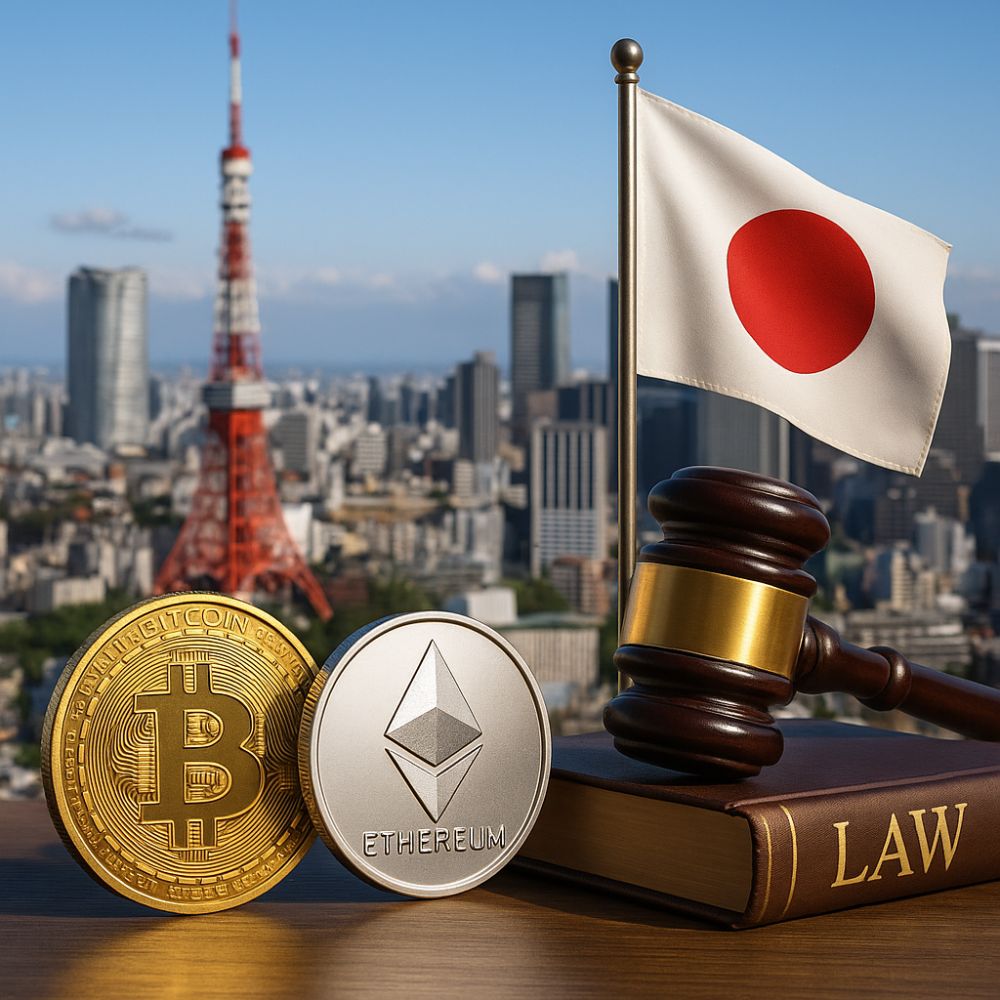
: Japan’s Historic Step Toward Full Crypto Regulation
Japan is once again stepping into the global spotlight for cryptocurrency policy. After years of cautious oversight, the country is preparing to introduce new regulations targeting crypto insider trading, a move that could redefine how digital assets are treated within one of the world’s largest economies.
The Securities and Exchange Surveillance Commission (SESC), Japan’s top financial watchdog, will soon receive expanded powers to investigate and penalize insider trading involving cryptocurrencies, something that has remained largely unregulated under current law.
This landmark development follows a surge in digital asset participation across Japan. With nearly 8 million active crypto accounts in 2025 and an exploding interest in blockchain innovation, regulators are determined to balance innovation with investor protection.
If passed, the proposed reforms will bring crypto assets under the same legal framework as stocks and bonds, marking a monumental shift toward mainstream financial recognition and transparency.
1. Background: How Japan Became a Global Crypto Pioneer
Japan has long played a leading role in the global digital asset landscape. After the Mt. Gox collapse in 2014, Japan became one of the first nations to establish legal guidelines for cryptocurrency exchanges.
Under the Payment Services Act (PSA) and Financial Instruments and Exchange Act (FIEA), Japan’s Financial Services Agency (FSA) created a regulatory framework that allowed exchanges to operate legally, provided they met strict compliance and KYC (Know Your Customer) requirements.
However, one key area remained untouched: insider trading in crypto markets.
While Japan enforces strict insider trading laws for equities and securities, the FIEA does not currently apply to digital assets. This has left a significant loophole – one that bad actors could exploit by using non-public information to trade tokens before major announcements or exchange listings.
Now, that loophole is closing.
2. The Upcoming Reform: Insider Trading Laws to Include Crypto
Japan’s Financial Services Agency (FSA) and Securities and Exchange Surveillance Commission (SESC) have confirmed plans to amend the FIEA to include digital assets within its insider trading provisions.
This amendment would make Japan the first major economy in Asia to explicitly ban and punish insider trading in cryptocurrency markets.
Under the proposed law:
- Crypto assets will be treated similarly to stocks and bonds under insider trading statutes.
- The SESC will have authority to monitor and investigate suspicious trading activity across registered crypto exchanges.
- Market participants using non-public information for personal gain could face criminal prosecution, fines, and potential imprisonment.
According to sources close to the FSA, the new rules are expected to be submitted to Japan’s Diet (parliament) in 2026, with implementation likely before the end of that year.
3. Why the Reform Matters: Crypto Insider Trading Is on the Rise
The rapid growth of Japan’s crypto market has made regulatory oversight more urgent. As of mid-2025, the nation boasts more than 7.88 million active cryptocurrency accounts, a number that has grown over 400% in just five years.
However, as trading volumes surged, so did allegations of insider activity. Several exchanges and token issuers have faced accusations of listing leaks and coordinated buying before major announcements.
Unlike traditional securities, crypto projects often lack identifiable issuers or formal corporate structures, making it difficult to define who qualifies as an insider. This regulatory gray zone has left Japanese authorities unable to prosecute suspicious activity — until now.
The upcoming legal changes aim to bring clarity, enforcement, and investor confidence back to the fast-moving digital asset ecosystem.
4. The Role of the SESC and FSA: Expanding Oversight and Authority
Japan’s Securities and Exchange Surveillance Commission (SESC) has traditionally focused on equities, derivatives, and foreign exchange markets. Under the upcoming amendment, its jurisdiction will expand to cover digital asset transactions.
The Financial Services Agency (FSA) will supervise the SESC’s enforcement efforts and guide the creation of a dedicated crypto compliance unit. This task force will be responsible for identifying suspicious transactions, auditing crypto exchanges, and issuing sanctions when necessary.
In addition, Japan’s Virtual and Crypto Assets Exchange Association (JVCEA) – a self-regulatory body composed of licensed exchanges — will coordinate with the SESC to implement real-time monitoring systems.
This multi-layered approach demonstrates Japan’s intention to treat digital assets with the same seriousness as traditional finance, ensuring a safer market environment for retail and institutional participants alike.
5. Reclassifying Crypto as a Financial Product
Perhaps the most consequential aspect of Japan’s regulatory overhaul is the plan to reclassify cryptocurrencies as financial products under the FIEA.
Currently, crypto assets are taxed as miscellaneous income, subject to rates as high as 55% on capital gains. Under the proposed changes, cryptocurrencies would be reclassified similarly to securities, reducing capital gains tax to approximately 20%.
This shift would have several benefits:
- Encouraging institutional investment: Lower taxes and legal clarity attract hedge funds, banks, and corporations.
- Aligning Japan with global standards: The new classification would match tax treatment in markets like the U.S. and the EU.
- Boosting domestic innovation: Reduced tax pressure encourages Japanese startups and blockchain developers to remain in-country instead of relocating to Singapore or Dubai.
As economist Holger Zschaepitz notes, this reform could make Japan “one of the most crypto-friendly developed economies in the world.”
6. Political Momentum: The Role of Sanae Takaichi
Driving much of this reform is Sanae Takaichi, a prominent Japanese lawmaker and vocal advocate for technology sovereignty and digital finance innovation.
Takaichi has long argued that Japan should position itself as the world’s regulatory leader in cryptocurrency, combining strict oversight with supportive tax and innovation policies.
Her growing political influence and alignment with pro-innovation lawmakers have added momentum to the FSA’s reform agenda.
If successful, Japan could become the global benchmark for responsible crypto regulation — striking a balance between market freedom and investor protection.
7. Challenges Ahead: Defining “Insider Information” in a Decentralized World
Despite the progress, regulators face several practical challenges.
Unlike traditional markets, where insider information comes from corporate executives or board members, crypto ecosystems are decentralized and often lack identifiable issuers.
Determining what qualifies as “non-public information” can therefore be extremely complex.
For example:
- A blockchain developer with access to unannounced code updates could be an insider.
- Exchange employees aware of upcoming listings could be insiders.
- Even validators or governance participants might possess material, non-public information.
Japan’s regulators must therefore create clear, adaptable definitions to ensure fairness while avoiding overreach. This is one of the key reasons why the SESC and FSA are forming a joint working group of crypto experts, technologists, and legal scholars to refine the details before the law’s final submission.
8. Strengthening Investor Confidence and Market Integrity
The ultimate goal of Japan’s crypto reform is not punishment – it is restoring market integrity.
Transparent regulation encourages investor trust, reduces manipulation, and strengthens the reputation of Japan’s digital economy.
By aligning crypto with the same legal protections as traditional assets, the FSA hopes to attract foreign investment and establish Japan as the regional financial hub for regulated digital assets.
Moreover, exchanges operating in Japan would be held to higher operational standards, including:
- Mandatory reporting of suspicious transactions.
- Real-time surveillance of wallet activity.
- Regular independent audits and transparency reports.
These new measures ensure that investors can trade digital assets safely and confidently, knowing that misconduct will be identified and penalized.
9. Industry Reactions: Crypto Community Divided
The response from Japan’s crypto community has been mixed.
Many institutional players and licensed exchanges have welcomed the clarity, arguing that proper regulation legitimizes the market and attracts long-term capital.
However, some decentralized finance (DeFi) advocates worry that over-regulation could stifle innovation. They fear that too much oversight could drive projects offshore or discourage small startups from entering the market.
Still, most analysts agree that the benefits outweigh the risks. In the long run, regulatory clarity promotes maturity, paving the way for mainstream adoption and sustainable growth.
10. Japan’s Broader Vision: Becoming a Global Leader in Digital Finance
Japan’s ambition extends far beyond preventing insider trading. The FSA and Ministry of Finance envision a comprehensive digital asset ecosystem, where:
- Cryptocurrencies coexist with central bank digital currencies (CBDCs).
- Web3 startups flourish under transparent regulatory frameworks.
- International investors view Japan as a trusted jurisdiction for blockchain finance.
The country’s proactive stance could encourage other G7 nations to follow suit. As the global race for digital financial dominance accelerates, Japan’s regulatory model may become the blueprint for responsible innovation worldwide.
Conclusion: A New Chapter for Crypto in Japan
Japan’s upcoming crypto insider trading laws signal a maturing era for the digital asset industry.
By extending traditional financial rules into the blockchain space, the country aims to protect investors, deter misconduct, and attract institutional capital.
The collaboration between the SESC, FSA, and JVCEA highlights Japan’s unique ability to blend government oversight with industry expertise – a partnership few nations have achieved successfully.
If implemented as planned, these reforms could establish Japan as the global capital of regulated crypto finance, setting a precedent that others will inevitably follow.
The world will be watching closely as Japan prepares to enforce one of the most comprehensive crypto regulatory frameworks ever created.









