



























































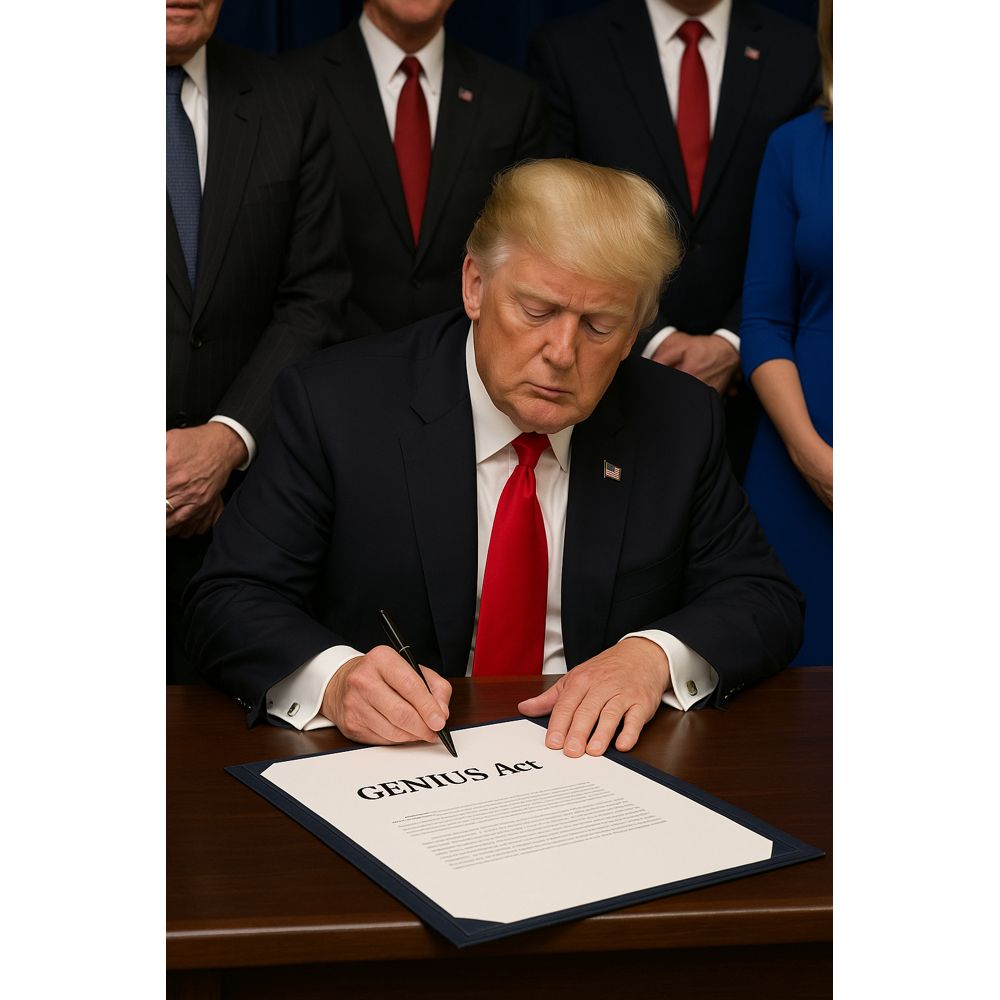
A Historic Milestone for Crypto Regulation
The approval of the GENIUS Act (Government-Enabled National Investment in Ubiquitous Systems) by the U.S. government is being hailed by blockchain industry leaders as a major inflection point in the global conversation around digital asset regulation. While the United States has long been regarded as a hesitant player in crypto policy, the Genius Act represents a meaningful pivot from uncertainty and regulatory fragmentation to clear legislative engagement with blockchain technology and stablecoins.
This move isn’t just symbolic. It’s a legislative milestone that reverberates far beyond America’s borders, nudging other global players into action. The GENIUS Act is already sparking regulatory reevaluations in countries that have historically either ignored or cracked down on cryptocurrency innovation. Nations once hostile or uncertain about digital assets are now being forced to reconsider their stances as crypto adoption grows too large and too economically impactful to ignore.
With provisions that require stablecoins to be fully backed by tangible, government-approved assets like the U.S. dollar, the law is a clear step toward legitimizing crypto as a core pillar of modern finance. While some critics caution about the risk of turning tech companies into quasi-banks, the undeniable outcome is that digital assets now have a seat at the policy-making table.
India, Once Restrictive, Begins Shifting Toward Policy Reform
Nowhere is the impact of the GENIUS Act more visible than in India, a country that has walked a tightrope between encouraging fintech innovation and controlling the crypto market. For years, Indian lawmakers imposed high taxes and regulatory ambiguity on digital asset traders. A 30% flat tax on capital gains and a 1% TDS (Tax Deducted at Source) on every transaction were viewed as deterrents — if not outright disincentives — for crypto enthusiasts.
But despite these challenges, the Indian crypto market has surged in activity. According to local analysts and blockchain firms, more and more stock and forex traders are migrating toward crypto due to its growth potential and decentralized nature. These investors seem unfazed by tax hurdles, creating an active, rapidly growing user base that’s difficult for regulators to overlook.
The GENIUS Act has added fuel to the fire. Recent discussions within Indian political circles include proposals to establish a Bitcoin reserve similar to what the U.S. is now considering. This would mark a massive policy turnaround for India and could signal the beginning of a more inclusive digital asset framework on the subcontinent.
The Global Ripple Effect: GENIUS Act Forces Regulatory Reassessment Worldwide
The GENIUS Act’s implications stretch far beyond U.S. borders and India. Across the globe, countries are beginning to recalibrate their digital asset strategies. The underlying message of the legislation is unmistakable: blockchain is here to stay, and it’s time for governments to move from reactive suppression to proactive participation.
In Europe, where MiCA (Markets in Crypto-Assets Regulation) has set a legal foundation for digital asset businesses, policymakers are examining how the GENIUS Act’s emphasis on dollar-backed stablecoins might influence stablecoin infrastructure and cross-border interoperability. Germany, France, and Switzerland are closely watching U.S. moves as they consider adjustments to their own crypto frameworks, especially for institutional access to stablecoins and crypto-backed securities.
In Asia, countries like Japan, Singapore, and South Korea are already leaders in regulated crypto innovation. The GENIUS Act, however, adds geopolitical pressure, especially on emerging markets, to join the regulated crypto movement or risk being left behind.
Governments that had previously dismissed crypto as speculative or too volatile for policy integration are now faced with a new reality: the technology is maturing, and users, from retail investors to multinational corporations, are demanding access.
Blockchain No Longer a Fringe Technology
The most remarkable takeaway from the Genius Act isn’t merely its legislative impact. It’s the psychological shift it signals across the political spectrum. Digital assets are no longer being viewed as a Wild West market or a tech experiment — they are now being treated as essential infrastructure for the future of global finance.
Blockchain is being deployed in a growing number of mainstream sectors:
- Payment systems now integrate stablecoins for cross-border remittances.
- Supply chains use decentralized ledgers for real-time logistics tracking.
- DeFi platforms offer yield-generating services without relying on traditional banking intermediaries.
- NFTs are transitioning from collectible hype to tools for ownership authentication, ticketing, and more.
As these applications expand, so does the pressure on governments to modernize their regulatory frameworks. The Genius Act sets a precedent for how crypto can be incorporated into a sovereign financial system without completely replacing fiat or overhauling the central banking structure. It promotes coexistence, not competition, between legacy and decentralized systems.
Critics Warn of Risks, But Momentum Is Inevitable
Like any major policy shift, the Genius Act isn’t without detractors. Consumer advocacy groups have warned that allowing tech companies to operate as stablecoin issuers, potentially without traditional banking licenses, may expose consumers to new financial risks. There are concerns about data privacy, algorithmic control, and platform monopolies.
Nonetheless, the global momentum behind crypto regulation appears unstoppable. Countries that cling to outdated financial models are increasingly out of step with modern economic behavior, especially among younger, tech-savvy populations. Whether it’s a government in Africa exploring blockchain land registries or an Asian startup tokenizing real estate assets, blockchain-based innovation is evolving faster than the laws meant to regulate it.
Policymakers now face a choice: adapt, regulate, and benefit, or stall, restrict, and be bypassed.
U.S. Policy Leadership Returns — This Time with Crypto at the Forefront
For years, the U.S. lagged behind other nations like Switzerland, Singapore, and the UAE when it came to regulatory clarity for crypto markets. The GENIUS Act represents a dramatic course correction, one that reestablishes America’s role as a global standard-setter in emerging financial technologies.
The Act’s emphasis on asset-backed stablecoins provides a foundation of trust for institutions wary of volatility. Simultaneously, it offers a way forward for crypto-native firms seeking legitimacy and regulatory alignment. With this framework in place, the U.S. can now begin crafting additional legislation that addresses DeFi, DAOs, tokenization of real-world assets, and even CBDCs.
The Genius Act could very well be the first in a series of transformative bills that bring crypto into the formal U.S. financial system, with bipartisan support and growing public demand as tailwinds.
A New Era of Crypto Legislation Has Begun
The GENIUS Act marks more than a legislative victory. It signifies a paradigm shift in how governments, regulators, and institutions engage with digital assets. It also reveals the mounting global consensus that crypto is not a threat — it’s an opportunity. Countries that embrace the trend with smart, secure regulations stand to gain not only financial innovation but also geopolitical influence in a rapidly digitizing world.
As global interest in blockchain continues to soar, and as legislation like the Genius Act sets new precedents, one thing is clear: we are entering a new era of crypto integration, and it’s one where regulation plays a key, not obstructive role in shaping the future.









