





















































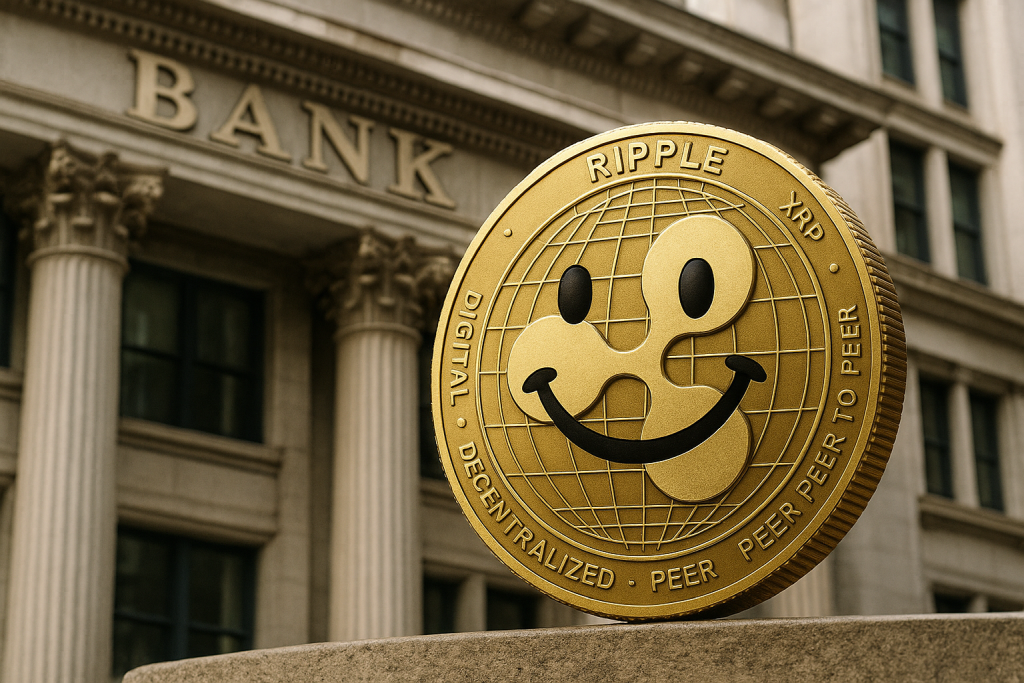
The year 2025 has become a defining turning point for the global crypto landscape. Landmark developments, including significant policy shifts and regulatory reforms, have created a dynamic environment for digital assets. Among the most notable changes was the OCC (Office of the Comptroller of the Currency) issuing groundbreaking clarification memos on March 7 and again on May 7, effectively greenlighting banks to participate in crypto custody and transaction services.
This endorsement signaled a bold step forward: traditional banks were finally being encouraged to embrace the blockchain revolution. For many in the crypto community, this marked the end of the “crypto crackdown” era and the beginning of serious institutional adoption.
But behind the scenes, the reality proved far more complex.
Ripple’s Ongoing Battle: The Targeted Crypto Company
Despite regulatory advancements and what seemed to be a broad green light for crypto innovation, Ripple has remained a primary target. Since 2020, Ripple Labs and its native asset, XRP, have been under intense scrutiny and legal pressure – a battle that continues to this day. From the SEC lawsuit to waves of resistance from banking entities, Ripple’s journey reflects the struggle of innovation facing entrenched legacy systems.
Operation Chokepoint 2.0, a term often referenced within the crypto world, resurfaced to describe the silent war waged against blockchain pioneers like Ripple. Many believe the original and ongoing legal attacks are not just about regulatory compliance but about protecting traditional financial power structures.
The idea that big banks feared Ripple’s tech isn’t far-fetched. XRP Ledger’s ability to enable real-time, low-cost cross-border payments poses a direct challenge to the SWIFT-based systems banks have long profited from.
Debanking and Political Pushback: The Fight to Level the Playing Field
In 2025, even with a supposed open door to crypto services, debanking—the process of shutting down accounts of crypto businesses—remains rampant. Cody Carbone, CEO of the Digital Chamber, released a statement highlighting how financial institutions still arbitrarily cut off services to crypto firms. Backed by Senator Tim Scott, the FIRM Act aims to end this abuse.
Appearing on Fox Business with Larry Kudlow, Senator Scott labeled this form of debanking as modern-day redlining. He emphasized that while an executive order from former President Trump could help, only firm legislation would create lasting protection. The key target? Reputational risk—a vague term regulators have used to justify the exclusion of crypto from mainstream finance.
Yet, as Ripple attempts to gain legitimacy through a banking license, the irony is unmistakable. Despite broader regulatory acceptance, Ripple is being stonewalled once again.
Ripple’s Banking Ambitions Blocked by 42 Major Institutions
In a stunning move, the Bank Policy Institute (BPI), representing 42 of the most powerful banks in the U.S., filed an objection to Ripple’s application for a national banking license. Members of the BPI include JPMorgan Chase, Citibank, Wells Fargo, Bank of America, and Goldman Sachs – all institutions that profit from the current remittance and settlement systems.
This direct opposition highlights an uncomfortable truth: Ripple’s vision is too disruptive. The traditional banking sector, which has long thrived on high fees and slow cross-border transactions, sees Ripple as an existential threat. These same banks had previously funded anti-crypto politicians and narratives, including repeated attacks labeling crypto as “a scam” or “made-up money.”
Now, their fear is manifesting in overt policy resistance.
The ICBA Joins the Battle: 5,000+ Banks Sound the Alarm on XRP
Adding fuel to the fire, the Independent Community Bankers of America (ICBA), which represents over 5,000 small and mid-sized U.S. banks, also voiced opposition to Ripple’s trust bank charter. Their core complaint? Ripple’s blockchain-based payments and stablecoin reserve systems could operate outside traditional congressional control.
Ripple’s application for Ripple National Trust Bank, which aims to manage stablecoin reserves and enable enterprise-grade blockchain integration, is framed as a “risk” to the economy. But many see this as yet another excuse to prevent technological evolution from threatening legacy structures.
The irony, of course, is thick. While the federal government is actively pushing U.S.-based crypto initiatives and stablecoin frameworks, banks continue resisting blockchain adoption. Ripple finds itself simultaneously encouraged and blocked – an environment that clearly illustrates the friction between innovation and incumbency.
The Bigger Picture: Ripple’s Resilience and Institutional Fear
To truly grasp why Ripple is under siege, one must understand what it represents. Ripple isn’t just another crypto company. It’s a strategic disruptor. Its tools aim to eliminate the costly inefficiencies that banks used to profit from international transactions and money management.
This very capability is what makes Ripple so threatening to the status quo. When mighty financial giants like Jamie Dimon of JPMorgan express disdain for crypto, they aren’t just offering opinions – they’re protecting decades-old business models.
Retail consumers, small businesses, and even governments stand to benefit from Ripple’s technology. The same cannot be said for the institutions profiting from outdated, fee-heavy infrastructure. As history shows, from the 2008 financial crisis to ongoing retail exploitation, these banks have a track record of self-interest.
Ripple’s Next Chapter: Stronger Than Ever
Ironically, every new challenge Ripple faces only reinforces the belief that it is on the right path. If Ripple weren’t a legitimate threat to the banking elite, there would be no coordinated effort to block it. The louder the resistance, the more precise the signal: XRP is not just surviving, it’s thriving.
Social media is buzzing with takes like that of crypto analyst Nix Blackwood, who noted: “They want Ripple banned. That means you’re directly over the target.” And he’s right.
With Ripple deeply integrated into global discussions around central bank digital currencies (CBDCs), stablecoin reserves, and enterprise blockchain adoption, its trajectory is accelerating. The attacks from big banks are not the signs of a dying project—they’re signs of a revolution underway.
In conclusion, Ripple’s battle is far from over. But it’s also never been clearer that Ripple is positioned to reshape global finance. The question isn’t whether banks can stop Ripple. The real question is: how long can they delay the inevitable?