


























































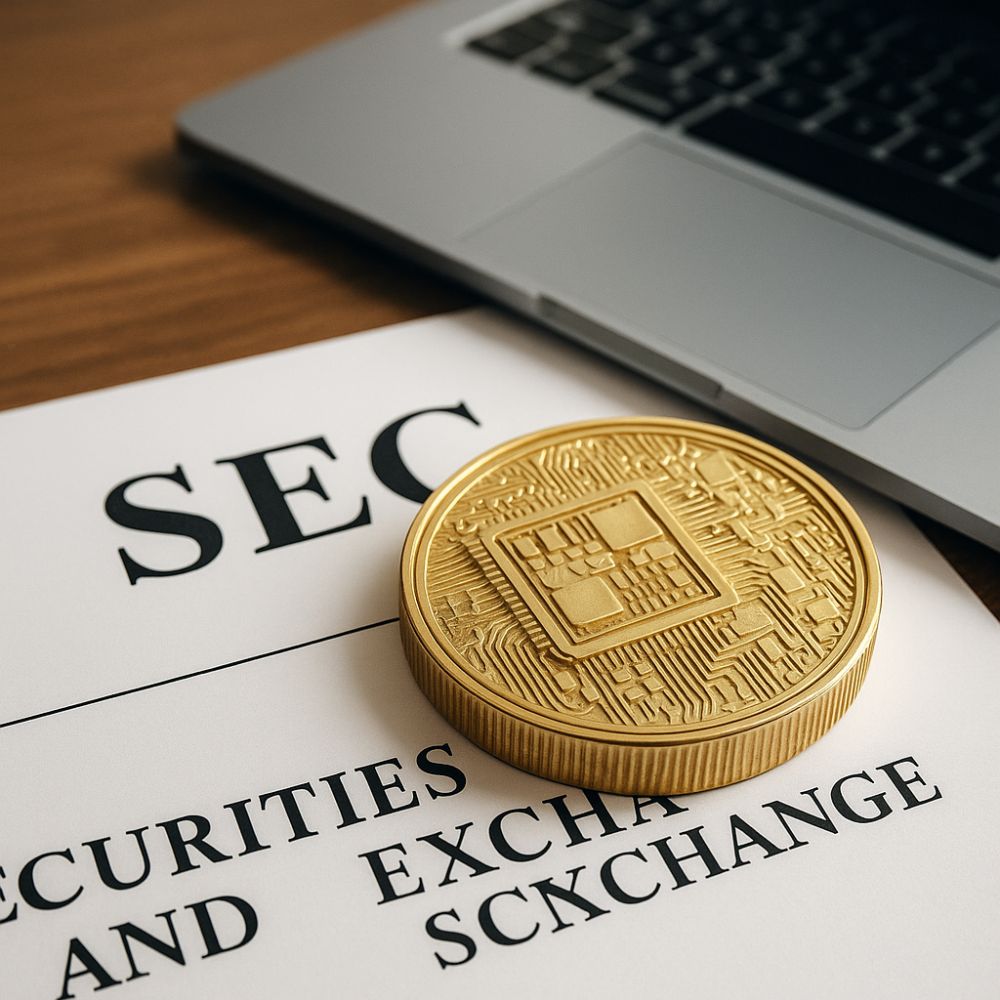
The transformation of traditional financial infrastructure continues to accelerate as blockchain technology moves from experimentation into regulated market deployment. In a major milestone for digital finance, the U.S. Securities and Exchange Commission has issued a No-Action Letter to the Depository Trust Company, a subsidiary of the Depository Trust and Clearing Corporation. This decision clears the way for a controlled tokenization service involving securities held in custody by DTC, with a planned rollout in the second half of 2026.
The approval represents one of the most significant regulatory signals to date that tokenization of traditional financial assets is transitioning from theoretical potential into practical execution within the U.S. market. Unlike pilot programs or isolated experiments, this initiative places tokenized securities directly into the heart of the American post-trade system, while maintaining existing investor protections, risk controls, and operational safeguards.
As global interest in tokenized real-world assets grows, this development positions the United States alongside other leading financial centers that are actively integrating blockchain technology into capital markets. The SEC’s decision reflects a cautious but meaningful shift in regulatory posture, balancing innovation with systemic stability.
Understanding the SEC No-Action Letter and Its Importance
A No-Action Letter from the SEC does not constitute formal rulemaking or blanket regulatory approval. Instead, it represents a commitment from the regulator that it will not recommend enforcement action if a specific activity is conducted exactly as described. In this case, the letter allows DTC to operate a controlled tokenization service for a defined period of three years, subject to clearly outlined parameters.
This structure gives regulators the opportunity to observe tokenized securities in a live environment while limiting systemic risk. It also allows DTC to refine operational processes, gather market feedback, and demonstrate that blockchain-based settlement can coexist with existing regulatory frameworks.
For the broader market, the issuance of this letter signals that tokenization is no longer confined to experimental sandboxes. It is now entering regulated infrastructure with the explicit knowledge and oversight of U.S. authorities.
What the DTC Tokenization Service Will Cover
Under the approved framework, DTC will tokenize a specific group of traditional securities on approved Layer 1 and Layer 2 blockchain networks. These digital representations will mirror the legal ownership rights, entitlements, and protections associated with their underlying securities.
The initial scope includes assets that already form the backbone of institutional portfolios and public markets. These include components of the Russell 1000 index, major index-tracking exchange traded funds, and U.S. Treasury instruments such as bills, notes, and bonds.
By starting with highly liquid, well-understood assets, DTC reduces complexity and risk. These securities already benefit from deep market participation, standardized servicing processes, and clear regulatory treatment. Tokenizing them allows market participants to explore efficiency gains without introducing unfamiliar asset structures.
Importantly, DTC emphasized that tokenized securities will remain subject to the same asset servicing rules as their traditional counterparts. Corporate actions, dividend payments, interest accruals, and ownership rights will be preserved. This continuity is central to maintaining investor confidence during the transition.
Preserving Investor Protections in a Digital Framework
One of the most critical aspects of the DTC initiative is its reliance on existing risk management and operational standards. Rather than creating a parallel system detached from current safeguards, the tokenization service is designed as an extension of established post-trade infrastructure.
DTC processes trillions of dollars in securities activity every year and plays a central role in clearing and settlement for U.S. markets. Any technological shift within this system carries systemic implications. For that reason, the service will operate under the same governance, compliance, and oversight structures that define DTC’s current operations.
Ownership records, entitlement tracking, and settlement finality will remain governed by familiar legal frameworks. Tokenization, in this context, functions as a technological enhancement rather than a structural overhaul.
This approach addresses one of the most common concerns surrounding blockchain adoption in capital markets. Investors and institutions often worry that digital assets introduce uncertainty around custody, legal ownership, and dispute resolution. By anchoring tokenized assets to existing protections, DTC mitigates these risks.
Timeline and Rollout Expectations for 2026
The tokenization service is scheduled to launch in the second half of 2026. This timeline reflects the complexity of integrating blockchain technology into systems that underpin global financial markets.
Before launch, DTC plans to publish detailed onboarding requirements, technical standards, and network approval criteria. Only selected blockchain networks will be authorized to host tokenized securities, ensuring that performance, security, and governance standards meet institutional expectations.
Market participants will also need to adapt internal systems to interact with tokenized assets. Custodians, brokers, and asset managers must ensure compatibility with blockchain-based settlement while maintaining compliance with existing reporting and regulatory obligations.
The three-year authorization period provides a controlled window for evaluation. During this time, regulators and industry stakeholders can assess the impact of tokenization on settlement efficiency, liquidity, risk management, and operational resilience.
Leadership Perspective on Digital Market Transition
DTCC leadership has framed the approval as a foundational step toward digital market infrastructure. President and Chief Executive Officer Frank La Salla noted that the authorization enables faster deployment of digital capabilities while preserving the protections investors rely on today.
Brian Steele, President of Clearing and Securities Services, emphasized that the initiative is designed to deliver digital access with the same security and resilience that characterize DTCC’s traditional operations. This messaging highlights a consistent theme across regulated tokenization efforts: innovation must enhance, not replace, trusted market structures.
This cautious optimism reflects broader industry sentiment. Financial institutions increasingly recognize the efficiency gains offered by tokenization, but remain unwilling to compromise on stability and compliance.
Regulatory Momentum in the United States
The SEC’s approval of the DTC tokenization service is not an isolated event. It forms part of a broader pattern of regulatory engagement with blockchain-based financial infrastructure.
Earlier in the year, the SEC granted approvals related to digital asset custody, tokenized fund structures, and real-world asset platforms operating under regulated conditions. Together, these decisions suggest a gradual shift away from blanket skepticism toward a more nuanced, case-by-case evaluation of blockchain applications.
This approach mirrors regulatory strategies in other jurisdictions, where authorities allow limited deployment under strict oversight rather than delaying adoption indefinitely. For market participants, this provides clarity and reduces uncertainty, encouraging long-term investment in compliant digital infrastructure.
DTC’s Existing Blockchain Initiatives
DTCC’s move into tokenization builds on years of blockchain experimentation. The organization has already deployed blockchain-based systems for collateral management, improving transparency and efficiency in margin processes.
These initiatives demonstrate that blockchain can operate effectively within high-volume, mission-critical environments. By extending this experience into securities tokenization, DTCC leverages existing expertise rather than starting from scratch.
The scale of DTCC’s operations makes this transition particularly significant. Any successful deployment at this level sets a precedent for other markets and institutions worldwide.
Global Growth of Tokenized Assets
While the U.S. moves cautiously, global tokenization activity continues to expand. Financial institutions across Asia, Europe, and the Middle East have launched tokenized products spanning commodities, debt instruments, and investment funds.
Recent examples include tokenized gold offerings in Singapore and blockchain-based bond issuances by major banks in multiple regions. These initiatives aim to reduce settlement times, lower operational costs, and increase access to capital markets.
Market research firms project sustained growth in tokenized real-world assets as infrastructure matures and regulatory clarity improves. U.S. participation through DTC positions American markets to remain competitive in this evolving landscape.
Implications for Market Efficiency and Liquidity
Tokenization promises several operational benefits. Settlement processes can become faster, reducing counterparty risk and freeing up capital. Asset transferability may improve, enabling more flexible market participation.
However, these benefits depend on careful implementation. Liquidity fragmentation, network reliability, and interoperability challenges remain key concerns. DTC’s controlled approach seeks to address these issues by limiting scope and maintaining centralized oversight.
If successful, the model could serve as a blueprint for broader adoption across asset classes.
Challenges and Considerations Ahead
Despite regulatory progress, challenges remain. Blockchain scalability, cybersecurity risks, and cross-border regulatory alignment must be addressed before tokenization reaches its full potential.
Additionally, market participants must adapt operational workflows, train staff, and update compliance procedures. These changes require investment and coordination across the financial ecosystem.
The SEC’s three-year authorization period provides a valuable testing ground. Lessons learned during this phase will likely inform future policy decisions and expansion plans.
Long-Term Outlook for Tokenized Securities
The SEC’s No-Action Letter to DTC marks a turning point in the evolution of financial markets. Tokenization is no longer an abstract concept but a regulated service backed by the core infrastructure of U.S. securities markets.
Over time, successful implementation could lead to broader adoption across additional asset classes, including corporate bonds, structured products, and alternative investments. It may also influence how global markets approach settlement, custody, and asset servicing.
As digital and traditional finance converge, initiatives like this will shape the next generation of capital markets.
Conclusion
The SEC’s decision to grant a No-Action Letter to the Depository Trust Company represents a landmark moment for regulated tokenization in the United States. By authorizing a controlled tokenization service for DTC-custodied assets, regulators have opened the door to meaningful innovation while preserving the safeguards that underpin market confidence.
With a planned rollout in 2026, the initiative offers a structured pathway toward digital securities that aligns blockchain efficiency with institutional trust. As global tokenization efforts accelerate, the success of this program will play a critical role in defining the future of financial market infrastructure.