
























































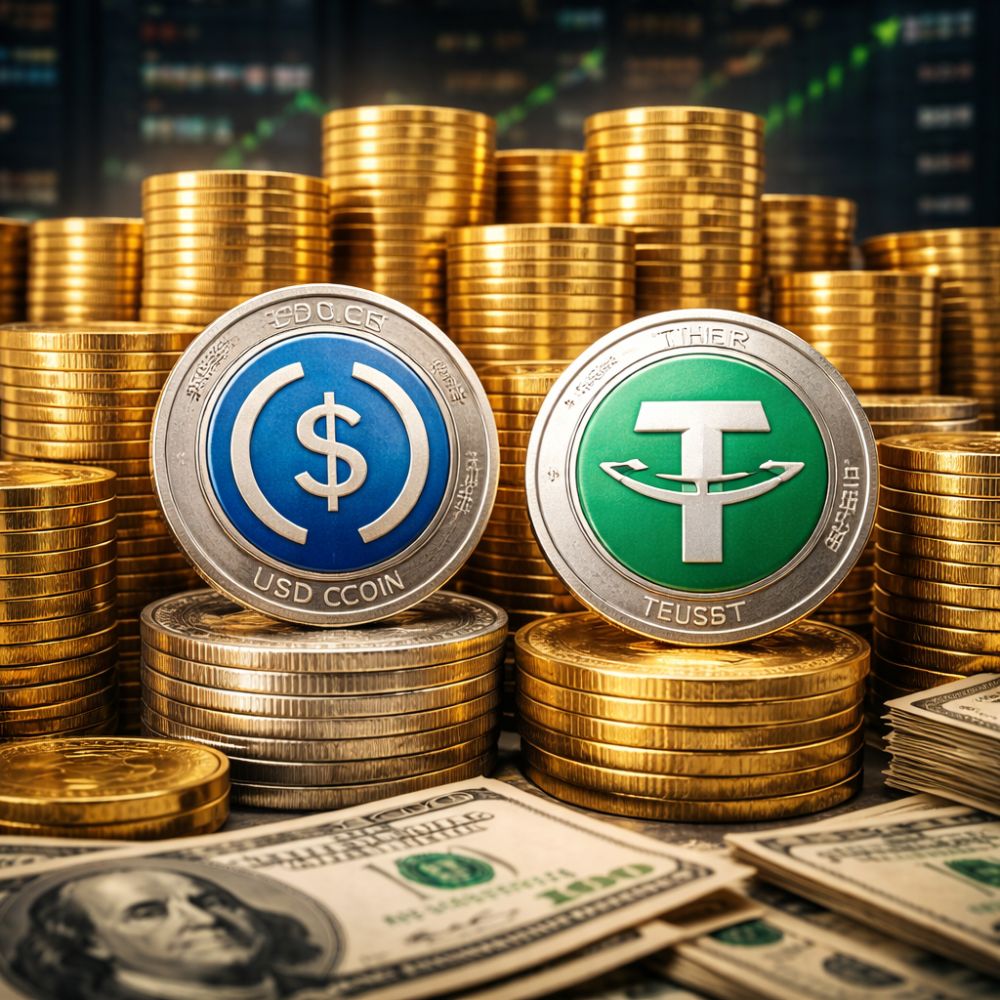
The global digital asset landscape has reached a new milestone as the total stablecoin supply climbed to a record 315 billion dollars during the first quarter of 2026. This significant growth represents an 8 billion dollar increase quarter over quarter, a feat that is particularly impressive given the broader contraction observed in other sectors of the cryptocurrency market. While the headline numbers suggest a steady upward trajectory for dollar-pegged assets, a deeper analysis reveals a dramatic shift in market leadership. Circle-backed USDC is rapidly closing the gap with the long-time market leader, USDT, signaling a fundamental change in how institutional and retail participants interact with digital dollars.
The rise of USDC is not merely a retail trend but a reflection of a maturing institutional infrastructure. Since late 2023, the supply of USDC has surged by an incredible 220 percent, reaching approximately 78 billion dollars. This expansion is being fueled by programmatic payment rails and B-to-B settlement solutions developed by traditional finance giants like Visa and Stripe. Unlike previous cycles where growth was driven by speculative trading, the current momentum is rooted in utility-based adoption such as payroll infrastructure and corporate treasury management. This shift toward regulated, transparent issuers suggests that the next phase of stablecoin growth will be defined by compliance and integration with legacy financial systems.
Institutional Adoption and the Rise of Programmatic Money
Data from the first quarter highlights a stark contrast in how different stablecoins are being utilized. While USDT continues to dominate in raw supply and remains the primary liquidity instrument in emerging markets and high-yield DeFi protocols, its market share has begun to slip. Analysts have noted that the divergence between USDC and USDT is becoming one of the defining market dynamics of the year. USDC now boasts a transaction velocity of 90x with an average transfer size of 557 dollars. This profile is highly consistent with high-frequency institutional automation and payroll disbursements rather than the large-scale “whale” movements typically associated with offshore trading platforms.
The strategic positioning of Circle ahead of potential U.S. stablecoin legislation has provided a significant structural advantage. As Washington continues to debate the Clarity for Payment Stablecoins Act, regulated issuers are becoming the preferred choice for compliance-sensitive capital. If this legislation passes with provisions that favor audited and domestic issuers, the gains made by USDC could become permanent and structural. For now, the market is watching the 315 billion dollar threshold as a sign that stablecoins have become the essential, load-bearing layer of the entire crypto economy, regardless of which individual token holds the top spot.
The Declining Retail Footprint and the Dominance of Trading Bots
One of the most surprising statistics from the Q1 report is the 16 percent drop in retail-sized transfers, which marks the steepest decline on record for this segment. This suggests that the organic, manual retail demand that once anchored the stablecoin market is being replaced by more sophisticated participants. In fact, automated trading bots now account for approximately 76 percent of all stablecoin transaction volume. This shift indicates a more mature but potentially less organic market structure, where algorithmic strategies and automated treasury rebalancing drive the majority of on-chain activity.
As retail participation wanes, the competitive moat for USDT – which is heavily reliant on the Tron network and retail-heavy offshore corridors – is beginning to narrow. While USDT remains the king of liquidity for now, its lack of product-level innovation compared to the programmatic integrations of USDC could become a long-term liability. Market participants are keeping a close eye on upcoming attestation reports from both Circle and Tether. If USDC manages to cross the 90 billion dollar mark while USDT supply remains stagnant, it will confirm that the market share shift is a long-term trend rather than a temporary fluctuation.
New Frontiers – Yield-Bearing Stablecoins and Regulatory Challenges
Beyond the battle between the “Big Two,” a new subsector of yield-bearing stablecoins has emerged, now representing a 3.7 billion dollar market. These assets offer holders a share of the interest generated by underlying reserves, usually consisting of U.S. Treasury bills. While these products provide a compelling value proposition for investors seeking passive income, they also introduce new layers of fragmentation and regulatory risk. Authorities in various jurisdictions are still determining whether these yield-bearing instruments should be classified as securities, which could lead to a localized crackdown on their issuance and distribution.
Despite these regulatory hurdles, the sheer volume of stablecoin activity is staggering. In the first quarter of 2026, total stablecoin transaction volume exceeded 28 trillion dollars. To put this in perspective, this figure now regularly surpasses the combined processing volume of major traditional payment networks like Visa and Mastercard. This suggests that while the growth rate of new supply may be slowing down, the actual usage of stablecoins as a medium of exchange is reaching all-time highs. Stablecoins have evolved from being a simple “on-ramp” for crypto trading into a global, 24-7 financial infrastructure that operates independently of traditional banking hours.
Future Outlook and the 315 Billion Dollar Milestone
The achievement of a 315 billion dollar total supply is a testament to the resilience of the stablecoin sector. Even during periods of market volatility and regulatory uncertainty, the demand for digital dollars remains robust. Moving forward, the focus will likely remain on the “flight to quality,” as investors prioritize transparency and regulatory oversight over pure yield or liquidity depth. The ongoing competition between USDC and USDT will serve as a bellwether for the broader industry, indicating whether the market favors the regulated, institutional approach of the West or the decentralized, high-liquidity approach of offshore entities.
So, the first quarter of 2026 has set the stage for a transformative year in the crypto space. The record supply levels, combined with the rise of programmatic money and the decline of retail-driven transfers, point toward a future where stablecoins are deeply embedded in the global financial system. Investors and policy makers alike must now recognize that stablecoins are no longer a niche experimental asset class; they are a critical component of modern finance that handles trillions of dollars in value every month. The 315 billion dollar milestone is just the beginning of what appears to be a new era for digital assets.