






















































Introduction: A Digital Transformation on the Horizon
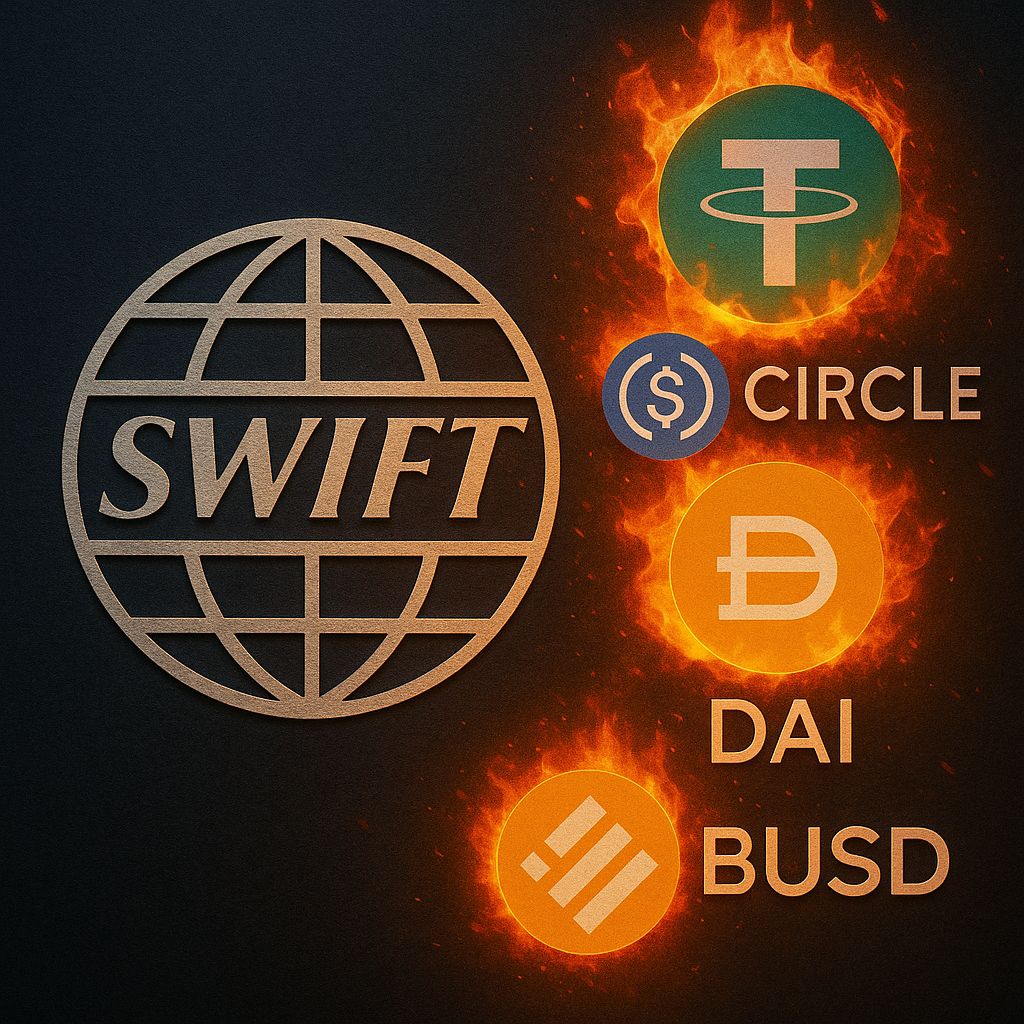
In the rapidly evolving world of financial technology, few developments have drawn as much attention as the rise of stablecoins. With projections estimating that stablecoin settlements could reach a staggering $5 trillion annually by 2026, this evolution signals more than just technological progress – it represents a paradigm shift that could challenge traditional financial systems like SWIFT.
Stablecoins, backed by fiat or real-world assets, are fast becoming the preferred vehicle for high-speed, low-cost international transactions. As Wall Street giants and significant financial institutions begin to embrace blockchain technology, we are witnessing the potential birth of a new global economic architecture.
This article explores the rapidly growing stablecoin market, the implications for traditional banking networks, the role of tokenized real-world assets, and how institutions are preparing for a blockchain-powered future.
The Rise of Stablecoins: A $5 Trillion Disruption in the Making
Stablecoin Adoption Is Accelerating
By 2026, the annual settlement volume for stablecoins is forecasted to exceed $5 trillion, according to multiple industry reports and expert analyses. This dramatic rise reflects increased institutional adoption, improved regulatory clarity, and the global shift towards blockchain-based financial infrastructure.
Stablecoins are digital currencies pegged to real-world assets – typically fiat currencies like the US dollar- offering the benefits of cryptocurrency (speed, transparency, decentralization) without the volatility. The two market leaders, Tether (USDT) and Circle’s USD Coin (USDC), currently dominate the market with a combined capitalization of over $400 billion as of mid-2025.
Traditional Networks vs. Blockchain Settlement
The Society for Worldwide Interbank Financial Telecommunication (SWIFT) has been the global standard for cross-border payments for decades. However, its inefficiencies—such as high fees, slow processing times, and limited transparency—have increasingly come under scrutiny. Blockchain, through stablecoins, offers near-instant, cost-effective alternatives that are especially appealing for emerging markets and high-volume institutional transactions.
Institutional Momentum: Wall Street’s Embrace of Blockchain Settlement
From Crypto-Native to Wall Street Giants
Initially viewed as a niche technology used primarily within the crypto community, stablecoins have now entered the radar of mainstream finance. Top investment banks, payment processors, and asset managers are exploring or actively integrating stablecoin functionality into their platforms. Institutions like JPMorgan, BlackRock, and Visa are piloting or expanding their blockchain-based payment solutions.
The tokenization of real-world assets (RWA) – ranging from real estate and bonds to commodities – is accelerating, enabling faster and more secure settlement mechanisms. These tokenized assets are typically settled using stablecoins, reinforcing the demand for robust, regulatory-compliant digital currencies.
“Approaching $5 trillion in stablecoin settlements will require the involvement of the largest banks and financial institutions – not just crypto-native firms.”
— Industry Analyst, 2025 Blockchain Finance Report
Why Institutions Are Moving to Stablecoins
The key drivers for this transition include:
- Speed: Transactions settle in minutes, not days.
- Cost-efficiency: Reduced fees compared to SWIFT or correspondent banking.
- Transparency: Blockchain allows auditable, real-time tracking.
- Programmability: Smart contracts can automate complex settlement conditions.
These features align perfectly with the digital transformation goals of banks, payment firms, and even central banks exploring CBDCs (Central Bank Digital Currencies).
Stablecoins vs SWIFT: A Structural Comparison
| Feature | Stablecoins | SWIFT |
|---|---|---|
| Settlement Time | Seconds to minutes | Hours to days |
| Transaction Fees | Minimal (often <$0.01) | Higher, depends on intermediary banks |
| Transparency | Full ledger visibility | Limited traceability |
| Availability | 24/7, global | Limited to business hours |
| Intermediaries Required | None | Multiple intermediaries |
| Programmability | Smart contract support | Not programmable |
This comparison highlights how stablecoins are structurally superior for many types of financial activities, particularly those requiring instant liquidity and cross-border interaction.
The Rise of Tokenized Assets and Real-World Integration
Tokenization Fuels Stablecoin Usage
The tokenization trend is one of the key factors pushing stablecoin adoption to new heights. Tokenized real-world assets allow physical items (like property or gold) or financial instruments (like bonds and stocks) to be represented digitally on the blockchain. These digital assets are then traded, collateralized, or settled via stablecoins.
For example:
- A real estate firm might tokenize ownership of a commercial building and use stablecoins to distribute monthly rental income.
- An asset manager could use tokenized Treasury bonds settled in USDC, enabling real-time auditing and performance tracking.
Regulatory Attention on the Rise
With growing usage comes increased scrutiny. Governments and regulators across the globe are drafting stablecoin regulations to ensure compliance, security, and consumer protection. Notably:
- The European Union’s MiCA regulation includes a framework for stablecoins.
- The U.S. Congress is debating legislation that would treat certain stablecoin issuers as banks.
- Asia-Pacific countries like Singapore and Japan have rolled out pilot programs integrating stablecoins with licensed institutions.
These developments are helping legitimize the role of stablecoins in the mainstream financial system.
The Future Outlook: Blockchain as a New Financial Backbone
From Theory to Practice
The transition to blockchain-based settlement systems is no longer theoretical – it is happening. Financial institutions are creating hybrid infrastructures, where traditional banking rails coexist with blockchain settlements. This coexistence model allows for risk mitigation while innovation progresses.
Industry Projections
Industry forecasts suggest:
- By 2026, 40% of cross-border corporate payments could involve stablecoins.
- Central banks may issue or integrate stablecoins alongside CBDCs.
- The SWIFT network could lose 20–30% of its market share in interbank transfers.
These numbers, if realized, will mark the most significant evolution in the international payment landscape since the introduction of digital banking.
Challenges Ahead: What Could Stall Stablecoin Growth?
Despite the promising outlook, stablecoins face several challenges:
- Regulatory Risks – Delays in regulatory clarity could limit institutional adoption.
- Security Concerns – Hacks and protocol exploits could undermine trust.
- Volatility in Governance Models – Issues in algorithmic stablecoins (e.g., Terra collapse) remind us of the importance of strong, asset-backed models.
- Banking Lobby Resistance – Traditional financial institutions benefiting from the SWIFT model may lobby against blockchain-based alternatives.
Addressing these challenges will be critical to achieving the projected $5 trillion milestone.
Final Thoughts: The Dawn of a New Financial Era
The rise of stablecoins isn’t just about replacing SWIFT – it’s about transforming global finance. With enhanced speed, cost-efficiency, and transparency, stablecoins are on track to become the de facto medium for digital settlement in a tokenized world.
Financial institutions, regulators, and technology providers must collaborate to ensure this evolution is secure, inclusive, and sustainable. As we approach 2026, the lines between traditional banking and decentralized finance (DeFi) will continue to blur, ushering in a new age of programmable money and real-time global settlement.









