




















































A Defining Moment in Financial Inclusion
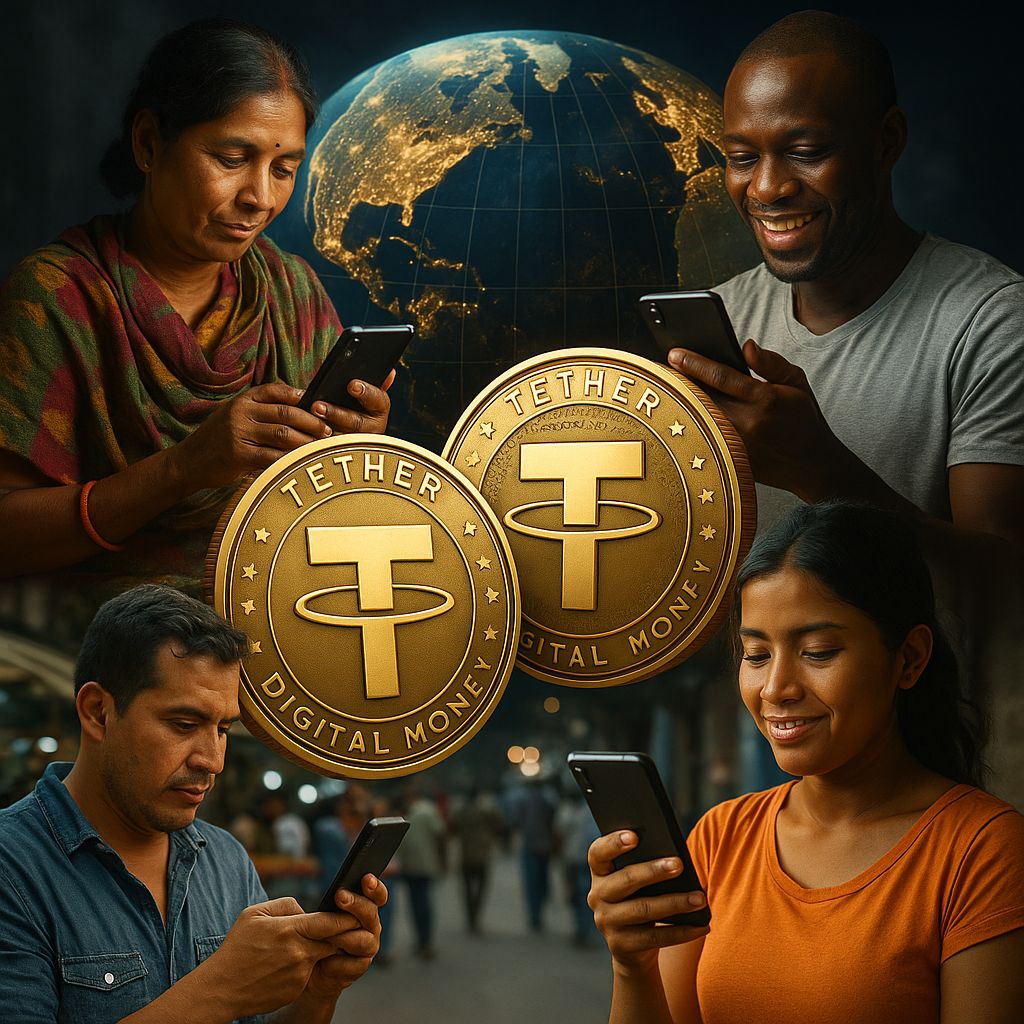
Tether, the company behind the world’s largest stablecoin USDT, has reached a new historic milestone. More than 500 million people around the world are now using USDT for everyday payments, savings, and cross-border transactions. CEO Paolo Ardoino called it “the biggest financial inclusion achievement in modern history,” emphasizing that the milestone represents real people using digital dollars to improve their financial lives.
This record underscores a turning point in the evolution of global finance. Stablecoins like USDT are no longer confined to cryptocurrency traders or digital investors. They are now a lifeline for individuals and small businesses in emerging markets, offering access to stable currency and global payment networks in places where traditional banks fail to reach.
Tether’s achievement arrives as the U.S. Federal Reserve explores new frameworks for fintech and blockchain payment access. Together, these developments suggest that digital dollars and stablecoins could soon become as essential to everyday finance as cash, debit cards, and mobile banking apps.
Tether Crosses Half a Billion Users Worldwide
In a post shared on X, Tether CEO Paolo Ardoino celebrated the achievement by noting that the company has officially reached 500 million verified users worldwide. This number represents a massive leap forward in the adoption of digital currencies and a growing shift toward blockchain-based finance.
Ardoino emphasized that this is not merely a technological or business milestone but a social one. “Half a billion people are now using digital dollars to store value, send money, and protect themselves from inflation,” he wrote.
Tether’s success story stretches across more than 180 countries, with particularly strong adoption in regions such as Latin America, Southeast Asia, Eastern Europe, and Africa. These are areas where banking infrastructure remains limited or unreliable and where inflation often erodes the value of local currencies.
To mark the occasion, Tether released a short documentary filmed in Kenya. The film showcases how small business owners, local merchants, and rural families are using USDT to conduct business, save money, and avoid the challenges of volatile currencies.
According to Ardoino, “Tether’s mission has always been about empowerment, not speculation. Financial freedom should not be a privilege, it should be a right.”
The Power of Digital Dollars in a Fragmented Global Economy
The global rise of stablecoins like USDT illustrates a broader transformation in how money moves around the world. In many developing nations, citizens lack access to stable banking systems, international remittances are expensive, and inflation eats away at wages.
For these populations, USDT has become a practical alternative to traditional banking. With just a smartphone and an internet connection, users can store, send, and receive U.S. dollar-backed value instantly and without intermediaries.
Unlike volatile cryptocurrencies such as Bitcoin or Ethereum, USDT is designed to maintain a 1-to-1 peg to the U.S. dollar. Each token is backed by a combination of cash, short-term U.S. Treasuries, and other liquid assets held by Tether’s reserves.
This stability has made USDT the go-to digital currency for millions of people and a bridge between the crypto economy and real-world finance. It is particularly valuable in countries like Turkey, Argentina, Nigeria, and Venezuela, where national currencies have experienced dramatic depreciation.
By using USDT, individuals can hold and transfer value in a stable currency, effectively bypassing inflation and local capital restrictions.
USDT as a Global Tool for Economic Empowerment
Tether’s half-billion milestone highlights how digital currencies are expanding access to financial inclusion. In countries with limited access to banks, people often rely on cash-based economies that make saving, borrowing, and investing difficult.
USDT changes that dynamic. Through digital wallets and peer-to-peer transfers, users can transact securely without needing to open a traditional bank account.
For example:
- Small business owners in Kenya use USDT to pay suppliers and receive international payments without high conversion fees.
- Freelancers in India and the Philippines are paid in USDT by clients overseas, avoiding the delays and high costs of traditional wire transfers.
- Families in Latin America use USDT for remittances, sending money across borders instantly at a fraction of the cost of traditional services like Western Union.
This global network of usage has turned USDT into a decentralized payment ecosystem that rivals traditional financial systems in speed and accessibility.
Tether’s Kenya documentary highlights stories like these, portraying how stablecoins are becoming a force for equality in global finance.
The Federal Reserve’s New Payment Access Initiative
The timing of Tether’s 500-million-user milestone aligns with growing attention from global regulators and central banks. In October 2025, the U.S. Federal Reserve revealed it was exploring a new payment access framework for fintech and blockchain firms.
The initiative would enable regulated digital asset providers to participate more directly in the traditional banking system, offering consumers faster and cheaper access to dollar-backed payments.
If implemented, such reforms could pave the way for stablecoins like USDT to interact more efficiently with official financial channels, bridging the gap between decentralized finance and government-regulated systems.
Industry observers believe the move could accelerate the mainstream adoption of stablecoins and digital payment systems. Some experts even suggest that the Federal Reserve’s openness to blockchain technology marks the beginning of a hybrid monetary era – one where private digital currencies coexist alongside national fiat currencies.
This development complements Tether’s growing influence, reinforcing its position as a central player in the future of global finance.
A $110 Billion Digital Economy
With over $110 billion in circulating supply, USDT remains the world’s largest and most widely used stablecoin. Its liquidity and trustworthiness have made it a foundational asset across the crypto ecosystem.
USDT is deeply integrated into decentralized finance (DeFi), exchanges, and remittance platforms, acting as both a store of value and a medium of exchange. For traders, it offers stability during market volatility. For everyday users, it provides an accessible on-ramp to the digital economy.
This combination of stability and accessibility has transformed Tether into a critical infrastructure component for the global financial system.
Even in countries with strict capital controls, USDT has become an unofficial financial lifeline. By using crypto wallets, individuals can protect their savings, trade assets, and send remittances without relying on fragile local systems.
Tether’s growth demonstrates how decentralized systems can achieve mass adoption faster than any centralized bank ever could. In less than a decade, USDT has reached more people than many national banks combined.
Challenges and Criticisms
Despite its success, Tether continues to face scrutiny. Critics have raised questions about the transparency of its reserves and the regulatory framework surrounding stablecoins.
However, Tether has repeatedly published attestation reports and third-party audits verifying that its tokens are backed by equivalent assets. The company has also expanded compliance efforts and strengthened relationships with financial authorities in multiple jurisdictions.
In 2025, CEO Paolo Ardoino reaffirmed Tether’s commitment to transparency, stating that “trust is built not through words but through consistent, verifiable action.”
Still, the broader stablecoin industry remains under regulatory observation. Policymakers across the U.S. and Europe are debating how to integrate stablecoins into existing financial laws while preserving innovation.
Ardoino argues that regulation should focus on protecting users without restricting innovation. “The goal is not to slow down progress,” he said. “It’s to make sure that financial inclusion grows in a safe and sustainable way.”
Stablecoins and the Future of Financial Inclusion
Tether’s achievement represents more than a corporate success story. It is a sign that financial inclusion is no longer dependent on traditional banking infrastructure.
For the first time in history, hundreds of millions of people can hold, transfer, and save value without a bank account. All they need is a smartphone.
The next step for Tether and the stablecoin ecosystem is likely integration with global payment systems, credit platforms, and decentralized lending networks. As financial institutions and regulators continue to explore blockchain-based finance, the role of USDT as a digital dollar is expected to expand even further.
Experts predict that by 2030, the total number of stablecoin users could exceed one billion, with Tether leading the charge.
A Digital Dollar for the People
Tether’s rise to 500 million users is a defining moment in the evolution of money. It shows that the promise of blockchain – global, borderless, and inclusive finance – is no longer theoretical. It is happening now.
USDT has evolved from a tool for crypto traders into a global instrument of economic empowerment. It bridges gaps between developed and developing economies, offering millions of people a chance to participate in global finance without fear of inflation, restrictions, or exclusion.
While challenges remain, the direction is clear. The future of finance is digital, inclusive, and borderless. As Ardoino puts it, “Tether is not just building a product. We are building a movement – a world where everyone, everywhere, can access stable money.”
With over $110 billion in circulation and half a billion users worldwide, USDT stands as proof that financial freedom through technology is not just possible – it is already here.