


























































The crypto world’s newest mystery
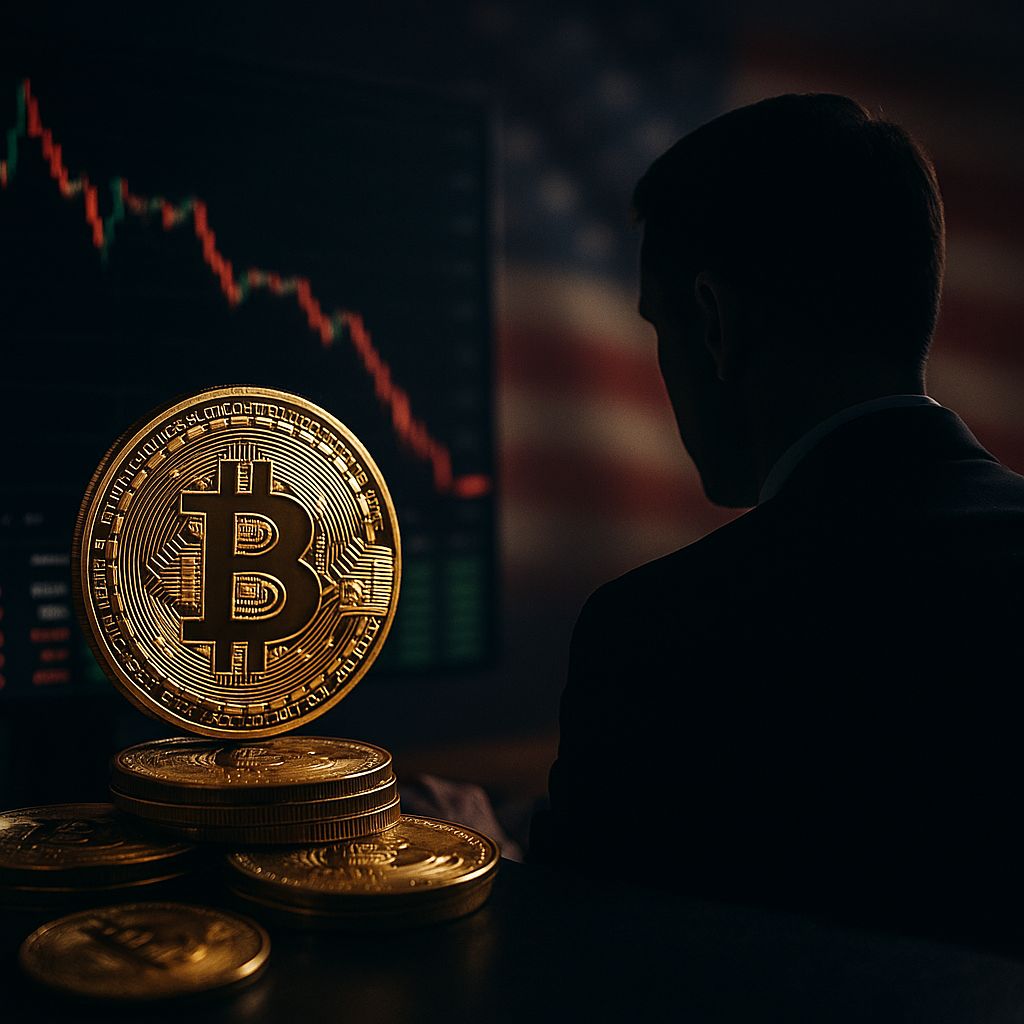
An $80 million mystery is shaking the crypto community. Following President Donald Trump’s shocking announcement of a 100 percent tariff on Chinese imports, global markets collapsed, wiping billions in value within hours. Yet, one anonymous trader appears to have seen it coming.
According to blockchain analysts, a massive short position was opened on the decentralized exchange Hyperliquid between October 9 and 11, perfectly timed to profit from the chaos that followed Trump’s tariff remarks. When Bitcoin and altcoins crashed, that single position earned an estimated $78 to $88 million in profit, making it one of the most lucrative crypto trades in recent history.
Now, everyone is asking the same question: who knew in advance?
Perfect timing or inside information?
Blockchain tracking firms were the first to spot the suspicious activity. On-chain data revealed an unusually large leveraged short position opened just days before Trump’s announcement, targeting Bitcoin and major altcoins. When the selloff hit, the position’s value skyrocketed in minutes.
The precision of the trade has raised eyebrows among both professional analysts and retail traders. It wasn’t just a lucky bet on volatility – it was perfectly aligned with one of the most market-moving political events of the year.
Some traders claim this could be a classic case of insider information, where someone with early knowledge of the tariff decision acted ahead of time. Others argue it could simply be a hedge executed by an experienced investor expecting macroeconomic turbulence.
Still, the scale and accuracy of the trade have made it impossible to ignore.
Online theories explode – a Trump family connection?
Within hours of the data surfacing, social media exploded with speculation. On platforms like X (formerly Twitter), Telegram, and Reddit, rumors began circulating that the mysterious trader might be connected to the Trump family itself.
The theory gained traction after users pointed out an uncanny coincidence: just weeks earlier, reports from Forbes and other media outlets claimed that Barron Trump, the president’s youngest son, had earned roughly $80 million through the family’s World Liberty Financial crypto venture.
The identical figure instantly sparked conspiracy theories across crypto forums and meme pages.
Could Barron or someone close to the Trump family have placed the Hyperliquid short?
No official evidence supports that claim. Neither the Trump family nor Hyperliquid has commented publicly, and blockchain forensics have not linked any known Trump-affiliated wallets to the trade. Still, the internet loves a scandal – and the coincidence has proven too tempting to ignore.
Crypto influencers and YouTube analysts have amplified the discussion, turning the story into a full-blown political and financial mystery that shows no sign of cooling off.
The alternative theory – a DeFi high-risk trader from Asia
While the Trump connection continues to dominate headlines, another narrative is quietly gaining credibility among blockchain investigators.
A growing number of analysts believe the wallet responsible for the Hyperliquid trade might belong to a network of Asian DeFi investors led by Garrett Jin, a well-known Chinese trader notorious for aggressive high-leverage positions and past regulatory scrutiny.
According to blockchain data shared by Arkham Intelligence and Lookonchain, the wallet in question was previously linked to several large trades originating from addresses associated with Jin’s trading circle.
In a statement shared on Telegram, Jin reportedly acknowledged that the address belongs to one of his clients, but strongly denied any insider access.
“It was a hedge, not a political bet,” Jin stated. “We expected volatility due to macroeconomic risk, but there was no special information or advance knowledge about Trump’s tariff announcement.”
Despite Jin’s denial, skeptics remain unconvinced. Some argue that the exact timing and massive leverage involved suggest something more than a simple hedge. Others believe Jin’s explanation could be an attempt to shield a high-profile client behind layers of anonymity.
Political headlines now move crypto in second
Beyond the speculation, analysts say the entire episode highlights a dangerous new reality in crypto trading: politics and algorithms now move markets faster than ever before.
In traditional finance, insider trading laws exist to prevent individuals from profiting off confidential information. But in the decentralized world of blockchain, where traders can act anonymously and transactions are public only after the fact, detecting insider activity is nearly impossible.
Automated bots now scrape social media platforms, government feeds, and even blockchain signals to place trades milliseconds after news breaks. But if someone has knowledge ahead of time, even by a few minutes, the profit potential is enormous.
Experts warn that events like the Trump tariff shock expose how fragile and reactive crypto markets have become, where billions can be gained or lost based on a single tweet or political announcement.
“We’re entering an era where geopolitical news is a trading signal,” said one analyst from Coin Metrics.
“This trade shows that timing and information access can make or break fortunes in minutes.”
The blockchain evidence – what the data shows
The wallet identified on Hyperliquid executed a series of high-leverage short positions totaling over $200 million in notional value. Blockchain data shows that these trades were opened over a 36-hour period between October 9 and October 11, just before Trump’s announcement.
When the market collapsed, Bitcoin briefly dipped below $106,000, Ethereum fell under $3,600, and altcoins like XRP and Solana saw drops exceeding 30 percent.
The short positions were systematically closed during the selloff, locking in profits estimated between $78 million and $88 million, depending on the token pair and closing prices.
While the transaction patterns were transparent, the identity behind the wallet remains concealed due to the pseudonymous nature of blockchain addresses. Investigators are still tracing related wallets and liquidity flows to identify any potential links to known entities.
So far, Hyperliquid has declined to comment beyond confirming that the trades were legitimate and executed within platform guidelines.
Crypto markets still reeling from the aftermath
Even days after the crash, the ripple effects continue to spread through the crypto ecosystem. Billions in open interest have evaporated from major exchanges as traders unwind leveraged positions. Liquidity across derivatives markets remains thin, and volatility indices have surged to their highest levels in 18 months.
Despite the chaos, Bitcoin has managed a partial recovery, stabilizing around $112,000, while BNB, Solana, and Ethereum are showing signs of gradual rebound.
However, the underlying sentiment remains fragile. Many traders are now calling for greater transparency from decentralized exchanges and stricter listing protocols for leveraged products, arguing that the combination of anonymity and extreme leverage can easily be abused.
Insider trading in crypto – a growing regulatory gray area
This incident adds to the growing list of suspected insider trading events in the cryptocurrency industry. While traditional financial regulators such as the SEC have clear frameworks for what constitutes illegal insider activity, crypto markets operate across multiple jurisdictions with little unified oversight.
In the U.S., the Commodity Futures Trading Commission (CFTC) and Securities and Exchange Commission (SEC) have each claimed partial authority, but enforcement has been sporadic.
In decentralized exchanges like Hyperliquid, identifying and prosecuting insider trading becomes nearly impossible, as users are often pseudonymous and transactions occur on-chain without intermediaries.
Legal experts note that unless regulators develop new digital-era frameworks for blockchain-based trading, such events will continue to occur unchecked.
“This situation shows the gap between technology and regulation,” one crypto compliance lawyer said.
“Until blockchain governance and legal standards catch up, bad actors will always find ways to exploit early information.”
Could this be the biggest crypto insider trade ever?
If proven to be based on non-public information, the Hyperliquid short could go down as the largest insider trade in crypto history.
The sheer scale of the profit, combined with its perfect timing, sets it apart from ordinary speculative trades. Even the most sophisticated hedge funds and institutional investors rarely achieve such precision.
Some analysts compare it to past controversies like the FTX collapse, where internal knowledge was allegedly used for strategic trades. Others point to the Coinbase insider trading case of 2022, where an employee leaked token listings before they went public.
But the Hyperliquid case is different – it involves no centralized exchange data leaks or platform manipulation. Instead, it raises the unsettling possibility that political insiders or connected financiers may be using decentralized platforms to profit anonymously from global events.
Speculation, secrecy, and the future of crypto integrity
The $80 million Bitcoin mystery remains unsolved. Whether it was a lucky hedge, a calculated macro trade, or a politically motivated insider move, it has already become a defining moment for crypto in 2025.
It exposes the vulnerabilities of an increasingly interconnected financial system, where political announcements can trigger automated market chaos, and anonymous traders can make fortunes overnight.
The truth may never be fully uncovered, but one thing is certain: crypto transparency is both its greatest strength and its biggest weakness.
Until regulators, exchanges, and the community develop ways to monitor suspicious on-chain behavior in real time, similar mysteries will continue to unfold. And for now, one trader walks away with nearly $80 million – leaving the world guessing who they really were.









