


























































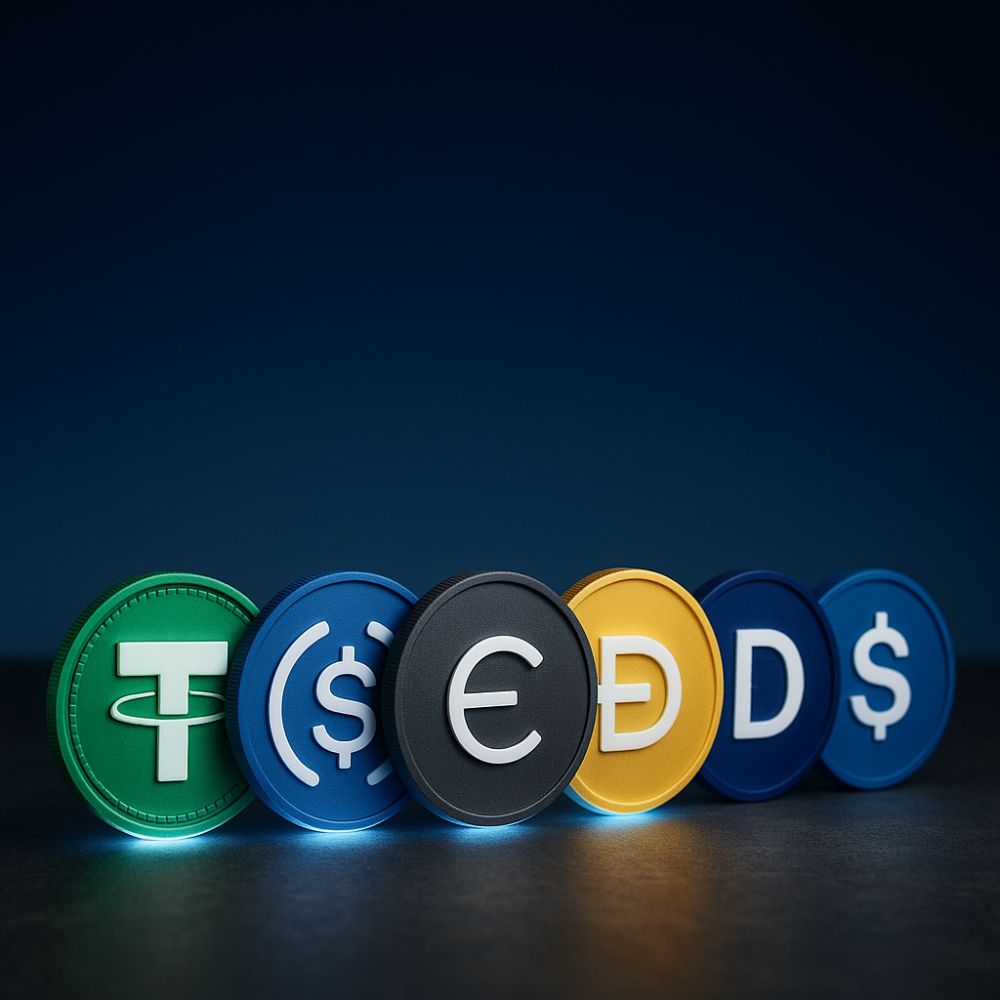
The global cryptocurrency landscape continues to evolve at high speed as 2025 comes to an end. Stablecoins, which were once viewed as niche digital instruments, have now become some of the most essential assets in the entire crypto economy. Their role in trading, payments, decentralized finance, and institutional liquidity is expanding at a remarkable pace. As the year closes, crypto investors, financial institutions, and global payment companies are focusing closely on which stablecoins demonstrate the strongest growth, the highest transparency, and the most reliable usage across real world applications.
In December 2025, the stablecoin market is larger and more influential than ever before. With more than 250 billion dollars in combined market capitalization as of mid year, stablecoins now serve as the backbone for trading activity across centralized exchanges, decentralized protocols, remittance services, and corporate payment rails. What began as a simple method for price stability has matured into a complex digital ecosystem tied to regulation, institutional adoption, and global financial innovation.
This article provides an in depth analysis of the top stablecoins in December 2025, the trends shaping their dominance, the impact of regulation, the rise of newer models like synthetic and yield bearing stablecoins, and how investors should evaluate which stablecoin best fits their specific needs in today’s market.
Leading Stablecoins in December 2025 Based on Market Dominance
Recent global market data confirms that several stablecoins continue to dominate the sector, maintaining strong liquidity, active adoption, and high usage across trading platforms. According to circulating supply and market capitalization metrics, the most prominent stablecoins at the end of 2025 are the following:
- Tether USDT at approximately 182 billion dollars
- USD Coin USDC at approximately 76 billion dollars
- Ethena USDe at approximately 12 billion dollars
- Dai DAI and several regulated stablecoins such as PayPal USD PYUSD with market caps near 5 to 6 billion dollars
These figures align with industry analytic platforms that track stablecoin movement and growth throughout the year. Despite competition from dozens of new entrants, these major names retain the overwhelming majority of market share because of their technical maturity, deeper liquidity, and broader acceptance across ecosystems.
USDT and USDC in particular have demonstrated persistent dominance due to their widespread trading presence and strong institutional links. USDe, a synthetic stablecoin that grew rapidly in 2025, has captured significant attention due to its unique reserve structure and appeal for yield strategies within decentralized finance.
Why These Stablecoins Continue to Lead the Market
Stablecoins succeed when they can deliver reliability, transparency, and predictable liquidity. The top stablecoins in December 2025 share several characteristics that explain their continued dominance.
Liquidity and Market Reach
USDT remains the most widely used stablecoin on the planet. Its presence on exchanges, trading pairs, and cross border payment flows makes it the default choice for millions of traders. Liquidity is the main reason USDT continues to hold its position as the world’s largest stablecoin.
USDC, supported by regulated financial companies, appeals strongly to institutions that value compliance, audited reserves, and transparent financial reporting. Its integration into banking rails and enterprise finance systems reinforces its credibility and ensures continued demand.
USDe has gained significant growth through decentralized finance mechanisms and alternative stabilization models. Its appeal comes from its innovative issuance system and the rising interest in yield bearing synthetic stable assets.
Transparency, Reserve Backing, and Regulatory Confidence
One of the most notable developments in 2025 is that regulators across key global regions have begun enforcing stricter rules for stablecoin issuers. This has pushed stablecoin providers to enhance transparency, disclose reserve details, and align with new compliance frameworks.
USDC is widely seen as one of the most transparent stablecoins, backed by cash and short term United States Treasury holdings. These reserves offer predictable redemption value and low risk, making the coin appealing to businesses, fintech platforms, and institutions.
USDT continues to improve transparency with more frequent attestations, though its reserve composition has historically been more complex.
DAI remains a decentralized option with a collateral based system that appeals to users who prefer algorithmic and user governed structures rather than corporate issuers.
Macro Trends and Tokenized Cash
The year 2025 is seen by many analysts as the beginning of a new macro cycle for stablecoins. As tokenized cash grows and integrates with traditional financial systems, stablecoins are acting as the bridge connecting banks and blockchain networks. Stablecoin regulations introduced in several regions have strengthened investor confidence.
The expansion of tokenized treasury products, corporate Treasury usage of stablecoins, and the introduction of new global financial frameworks are all contributing to stablecoins becoming core infrastructure in the emerging digital economy.
Market Size, Growth Trends, and Expanding Use Cases
The total market capitalization of stablecoins exceeded 250 billion dollars by mid 2025, marking a notable increase from previous years. Global stablecoin supply grew by roughly 28 percent year over year. These numbers confirm the rising demand for stable digital assets across multiple use cases.
Stablecoins are increasingly used for:
- Trading and hedging
- Cross border payments and remittances
- Payroll and treasury management
- Decentralized finance liquidity pools
- Collateral for smart contracts
- Merchant payments and settlement
- On chain savings mechanisms
The large scale expansion of stablecoins reflects their role in supporting a global digital financial system where value transfer is instant, transparent, and cost efficient.
Regulatory Change and Institutional Adoption in 2025
Regulation is now one of the biggest factors influencing stablecoin performance. Governments and financial authorities across the United States, Europe, Asia, and Latin America have introduced new rules targeting stablecoin reserves, disclosures, issuance rights, and redemption processes.
These regulatory shifts are not meant to slow the market but to formalize it. Enhanced regulation has encouraged institutional adoption by addressing concerns regarding backing, compliance, and risk management.
Researchers and policymakers now explore models in which stablecoins operate alongside central bank digital currencies, forming hybrid monetary frameworks. This combination of private stablecoins and public digital assets could introduce a more resilient and programmable financial system.
Market Concentration and the Dominance of Leading Stablecoins
Although new stablecoins enter the market regularly, only a small group commands most of the total value. As of late 2025, USDT, USDC, DAI, BUSD, and TUSD represent nearly 90 percent of the entire stablecoin market.
Newer coins like USDe are capturing interest but still face challenges related to liquidity depth, exchange support, and regulatory clarity. Liquidity remains critical. A stablecoin without deep liquidity risks sudden price fluctuations or depegging events if large investors withdraw or reallocate funds.
Investors are increasingly cautious about smaller stablecoins unless they can consistently demonstrate reserve strength, liquid markets, and reliable usage.
Community Sentiment and Public Perception of Stablecoins
Crypto communities on platforms such as Reddit and X tend to favor stablecoins with documented transparency and strong institutional support. USDC often receives praise for its clarity and compliance oriented approach. Many investors choose it for long term holding or for business related usage.
USDT remains extremely popular for trading, short term movement, and global liquidity needs. Its cross chain presence and acceptance across almost every major exchange make it the easiest stablecoin to use for quick transfers and market operations.
Communities also discuss newer stablecoins such as USDe with interest but encourage caution due to concerns about reserve transparency during stressed market conditions. While innovation is welcome, users emphasize the importance of risk management and clear auditing standards.
Choosing the Best Stablecoin for Your Needs
Selecting the right stablecoin depends primarily on intended use. Stability, liquidity, and transparency are important, but the ideal stablecoin can vary based on your goals.
- If you need maximum liquidity for trading or frequent transfers, USDT remains the most practical option.
- If you prioritize transparency and regulatory assurance, USDC is often seen as the safest stablecoin to hold.
- If you want to explore newer models and decentralized alternatives, stablecoins like USDe or DAI may offer unique features but come with additional risk considerations.
Because a few major players dominate the market, attention must be given to issuer reports, regulatory updates, and platform adoption. Monitoring reserve disclosures and macro trends is essential for assessing long term stability.
Stablecoins Enter a New Era Heading Into 2026
The stablecoin market in December 2025 demonstrates strong growth, increasing adoption, and rising influence in both crypto and traditional finance. Key stablecoins such as USDT, USDC, and USDe continue to attract investors due to their liquidity, transparency, and expanding lists of use cases.
As regulatory frameworks become clearer and institutional adoption increases, stablecoins are becoming central elements of the global financial infrastructure. They fuel trading, payments, institutional settlements, decentralized finance, and tokenized asset markets.
Investors looking to stay ahead should remain informed about transparency standards, liquidity trends, regulatory changes, and the financial stability of each stablecoin issuer. The stablecoin you choose should align with your specific needs, whether those needs involve active trading, long term stability, treasury management, or DeFi participation.
Stablecoins are not only supporting crypto growth. They are reshaping global finance and setting the stage for an entirely new digital economic landscape as the world approaches 2026.