



























































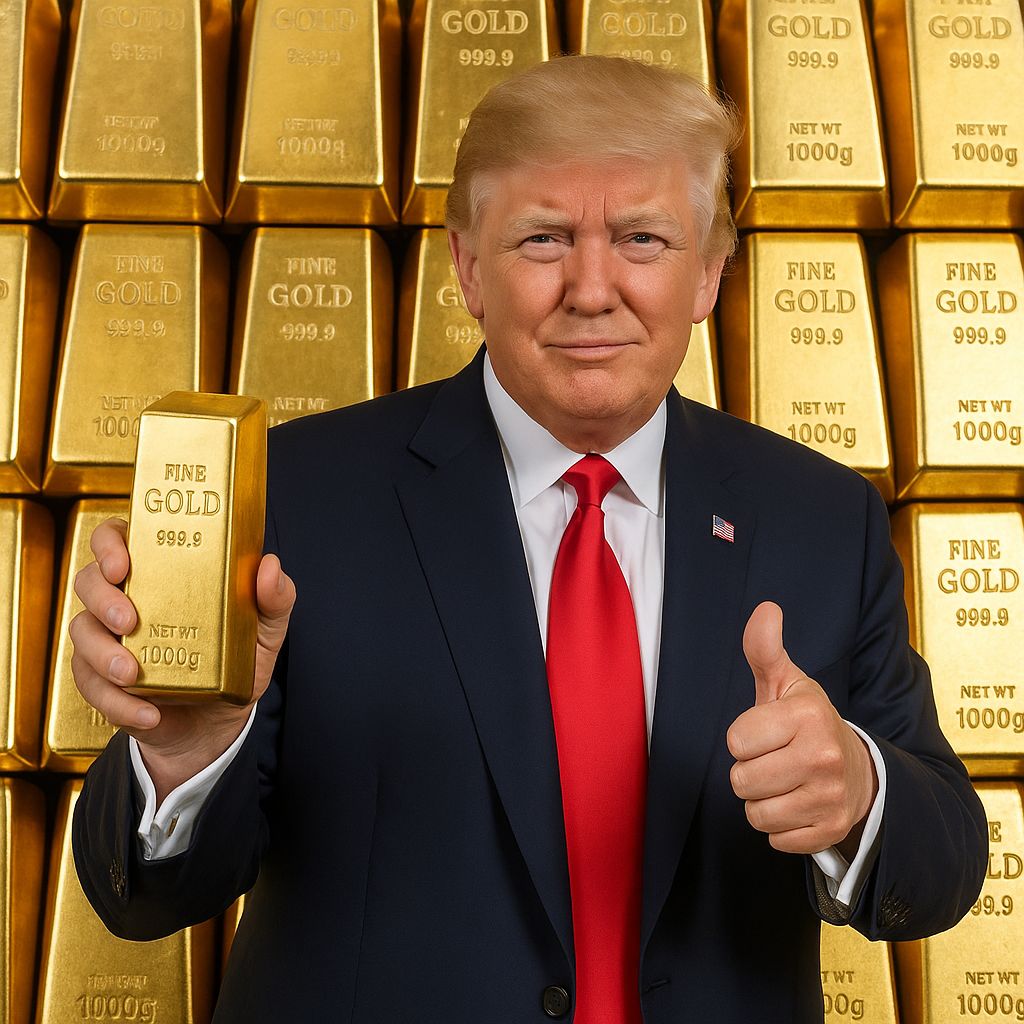
Introduction: A Clear Signal to the Gold Market
In a significant policy clarification that has rippled across global financial markets, former U.S. President Donald J. Trump announced that the United States will not impose tariffs on gold bars. The announcement came directly from Trump’s social media channels, counteracting fears and uncertainty that had been fueled by a recent ruling from U.S. Customs and Border Protection (CBP).
Gold traders, investors, and importers had been watching developments closely, as the initial interpretation of the CBP ruling suggested that specific categories of imported gold might face new tariff obligations. This sparked confusion, short-term price volatility, and intense speculation in both domestic and international markets.
By making a firm statement – “Gold will not be Tariffed!” – Trump sought to provide immediate reassurance to market participants. The White House further labeled earlier reports of potential tariffs as “misinformation”. It confirmed that an executive order will soon be signed to solidify the stance into official U.S. trade policy.
The Origin of the Confusion: Customs Ruling and Market Reaction
The uncertainty began when the U.S. Customs and Border Protection issued a clarification related to import classifications and tariff applicability for various forms of gold, including bullion bars and refined ingots. While the CBP ruling was not intended to impose broad tariffs, its technical language left room for interpretation, especially among traders and importers unfamiliar with the nuances of customs law.
In the days following the CBP statement, market sentiment shifted sharply. Gold prices, already sensitive to macroeconomic events, saw a brief surge as traders priced in the possibility of higher import costs. Importers rushed to secure shipments ahead of what they feared could be a cost-inflating policy, while hedge funds adjusted positions in the gold futures market.
Financial news outlets picked up the story, with some analysts suggesting that tariffs on gold could push prices to new highs in the short term. However, the lack of official confirmation from the White House left investors in a state of uncertainty until Trump’s direct intervention changed the narrative entirely.
Trump’s Announcement: Policy Clarity and Market Stability
On his social media platform, Trump wrote in all capital letters: “GOLD WILL NOT BE TARIFFED!” This was followed by a brief statement from the White House Press Office, confirming that no such tariff policy was under consideration and that the CBP’s earlier guidance had been misunderstood.
According to White House officials, the forthcoming executive order will explicitly state that gold bars and other investment-grade bullion will remain exempt from U.S. tariffs, regardless of their country of origin. This move is intended to remove any ambiguity and provide legal clarity that overrides conflicting interpretations from lower government agencies.
The announcement had an immediate impact on the commodities market. Gold prices, which had been climbing on tariff fears, began to stabilize and even dipped slightly as speculative buyers exited their positions. The U.S. dollar strengthened modestly against a basket of currencies, reflecting renewed confidence in the predictability of U.S. trade policy.
Why This Decision Matters for the Global Gold Industry
Gold occupies a unique position in global finance, serving as both a commodity and a monetary reserve asset. Tariffs on gold imports would have far-reaching consequences Trump gold tariffs, gold bars import policy USA, no tariffs on gold 2025, gold price market reaction, Donald Trump trade policy, CBP gold tariff ruling, U.S. Customs gold imports, executive order on gold, gold market stability, gold trading news, gold investor updates, tariff-free gold, gold importers USA, gold bullion trade policy, international gold markets, gold as safe haven asset, Trump announcement on gold, gold market volatility, U.S. precious metals policy, gold price analysis 2025 not just for U.S. investors, but also for international suppliers, mining companies, and central banks.
By removing the possibility of tariffs, the Trump administration has effectively safeguarded the free flow of gold across borders, ensuring that U.S. refiners, jewelers, and institutional investors will not face sudden cost increases. This stability is crucial given the current macroeconomic backdrop of inflationary pressures, central bank gold purchases, and geopolitical uncertainty.
For gold importers, the decision means predictable pricing and supply chain stability. For miners and exporters—especially from gold-producing nations such as Canada, Australia, and South Africa—the U.S. remains an open and tariff-free market. And for investors, it reinforces the perception of gold as a safe-haven asset free from sudden trade policy shocks.
Historical Context: Executive Orders Overriding Agency Rulings
While the clash between executive policy and agency interpretation may seem unusual, historical precedents exist. Multiple U.S. presidents have issued executive orders to override or clarify regulatory positions taken by government agencies. In trade policy, these actions have often been used to avoid market disruption and maintain investor confidence.
In this case, the CBP’s initial clarification created unintended consequences, leading to price volatility and market unease. By issuing a binding executive order, the Trump administration ensures that agency rulings cannot be misinterpreted in a way that destabilizes a critical commodity market.
Such decisive action aligns with broader trade strategies aimed at maintaining competitive access to essential raw materials. Whether in agriculture, energy, or precious metals, avoiding unnecessary tariffs can help preserve price stability and prevent cascading effects across the economy.
Investor Outlook: What Comes Next for Gold Prices
With the tariff threat eliminated, market analysts are now turning their attention to other factors influencing gold prices. These include interest rate policies from the Federal Reserve, inflation expectations, geopolitical tensions, and central bank purchasing trends.
While the short-term reaction has been a mild price correction, the medium-to-long-term outlook for gold remains strong. As global economic uncertainty persists, gold continues to serve as a hedge against currency devaluation and market instability.
Investors should watch for the formal signing of the executive order in the coming weeks, as well as any potential ripple effects in related commodities, such as silver and platinum. Additionally, global trade relations will remain a factor, as changes in tariff policy in other countries could indirectly influence U.S. gold markets.
Clarity Restores Confidence
Trump’s direct intervention to declare that gold will remain tariff-free has restored calm to a market that thrives on stability. By preemptively shutting down tariff speculation, the administration has reinforced the U.S.’s role as a leading player in the global gold trade.
For importers, traders, and investors, this decision removes a significant source of uncertainty and allows the market to refocus on fundamentals rather than policy speculation. With an executive order set to provide legal backing, the gold industry can operate with greater confidence in the weeks and months ahead.
In a world where commodity markets can swing wildly on rumor alone, clarity is worth its weight in gold.









