


























































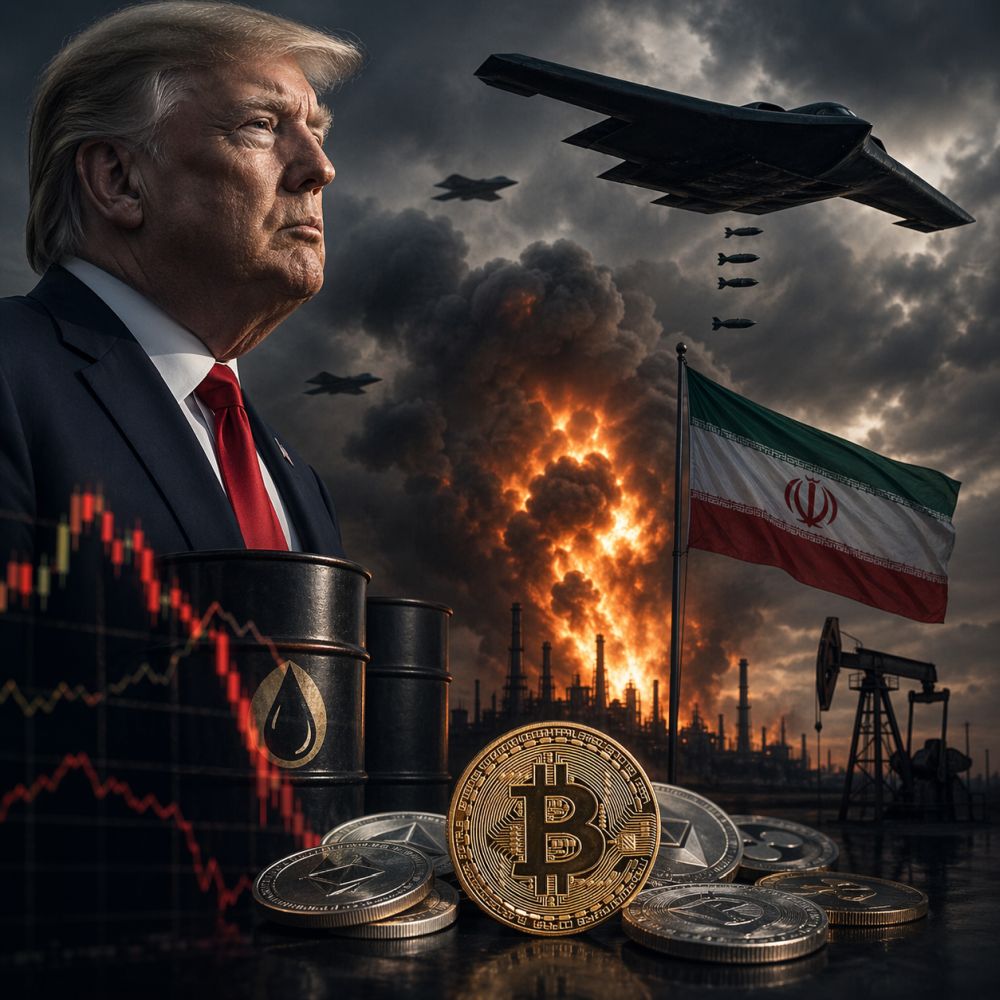
The global financial landscape is currently standing on a knife-edge as President Donald Trump issues a stark warning regarding the fragile ceasefire between the United States and Iran. With a critical deadline approaching, the president has signaled that military action is back on the table, a move that has sent shockwaves through both traditional energy sectors and the burgeoning world of digital assets. For investors in oil and Bitcoin, the stakes have never been higher, as geopolitical stability remains the primary driver of market volatility in 2026.
Trump Issues Bombing Threat as Ceasefire Deadline Looms
U.S. President Donald Trump has intensified his rhetoric against Tehran, stating in a recent interview that “lots of bombs start going off” if the current ceasefire agreement is not extended or replaced by a new deal this week. The president’s comments come as a U.S. delegation prepares for high-stakes negotiations, potentially in Islamabad, to address the ongoing conflict and Iran’s nuclear ambitions. Trump’s firm stance remains clear: any acceptable agreement must ensure that Iran never acquires nuclear weapons.
The threat of renewed hostilities has immediate implications for global trade, particularly concerning the Strait of Hormuz. This narrow waterway is a vital artery for the world’s energy supply, and any disruption there traditionally leads to a massive “risk-on” or “risk-off” reaction in the markets. By threatening to target Iranian infrastructure, including bridges and power plants, the Trump administration is exerting maximum pressure on Tehran to return to the negotiating table on Washington’s terms.
The Impact on Global Oil Prices and Energy Security
The energy market is perhaps the most sensitive to these geopolitical developments. If the ceasefire lapses and military strikes commence, analysts predict a significant surge in crude oil prices. Brent and WTI crude have already shown extreme sensitivity to the headlines, with some financial institutions suggesting that oil could easily surpass the 100 dollar per barrel mark if shipping lanes are compromised.
A spike in energy costs would not only affect the pumps but also fuel global inflation, potentially forcing the Federal Reserve to reconsider its monetary policy. The “Iran risk premium” is currently being baked into every barrel of oil traded, as the prospect of a prolonged blockade in the Strait of Hormuz threatens 20 percent of the world’s petroleum shipments. For the global economy, the cost of a “shooting war” in the Middle East could be a return to the high-inflation environment that policymakers have fought so hard to escape.
Bitcoin as a Hedge Against Geopolitical Instability
In the digital asset space, Bitcoin is once again being tested as a “safe-haven” asset or “digital gold.” During previous escalations in the U.S.-Iran conflict, Bitcoin has displayed a unique pattern of behavior. Initially, it often suffers from a “risk-off” liquidation alongside stocks as traders scramble for cash. However, these dips are frequently followed by sharp rebounds as investors look for assets that are outside the control of traditional banking systems and sovereign governments.
The current situation is even more complex due to Iran’s recent policy of charging oil tankers a fee of 1 Bitcoin per barrel to pass through the Strait of Hormuz. This move effectively links the price of Bitcoin to the physical movement of energy, making it a central player in global logistics. As Western sanctions continue to squeeze Iran’s access to traditional financial networks, the use of decentralized, censorship-resistant technology has become a necessity for Tehran, further cementing Bitcoin’s role in the theater of modern warfare.
Market Volatility and the Future of Crypto Risk
The interplay between bombs, oil, and Bitcoin highlights a new era of market risk. We are no longer looking at isolated events; rather, the “fusion” of energy prices and crypto liquidity means that a single tweet or interview from the White House can trigger billions of dollars in liquidations across multiple asset classes. Recently, the collapse of a round of negotiations led to nearly 890 million dollars in crypto liquidations in just six hours, illustrating how quickly sentiment can shift.
As the April 22 deadline for the ceasefire approaches, the world is watching to see if diplomacy will prevail or if the “bombs” Trump warned of will indeed start falling. For traders, the strategy is one of extreme caution. Whether Bitcoin acts as a volatile risk asset or a stable store of value in the face of war remains the most debated topic in the industry. What is certain is that the coming days will define the trajectory of the markets for the remainder of the year.
The Role of Stablecoins and Sanctions in the Conflict
Another layer of this geopolitical puzzle is the role of stablecoins. Recently, Tether blocked billions of dollars in assets linked to sanctioned entities, including those tied to the Iranian Revolutionary Guard. This has pushed Iran further toward Bitcoin, which lacks a central authority that can “freeze” wallets. This shift underscores why the Trump administration sees crypto as a significant factor in the efficacy of U.S. sanctions.
As tokenized real-world assets and stablecoins become more integrated into global trade, the lines between digital finance and national security continue to blur. The “Clarity Act” and other legislative efforts in the U.S. are also on the horizon, but they may be overshadowed by the immediate need to manage the fallout of a potential Middle Eastern war. Investors must now navigate a landscape where a geopolitical explosion is just as likely as a diplomatic breakthrough.









