


























































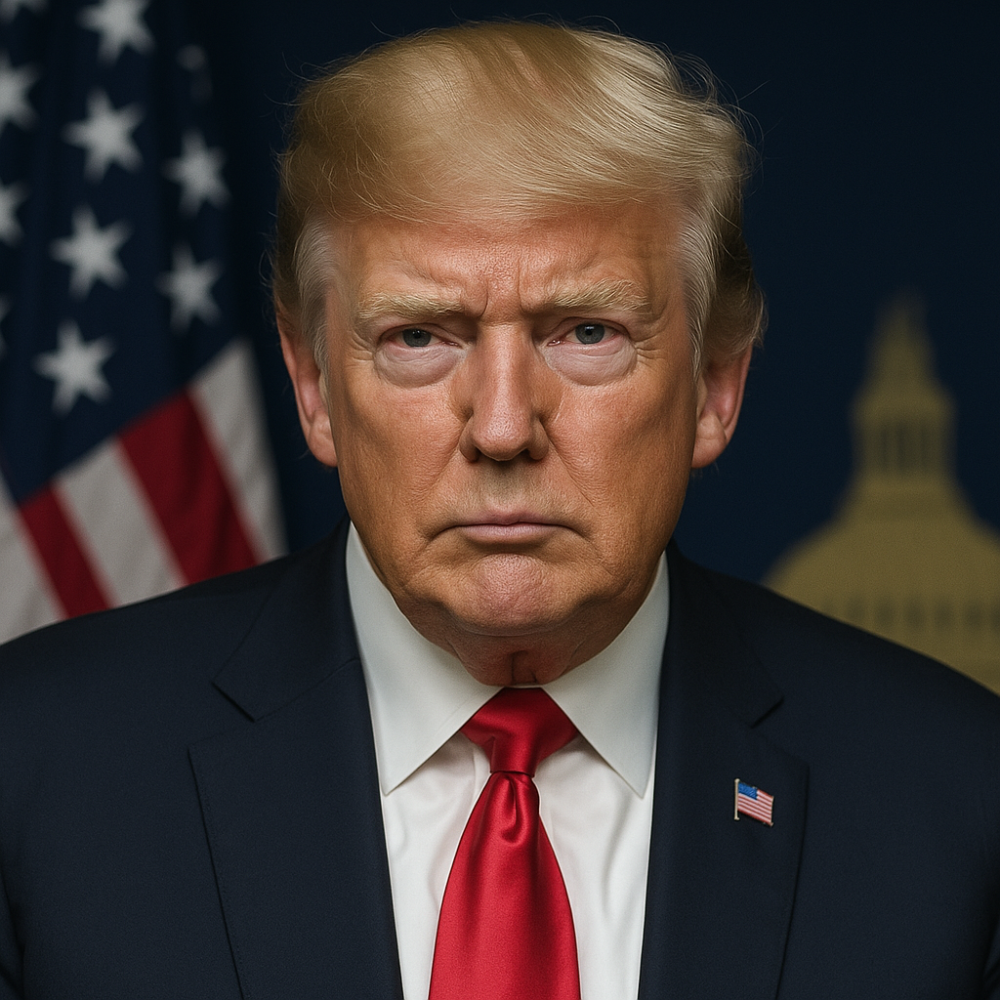
Trump’s New Crypto Strategy Raises Questions: Protection, Regulation or a Global Tax Trap
A new chapter is unfolding in the United States approach to digital assets under President Donald Trump. While he often promotes cryptocurrency as a path toward financial freedom and technological leadership, recent actions indicate a second narrative is emerging. Behind optimistic pro crypto speeches, the administration is preparing the foundation for a far reaching international tax enforcement system targeting offshore crypto holdings of American citizens.
This dual strategy has sparked debate among analysts. Some argue that Trump is attempting to position the United States as a global leader in digital assets while closing loopholes that allow capital to flow into foreign havens. Others believe this marks the beginning of a strict global surveillance model aimed at reclaiming tax revenue lost through offshore crypto activities.
At the center of this shift is CARF, the Crypto Asset Reporting Framework. This international agreement, supported by the OECD and adopted by more than forty countries, aims to create automatic tax information exchange for crypto accounts held abroad. If implemented fully in the United States, it would represent one of the largest expansions of tax oversight in the history of cryptocurrency.
Trump’s speeches have increasingly focused on economic protectionism and the repatriation of financial activity. Combined with the CARF initiative now sitting on the presidential desk, many industry experts believe a global crypto tax sweep is being shaped behind the scenes.
CARF Explained: The International Blueprint for Tracking Offshore Crypto Funds
CARF is often described as the crypto era equivalent of FATCA, the Foreign Account Tax Compliance Act. FATCA forced foreign banks to disclose details of American clients back to the United States. CARF follows a similar logic, but this time, it targets exchanges, custodians, trading platforms and institutions holding digital assets for US residents abroad.
More than forty countries have already agreed to adopt CARF. This includes major global financial centers and emerging crypto hubs. Locations that once served as favorable offshore environments, such as the Bahamas, Singapore or Dubai, are preparing to adjust their rules to meet upcoming requirements.
The primary objective is simple: force automatic reporting of crypto accounts belonging to American taxpayers. This would cover trading balances, transfers, custodial accounts and cross border activity. Under the proposal now circulating in Washington, Americans who open accounts on foreign exchanges would be required to report them to federal authorities. Failure to do so could result in penalties.
The U.S. administration has made its stance clear. In a report released earlier this year, the government stated that insufficient oversight of offshore crypto would harm national competitiveness. It suggested that by preventing citizens from moving digital capital offshore, the United States could strengthen its domestic digital asset economy.
In this context, regulation becomes an economic weapon. By closing the doors to foreign shelters, Washington aims to keep digital wealth inside US borders, whether for innovation, taxation, or strategic advantage.
A Global Battle Against Crypto Crime and Illicit Flows
The geopolitical backdrop to this shift is deeply tied to rising concerns over fraud, scams and illicit flows across the crypto sector. In 2024 alone, the United States Department of Justice estimated that crypto scam networks generated more than nine billion dollars in losses. Many of these operations originate from criminal centers abroad, where fraud networks can account for a large percentage of economic activity.
These networks often rely on offshore platforms to hide stolen funds. Victims’ capital is routed through unregulated exchanges, mixers and foreign wallets. CARF is designed to disrupt this pattern by forcing financial transparency and enabling cooperation between participating countries.
The United States is no longer the only major power tightening its approach. Nations like Japan, France and Germany already participate in CARF style data sharing agreements. Their focus is not merely tax enforcement but also the control of cross border crypto flows used to facilitate illicit activity.
This creates pressure on exchanges that refuse to share data. Platforms that do not comply with international standards risk being targeted by coordinated investigations or cut off from financial infrastructure.
At the same time, the Trump administration has taken care not to disrupt innovation entirely. CARF rules do not currently apply to decentralized finance. DeFi transactions remain outside reporting requirements, an exclusion that may be intentional. Regulators appear cautious about alienating the decentralization community, which forms a powerful ideological base in the crypto world.
Taxation, Regulation and Innovation: Why the Crypto Industry Is Divided
The growing push for global transparency has created a deep divide within the digital asset ecosystem. Some analysts welcome the movement, believing that regulatory clarity and stronger oversight will attract traditional institutional investors and ultimately strengthen the market. Others argue that excessive monitoring will destroy the original vision of crypto, which was built on financial privacy, autonomy and resistance to centralized control.
Between these two extremes are voices calling for a compromise. They argue that privacy and compliance can coexist if frameworks are built carefully. A hybrid model could allow financial regulators to track major illicit flows while preserving legitimate privacy for ordinary users. This approach is gaining attention among international policymakers and may eventually influence global standards.
Supporters of CARF say it will help legitimize crypto in the eyes of governments, financial institutions and large investors. Opponents claim it is the first step toward a new era of digital surveillance. The truth likely lies somewhere between these two positions. If implemented correctly, CARF could reduce malicious activity while fostering a safer and more regulated environment. If implemented carelessly, it could limit freedom, push innovation offshore and discourage adoption.
The crypto sector is already loud with warnings. Developers, exchanges and advocacy groups argue that poorly designed tax reporting laws could stifle growth. They worry that mandatory foreign reporting could overwhelm smaller participants and create barriers for new projects. For now, the fate of CARF in the United States remains undecided, but momentum is clearly building.
What CARF Means for Crypto Users, Traders and Offshore Platforms
If the United States adopts CARF, American taxpayers holding crypto abroad will face new obligations. Any digital account opened on a foreign platform would have to be declared to the IRS. Foreign exchanges in participating countries would send account data directly to US authorities on an automatic basis.
This could eliminate loopholes used to bypass domestic taxation. It could also reduce the ability of criminals to hide funds across borders. At the same time, it may limit the freedom of legitimate investors to choose where they store and trade their digital assets.
Offshore exchanges known for flexible rules may see reduced participation from US based clients. Investors who previously moved assets to avoid domestic reporting will face new compliance challenges. The change may also incentivize exchanges worldwide to begin aligning their operations with US standards, creating a ripple effect that shapes the entire global industry.
Some argue that CARF could help stabilize markets by discouraging rapid flows of undeclared capital. Others warn it may lead to liquidity fragmentation as investors seek new unregulated zones outside CARF coverage.
These concerns are amplified by the possibility that CARF could expand in scope over time. While DeFi is currently exempt, future revisions could bring decentralized services under reporting obligations, altering the structure of the entire ecosystem.
The SEC’s Surprising Silence and What It Means for Crypto Regulation
One of the most unexpected developments occurred when the US Securities and Exchange Commission released its strategic priorities for 2026. Crypto was not included on the list. The absence of digital assets from the SEC’s focus areas has been interpreted in different ways. Some see it as a sign that oversight may shift more toward tax and treasury authorities rather than securities regulators. Others believe it suggests the US is preparing a new regulatory model that places less emphasis on classification battles and more emphasis on taxation and transparency.
The timing of this omission is seen by some as a second warning. With CARF on the horizon and global coordination increasing, the United States appears determined to redefine how crypto is monitored. The shift may move from debates about whether tokens are securities toward a more comprehensive system of financial reporting and capital tracking.
For investors, this means the regulatory future of crypto may look very different from the past decade. Compliance may become more central. Privacy may become more difficult. Innovation may need to adapt to stricter frameworks.
Yet none of this guarantees that crypto will lose its appeal. Many believe that regulation will eventually strengthen digital assets by offering clarity and reducing the risks that discourage institutional participation.
A New Phase in America’s Crypto Policy Has Begun
The Trump administration’s movement toward CARF signals a major turning point. While the president continues to speak positively about cryptocurrency, his actions indicate a drive to control offshore flows, tighten tax oversight and align the United States with global transparency standards.
Whether this shift represents necessary modernization or excessive intrusion remains a subject of debate. The future of crypto will depend on how these measures are implemented and how the industry responds. As more countries adopt CARF and global surveillance networks expand, investors must prepare for a world where offshore secrecy becomes increasingly difficult.
The next few years will define whether cryptocurrency evolves into a fully regulated global asset class or whether privacy focused sectors like DeFi rise in response to growing state oversight.