
























































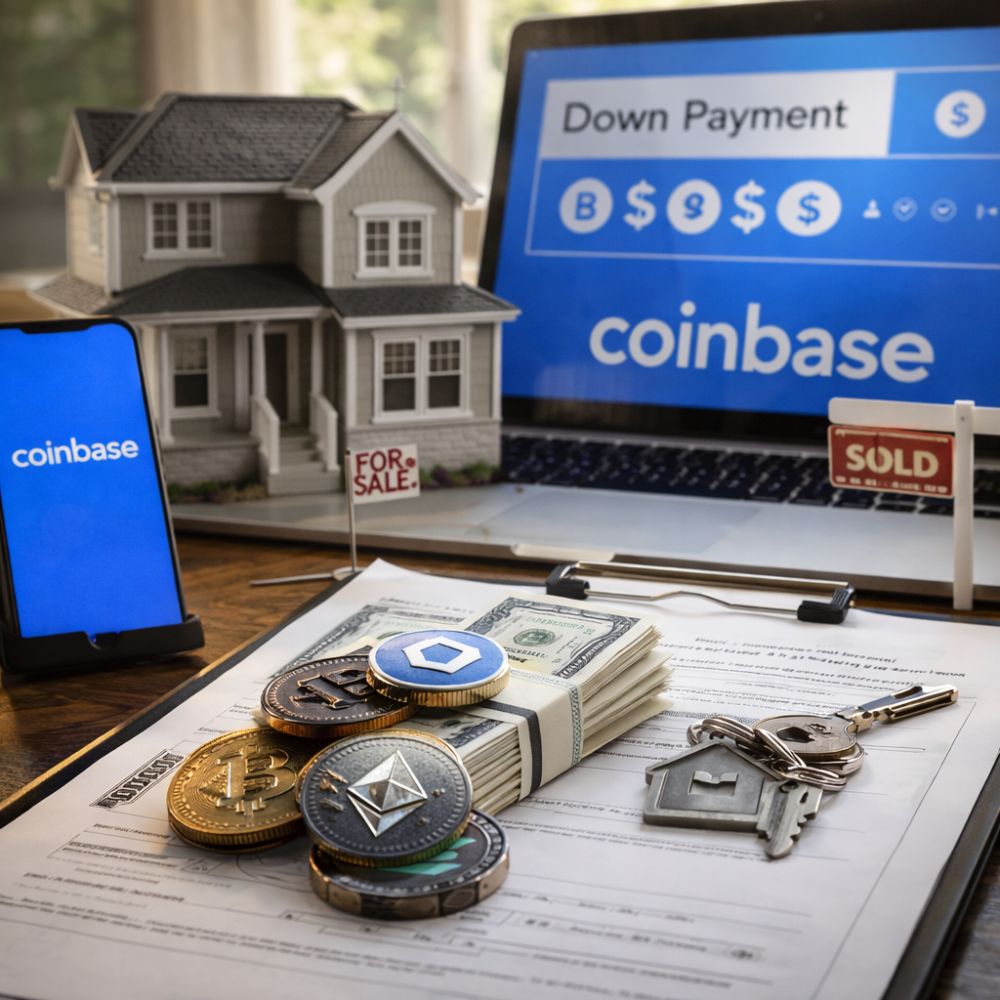
The integration of digital assets into the legacy financial system has reached a major milestone. As of late March 2026, the barrier between “crypto wealth” and “real estate” has finally been breached through a landmark partnership between Coinbase and Better Home & Finance. This initiative marks the first time that homeowners can use their digital holdings to secure a standard, Fannie Mae-backed mortgage without the need to sell their assets and trigger massive tax events.
For over a decade, cryptocurrency investors have faced a frustrating paradox: they might be “rich” on screen, but they are “cash poor” in the eyes of traditional mortgage lenders. To buy a home, a Bitcoin holder typically had to sell their assets, pay capital gains taxes, and then move the remaining cash into a traditional bank account for months to satisfy “seasoning” requirements. That era is officially ending. Through a new collaboration with Better Home & Finance, Coinbase is introducing a token-backed down payment system that allows buyers to pledge Bitcoin or USDC as collateral. This means you can keep your crypto and still move into your dream home, effectively bridging the gap between decentralized finance and the $55 trillion American housing market.
This product is not just a niche offering for the ultra-wealthy. Because these loans are designed to meet Fannie Mae’s conforming mortgage guidelines, they carry significantly lower interest rates than the predatory “crypto-loans” of the past. The structure is ingenious: the borrower takes out a standard mortgage for the home, while their digital assets are placed in a secure custody account with Coinbase to cover the down payment portion. This setup allows the digital asset to serve as a financial guarantee. As long as the borrower makes their monthly payments, their Bitcoin stays untouched, allowing them to benefit from any future price appreciation while living in a physical property they own.
The End of the Tax Trap- Pledging vs Liquidating Your Bitcoin
One of the biggest hurdles for crypto investors has always been the tax man. Under current IRS guidelines, selling Bitcoin to fund a down payment is a “taxable event.” If you bought Bitcoin at $20,000 and it is now worth $70,000, selling it to buy a house could result in a massive capital gains tax bill, effectively reducing your purchasing power by 20% or more. The Coinbase and Better partnership solves this by using a “pledge” model. Since you are not selling the asset, but rather using it as collateral for a loan, no capital gains tax is triggered. This allows homeowners to put 100% of their digital value to work toward their home, rather than handing a large chunk of it over to the government before the house hunt even begins.
Furthermore, this model offers a level of flexibility previously unseen in the mortgage industry. For those pledging USDC – a stablecoin pegged to the US dollar – the benefits are even more immediate. Pledged USDC can continue to earn rewards or interest while it sits in the collateral account. These earnings can then be applied directly to the mortgage’s monthly principal or interest, effectively lowering the homeowner’s net interest rate. It transforms a stagnant down payment into a productive asset that works to pay off the house faster. This is a radical departure from the traditional model, where a cash down payment sits in a bank escrow account earning zero for the borrower.
Institutional Safety- Fannie Mae and the New Housing Standard
The most significant aspect of this announcement is the involvement of Fannie Mae. For the uninitiated, Fannie Mae is a government-sponsored enterprise that provides liquidity to the mortgage market by purchasing loans from lenders. By agreeing to back these token-backed mortgages, Fannie Mae has effectively given cryptocurrency a “stamp of approval” for the most important asset class in the United States. This move signals to the broader financial world that digital assets like Bitcoin and USDC are now viewed as high-quality, reliable collateral. This institutional backing ensures that the loans are regulated, transparent, and integrated into the same consumer protection frameworks as any other home loan.
Critics have long worried that mixing crypto with housing could lead to 2008-style instability, but the Better-Coinbase model includes strict safeguards to prevent such a scenario. Unlike the highly leveraged “margin” trading found on crypto exchanges, these mortgages are built on conservative loan-to-value ratios. Additionally, the program is designed to avoid “flash liquidations.” In most cases, a drop in the price of Bitcoin will not trigger an immediate seizure of the asset. The collateral is only at risk if the borrower defaults on their actual mortgage payments for an extended period – typically 60 days – mirroring the protections found in traditional foreclosure processes. This stability makes the product viable for long-term homeowners rather than just short-term speculators.
The Future of Real Estate- From Bitcoin to Tokenized Equities
While the current rollout focuses on Bitcoin and USDC, the roadmap for this partnership is even more ambitious. Executives from both Coinbase and Better have indicated that this is only the first step toward the “tokenization of everything.” In the coming years, the platform plans to expand the types of assets that can be pledged for a home. This could include tokenized stocks, fixed-income products, and even “fractionalized” real estate. Imagine using your shares in a tech company or your ownership in a tokenized commercial building as the down payment for your primary residence. The goal is to create a seamless, digital-first financial identity where all your assets, regardless of their form, can be used to build your life.
This evolution is particularly important for the 52 million Americans who now own digital assets. As the “crypto-native” generation enters their prime home-buying years, they are looking for financial tools that match their digital lifestyles. They don’t want to deal with paper statements, weeks of manual underwriting, or the forced sale of their favorite investments. By moving the mortgage process onto the blockchain and utilizing AI-driven underwriting through Better’s Tinman platform, the industry is finally catching up to the speed of the internet. We are moving toward a world where a “mortgage” is simply a smart contract, and your “down payment” is a secure digital signature.
How to Qualify- What Potential Homeowners Need to Know
For those interested in taking advantage of this new frontier, the process is surprisingly similar to a traditional mortgage but with a digital twist. To qualify, borrowers still need to demonstrate a stable income and a solid credit score. The “crypto” part of the equation specifically replaces or supplements the “cash on hand” requirement for the down payment. Members of Coinbase One, the exchange’s premium subscription service, are even eligible for rebates on closing costs, further incentivizing the use of the platform. The first step for any potential buyer is to ensure their assets are held in a Coinbase account that supports the pledge program and to get a pre-approval through the Better platform.
As we move further into 2026, the success of this program will likely prompt other major lenders and exchanges to follow suit. The competition will be good for consumers, leading to even lower fees and more diverse asset options. However, for now, the Coinbase and Better partnership stands as the gold standard for crypto-integrated housing. It proves that the “Wild West” of crypto is maturing into a sophisticated tool for wealth preservation and homeownership. Whether you are a Bitcoin “HODLer” or a stablecoin saver, the path to the front door of your own home has never been more direct or more digital.