




















































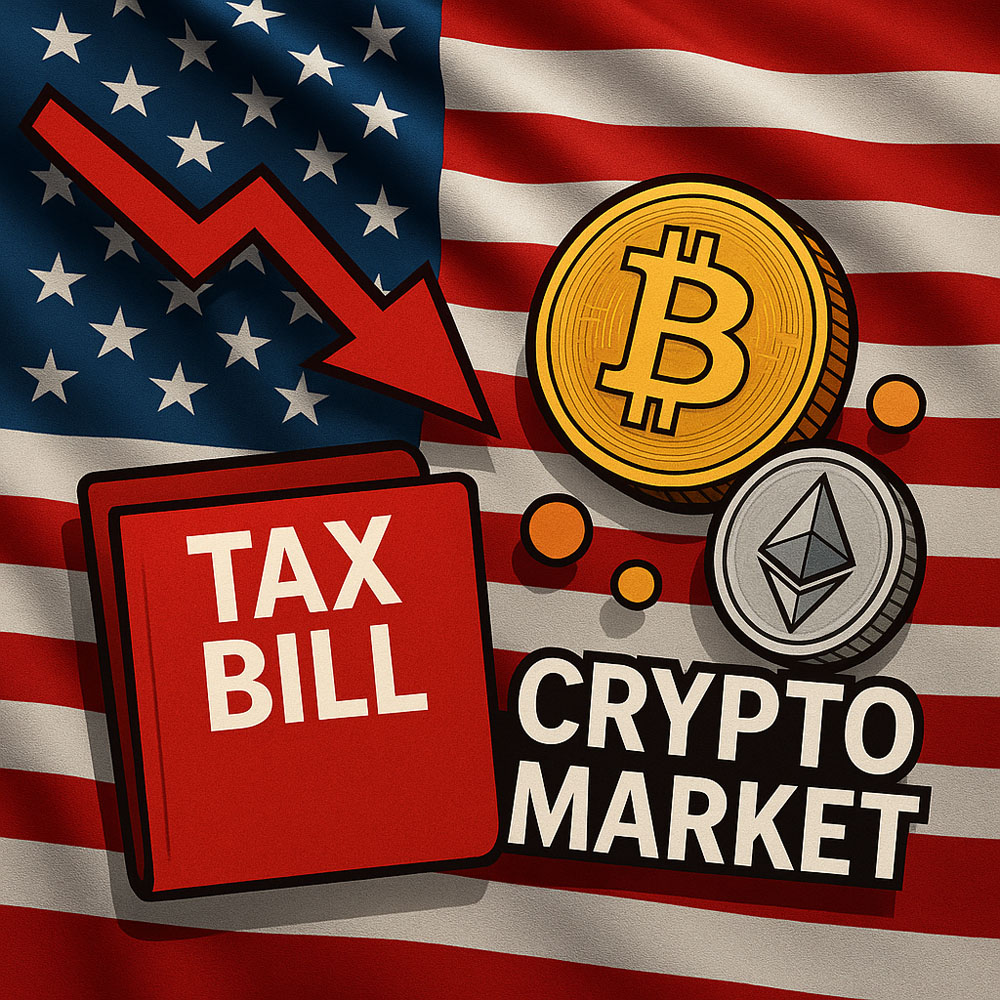
The cryptocurrency market is facing fresh uncertainty as the U.S. government pushes forward with a controversial new tax bill. Despite bullish headlines around blockchain adoption, digital assets like Bitcoin (BTC) and Ethereum (ETH) are under pressure, not because of on-chain issues, but due to off-chain macroeconomic turmoil. From growing deficit fears and rising interest rates to Elon Musk’s open opposition to fiscal policy, the crypto space is once again caught in the middle of a broader political and economic showdown.
Musk, a key influencer in both the tech and crypto worlds, has taken a hard stance against the proposed legislation. With slogans like “Kill the Bill” circulating on social media, his criticism highlights concerns over America’s growing national debt and its potential to bankrupt future generations. But there’s more beneath the surface — including personal fallout from his strained relationship with Donald Trump and the sidelining of Musk’s allies in key government appointments.
Elon Musk vs. Trump: The Political Drama Behind the Tax Bill
The story goes far deeper than Musk simply opposing new taxes. According to reports, Elon’s frustration stems from a series of decisions made by the Trump administration, including the removal of Jared Isaacman, Musk’s close associate, from consideration as NASA’s administrator. Moreover, Trump’s rejection of using Starlink for government infrastructure and reductions in electric vehicle tax credits hit Tesla directly in the wallet.
This tension may also explain Musk’s departure from the Dogecoin (DOGE) development team and his increasingly vocal criticism of federal leadership. The deterioration of this high-profile relationship, which once looked like a powerful tech-political alliance, has left investors questioning what direction the U.S. government will take on technology, crypto, and economic leadership.
To make matters worse, new reports suggest Elon Musk was denied extended tenure as a special government employee. This bureaucratic move, combined with revoked access to key space and defense contracts, paints a picture of retaliation, or at the very least, a massive shift in Washington’s view of private tech-sector allies.
China, Trade Wars, and Tariffs: The Global Ripple Effect on Bitcoin
As if internal politics weren’t enough, U.S.–China relations are once again flaring up. Trump recently met with Chinese President Xi Jinping in what analysts are calling a tense but necessary diplomatic meeting. The main issue? Tariffs. The cost of importing goods, especially from China, continues to skyrocket and the textile industry is feeling it first-hand.
Consider this example: a cotton sweater made in China that previously cost $6.80 to manufacture now comes with a total tariff burden of $12.68. That nearly doubles the wholesale price and inflates retail costs from $30 to nearly $58. The implications are massive, not only for American consumers but for inflation data and purchasing power overall.
Rising costs caused by tariffs are triggering another issue: a weakening U.S. dollar. Asset managers and hedge funds are increasingly shorting the dollar, with net short positions reaching $47 billion, their highest since December 2023. As confidence in the dollar declines, risk assets like Bitcoin and Ethereum could see renewed investor interest.
Stablecoins, Starlink, and the Digital Dollar: What’s Next?
Amid these geopolitical and fiscal uncertainties, tech infrastructure continues to evolve. Elon Musk’s Starlink, despite recent political friction, could play a pivotal role in expanding access to dollar-based stablecoins such as USDC and Tether (USDT). With Starlink’s global internet coverage, previously disconnected regions could gain access to digital dollars, increasing stablecoin adoption and creating new onramps into the crypto economy.
Nick Carter, a well-known Bitcoin advocate and analyst, believes this could transform international finance. As coverage expands, financial services tethered to USD via stablecoins could outcompete local currencies in regions hit hardest by inflation or capital controls. The irony? Even as Musk distances himself from Washington, his private ventures could support America’s global financial influence through blockchain rails.
Simultaneously, discussions around the Genius Act and new stablecoin regulations are intensifying. The bill could bring clarity to how stablecoins are issued, managed, and taxed – crucial elements as crypto firms push for legitimacy in the eyes of regulators and institutional investors.
Europe Cuts Rates – Will Powell Follow? The Macro Outlook
Across the Atlantic, the European Central Bank (ECB) has already taken decisive action by cutting its key interest rates by 25 basis points. While this move aims to stimulate growth amid geopolitical tensions and sluggish investment, it also signals a return to monetary easing. The ECB’s decision to print more money and lower borrowing costs raises a question for U.S. policymakers: Will the Federal Reserve be forced to follow?
U.S. labor markets are beginning to show cracks. According to recent surveys, 66% of Americans now expect a rise in unemployment over the next year — the highest figure since the 2008 financial crisis. In response, pressure is mounting on Federal Reserve Chairman Jerome Powell to slash interest rates, a move former President Trump is already pushing for.
But Powell remains cautious, especially with inflation not yet fully under control. The next rate decision could be pivotal for both traditional and digital asset markets. If the Fed does ease, Bitcoin and Ethereum may surge, especially if they remain the most attractive hedges against monetary debasement.
Institutional Bitcoin Adoption Accelerates: JPMorgan Enters the Game
Even with policy battles dominating headlines, institutional interest in Bitcoin continues to rise. JPMorgan has taken a historic step by announcing it will accept crypto ETFs -0, specifically, iShares Bitcoin Trust, as loan collateral. This move significantly legitimizes Bitcoin as a financial instrument and sets the stage for other blue-chip cryptocurrencies like Ethereum (ETH) to follow.
JPMorgan’s decision also opens new doors for traditional investors who have been cautious about crypto exposure due to lack of regulatory clarity. With ETFs now accepted as valid collateral, wealth managers, pension funds, and hedge funds may increase their crypto allocations without directly holding volatile assets.
This trend mirrors what we’ve seen in real estate and equities — once big banks recognize an asset class as legitimate, the domino effect spreads fast. Ethereum and possibly other smart contract platforms like Solana (SOL) or Avalanche (AVAX) may soon benefit from similar treatment.
Circle IPO, ETF Momentum, and a Coming Melt-Up?
One of the biggest upcoming stories is the rumored IPO of Circle – the firm behind USDC, one of the largest stablecoins by market cap. While some investors remain cautious, especially after Coinbase’s volatile IPO in 2021, the current market structure is much more mature.
Back then, Bitcoin was surging, altcoins were flying, and the hype was unsustainable. Today, however, Bitcoin has reached new highs while altcoins have yet to catch up. This divergence suggests we may still be early in the current cycle.
Veteran analyst Tom Lee believes the conditions are set for a major “melt-up” rally. Despite conservative outlooks from traditional investors and high cash reserves on the sidelines, digital assets are already showing signs of breakout behavior. If confidence improves, through tariff resolutions or Federal Reserve rate cuts, the crypto market could see a parabolic move upward.
Pressure, Potential, and the Path Forward for Crypto
The intersection of politics, regulation, and economics is creating a perfect storm – but not all storms are bad. For cryptocurrencies like Bitcoin and Ethereum, volatility may be the cost of progress. From government infighting to institutional breakthroughs, the landscape is shifting rapidly. Tariffs, tax bills, and tech industry feuds may dominate headlines, but underneath it all, blockchain is becoming more ingrained in global finance.
If you’re a long-term crypto investor, this is the moment to stay informed, stay strategic, and stay diversified. While risks remain high, the upside potential is equally massive, especially if rate cuts, stablecoin legislation, and institutional backing continue to evolve as expected.









