


























































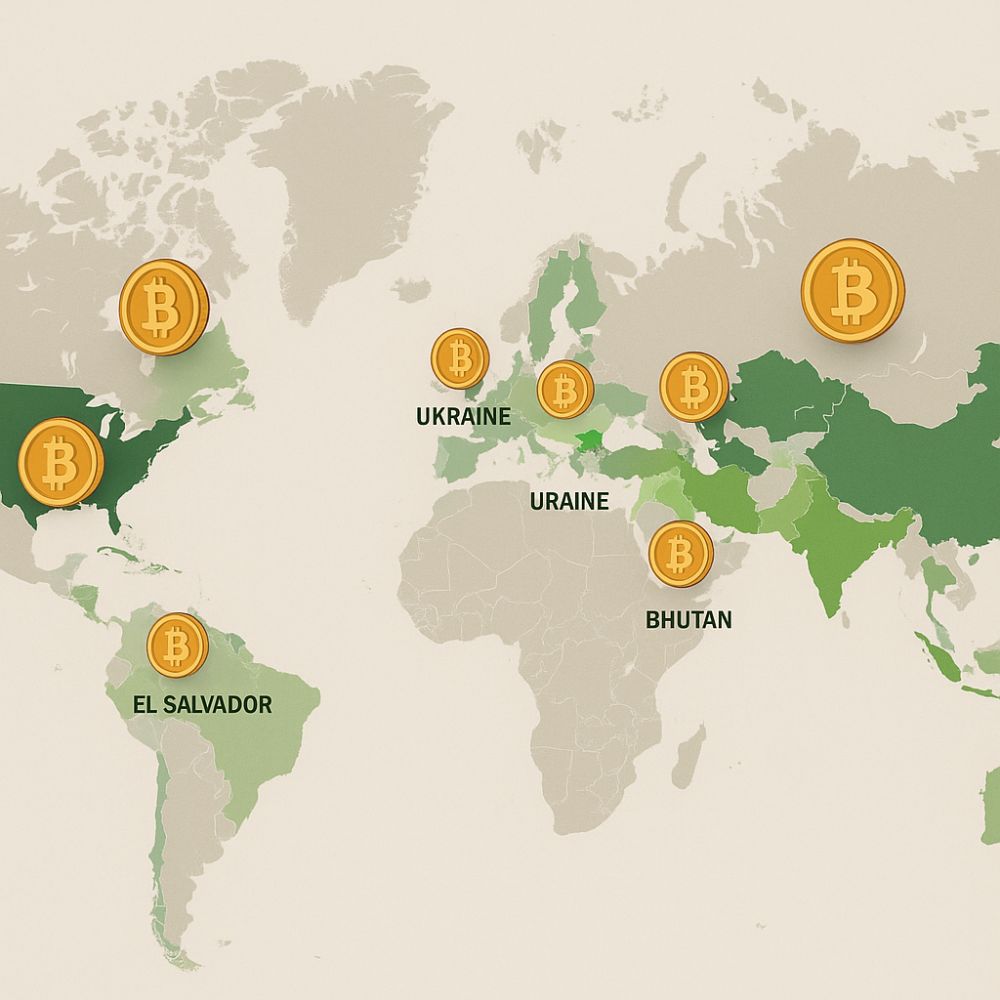
Global interest in bitcoin has evolved far beyond retail speculation and institutional accumulation. In 2025, national governments have emerged as some of the largest holders of bitcoin, either through direct strategy or through the growing number of law enforcement seizures connected to criminal investigations. What was once considered a fringe digital asset has now made its way into national treasuries, geopolitical planning, and international financial discussions. As bitcoin continues to mature, its distribution among governments provides insight into how nations are preparing for the long term digital economy.
Today, some of the most significant bitcoin reserves are controlled not by hedge funds, corporations, or wealthy investors, but by national authorities whose holdings reach deep into the hundreds of thousands of coins. With bitcoin trading above one hundred thousand dollars per coin in 2025, these reserves collectively represent tens of billions of dollars.
This article offers a comprehensive examination of the countries with the largest bitcoin holdings as of July 2025, while also exploring the reasons behind these accumulations, the methods by which governments acquire bitcoin, and the implications this trend carries for global finance.
Understanding the Growth of Government Bitcoin Holdings
For many years, bitcoin was primarily associated with private investors, early adopters, and technology enthusiasts. Governments paid little attention until bitcoin became involved in criminal investigations, tax issues, and cross-border financial activity. This forced national authorities to interact with the asset. As a result, most official government bitcoin holdings began not with investment strategies but through the seizure of digital assets from illegal activity.
Over time, however, the appeal of bitcoin as a strategic asset began to grow. Some governments started to view bitcoin as a hedge, others as a store of value, and several nations began mining operations or regulatory programs that resulted in them holding increasing amounts of the digital currency.
By 2025, governments collectively hold more bitcoin than many of the world’s largest corporations. The top ten government holders control more than 2.5 percent of the global supply, a figure that is likely to grow as more nations reconsider their stance on digital assets.
The United States Holds the Largest Government Bitcoin Reserve
The United States now holds the largest known government stash of bitcoin, totaling 198,022 coins valued at more than 23 billion dollars in mid 2025. This represents nearly one percent of all bitcoin in existence.
How the United States Accumulated Its Bitcoin
Most of the US bitcoin reserves originate from law enforcement seizures. Over the past decade, agencies such as the FBI, IRS Criminal Investigation, and the Department of Justice have seized significant quantities of bitcoin connected to crimes including darknet marketplace activity, fraud, money laundering, and ransomware cases.
One of the most well known incidents occurred in 2013 when the FBI seized over 144,000 bitcoin from the Silk Road marketplace. At the time, the value of this bitcoin was a fraction of what it represents today. The founder of Silk Road, Ross Ulbricht, was later sentenced to life in prison, but was pardoned in early 2025 by President Donald Trump, reopening public discussion on the case.
In addition to Silk Road, numerous other seizures have occurred, including cryptocurrency confiscated from hacking groups, insider trading schemes, and illicit financial networks.
Why the United States Continues to Hold Its Bitcoin
The US government periodically auctions a portion of seized bitcoin, but in recent years the trend has shifted. Instead of rapidly liquidating all holdings, federal authorities have chosen to retain a notable amount in reserve. Analysts believe the reasons include the recognition of bitcoin as a strategic asset, the desire to maintain holdings for potential future use in research or national programs, and the possibility that bitcoin may function as a long term hedge within the national balance sheet.
With nearly two hundred thousand bitcoin under its control, the United States now sets the benchmark for governmental digital asset reserves worldwide.
China Follows Closely Behind as a Major Bitcoin Holder
China’s holdings of 190,000 bitcoin place it just behind the United States. Despite its strict regulatory stance on retail cryptocurrency trading and mining, China has accumulated a massive bitcoin reserve primarily through law enforcement activities.
Bitcoin Acquired Through Criminal Case Confiscations
Over the past decade, China has been involved in numerous investigations into illegal mining, financial fraud, cybercrime, and unauthorized exchange operations. A combination of forced shutdowns, confiscations, and legal proceedings has resulted in the government securing large amounts of bitcoin.
Even though China banned cryptocurrency transactions and mining on a wide scale, many underground operations continued, especially in regions where inexpensive electricity made mining profitable. When these activities were discovered, the government often seized the mining equipment along with any digital assets associated with them.
China’s Strategic Interest in Bitcoin
While China restricts private ownership and trading, it has kept significant amounts of bitcoin in state custody. This has led analysts to question whether the government will eventually shift its stance and use digital assets as part of its long term financial or technological strategy. China remains deeply invested in the development of central bank digital currencies and blockchain technology, and some believe that retaining bitcoin enhances the country’s leverage within the global digital economy.
The United Kingdom Holds One of the Largest European Bitcoin Reserves
The United Kingdom controls 61,245 bitcoin, valued at more than seven billion dollars. Similar to the United States, the majority of these holdings come from criminal case seizures.
High Profile Investigations and Asset Seizures
UK authorities have been increasingly active in digital asset enforcement. Over the past decade, the Crown Prosecution Service and law enforcement agencies have confiscated bitcoin from fraud networks, cybercrime organizations, and large scale money laundering operations. These seizures have led to a steady accumulation of bitcoin within government control.
Strategic Regulatory Approach
The United Kingdom has been developing a comprehensive regulatory environment for crypto assets. With clearer frameworks for exchanges, custodians, and financial institutions, the country has moved toward becoming a regulated hub for digital asset innovation. While its bitcoin holdings are not strategic investments, they still position the UK as a significant player in the digital asset landscape.
Ukraine and North Korea: Two Unexpected Major Holders
Both Ukraine and North Korea appear on the list of countries holding large reserves of bitcoin, but for very different reasons.
Ukraine’s Bitcoin Connected to Cyber Activity and Donations
Ukraine holds roughly 46,351 bitcoin. Much of the country’s digital asset reserves comes from crypto seized in cybercrime investigations or donated during international support campaigns after geopolitical conflicts. Crypto became a major funding channel for Ukraine due to its efficiency and global accessibility.
North Korea’s Bitcoin Linked to State Sponsored Cyber Operations
North Korea’s estimated 13,562 bitcoin is believed to originate from state sponsored hacking operations. The country has been repeatedly linked to cyber theft cases targeting exchanges, financial institutions, and blockchain projects. Bitcoin secured from these activities forms part of the country’s restricted financial reserves.
Bhutan’s Surprising Bitcoin Accumulation
Bhutan, a small nation known for its environmental initiatives and hydropower resources, has emerged as an unexpected participant in large scale bitcoin mining. Bhutan reportedly controls more than 11,000 bitcoin that were acquired through mining operations conducted discreetly over several years.
Bhutan’s abundant hydropower offers extremely low cost electricity, making bitcoin mining highly profitable. The government’s involvement has only recently become public, revealing a strategic plan to diversify national wealth using sustainable mining.
El Salvador: The First Country to Officially Adopt Bitcoin
El Salvador holds 6,257 bitcoin. Unlike most nations whose holdings come from seizures, El Salvador became the first country to purchase bitcoin directly as part of its official financial and economic strategy.
Bitcoin as Legal Tender
In 2021, El Salvador declared bitcoin legal tender. Since then, the government has continued to purchase bitcoin and even mine it using volcanic geothermal energy. This bold national experiment has been closely watched by economists and global policymakers.
The Financial Impact
The total value of El Salvador’s holdings exceeds 740 million dollars. The country’s leadership believes bitcoin will strengthen national independence, attract investment, and modernize its financial infrastructure.
Other Countries With Smaller Holdings
Venezuela and Finland each report small amounts of bitcoin, mainly derived from criminal cases. Although their holdings are modest, they demonstrate that bitcoin has become an asset class that governments must increasingly address in both policy and practice.
Global Implications of Growing Government Bitcoin Reserves
The fact that governments now hold more than 2.5 percent of bitcoin’s supply carries major implications for the market and for the future of digital assets.
Bitcoin as a Geopolitical Asset
As countries continue to accumulate bitcoin, either consciously or through enforcement, digital assets are becoming tools of geopolitical influence. Nations with larger bitcoin reserves may gain strategic financial advantages, especially in a world where decentralized assets play a growing role in international trade, investment, and global liquidity.
Increasing Rarity and Reduced Circulation
Governmental control of bitcoin removes significant supply from the active market. As governments accumulate and hold reserves over long periods, bitcoin’s circulating supply decreases, potentially influencing scarcity and long term pricing dynamics.
Shifting Attitudes Toward Bitcoin Regulation
When governments become stakeholders in bitcoin’s success, regulatory perspectives may begin to shift. Nations holding large reserves may seek to support a stable and secure digital asset ecosystem.
Future Growth of Government Holdings
As cyber finance expands and digital enforcement increases, more bitcoin will inevitably fall under government control. Additionally, more countries may adopt strategic mining or reserve accumulation policies.









