


























































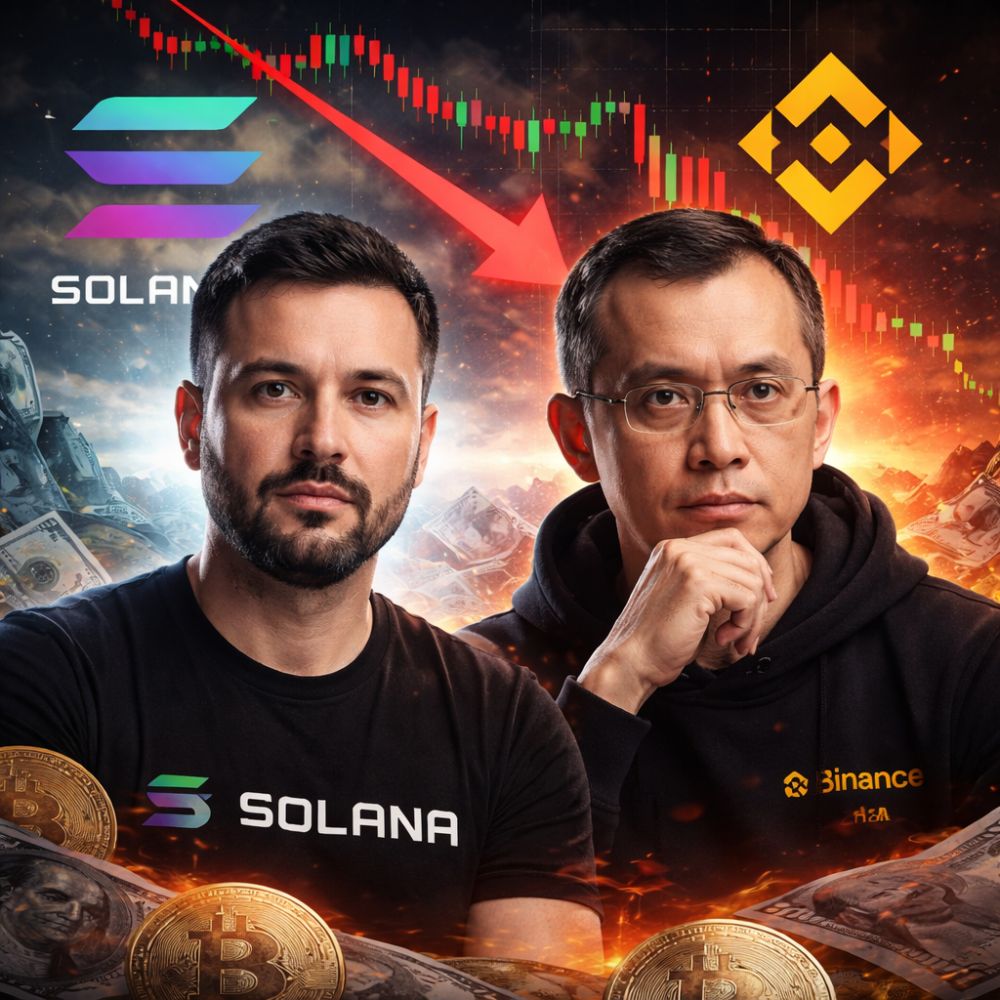
Crypto Market Turmoil Rekindles Old Tensions
The cryptocurrency market has once again entered a period of heightened tension following the sharp market downturn that unfolded on October 10. While price volatility is nothing new in digital assets, the aftermath of this particular crash has extended far beyond charts and liquidation data. Instead, it has ignited a very public dispute among some of the most influential figures in the crypto industry, exposing deeper disagreements about risk management, incentives, and accountability across centralized and decentralized platforms.
As traders assessed losses and investors searched for clarity, a series of public statements and social media exchanges added fuel to an already fragile market environment. At the center of the debate stood Anatoly Yakovenko, co-founder of Solana Labs, whose comments on the potential duration of the downturn quickly captured the attention of the crypto community. His remarks not only sparked discussion about the next market cycle but also triggered reactions from major exchanges and industry leaders, including Changpeng Zhao, the founder of Binance.
What began as a macro level observation about market cycles soon evolved into a broader conflict involving Binance, OKX, and prominent liquidity providers. The result was a multi layered debate that highlighted long standing concerns about leverage, incentive driven products, and the systemic risks that continue to shape the crypto ecosystem.
Anatoly Yakovenko Warns of a Prolonged Bear Market
In the days following the October 10 market crash, Anatoly Yakovenko took to the social media platform X to share his perspective on what the downturn could mean for the broader crypto landscape. According to Yakovenko, the scale and structure of the crash suggested that the market might be entering a prolonged bearish phase that could last as long as eighteen months.
Rather than framing this outlook purely as a negative development, Yakovenko positioned it as a potential opportunity. He suggested that extended bear markets historically provide the ideal environment for builders to focus on innovation, infrastructure, and long term value creation without the distractions of speculative excess. In his view, a sustained downturn could give developers the time and space needed to strengthen the foundations of the crypto ecosystem.
This perspective resonated with many long term participants who have experienced previous market cycles. Historically, some of the most impactful blockchain projects and technological breakthroughs have emerged during periods of reduced market hype. Yakovenko’s comments echoed that sentiment, emphasizing resilience and long term thinking over short term price action.
Subtle Jabs and References to the FTX Recovery
Yakovenko’s commentary did not stop at general market observations. He also amplified a post by the founder of OKX, Star, who had implied that Binance bore responsibility for the October 10 and October 11 market turmoil. In retweeting the post, Yakovenko added a remark that many interpreted as lightly sarcastic, referencing how long it took for the Solana ecosystem and the SOL token to recover following the collapse of FTX.
The remark appeared to allude to the roughly eighteen month period it took for SOL to regain strength after being heavily impacted by the FTX implosion. Given Solana’s historical ties to FTX and Alameda Research, the comparison was not lost on market observers. For some, the comment underscored Yakovenko’s belief that markets do recover with time. For others, it suggested a subtle critique of how narratives and blame are often assigned in moments of crisis.
Regardless of interpretation, the exchange drew widespread attention and contributed to an increasingly polarized conversation within the crypto community.
Changpeng Zhao Unfollows Yakovenko
Shortly after these interactions gained traction, on chain analysts and social media users noticed that Changpeng Zhao had unfollowed Anatoly Yakovenko on X. While unfollowing someone on social media may seem minor, in the context of crypto leadership and public discourse, such actions are often viewed as symbolic.
The move was widely interpreted as a signal of disagreement or disapproval, further escalating speculation about growing friction between leaders of major blockchain ecosystems and centralized exchanges. Although Zhao did not publicly comment on the unfollowing, the timing left little doubt that it was connected to the unfolding debate around responsibility for the market crash.
In an industry where narratives can move markets as much as fundamentals, even subtle gestures can carry weight. The unfollowing became another data point in a rapidly evolving story of rivalry, accountability, and influence.
OKX Founder Directly Accuses Binance
While earlier remarks from OKX leadership had been indirect, the aftermath of the October crash marked a shift in tone. Star, the founder of OKX, directly accused Binance of playing a central role in triggering the market turmoil. According to his statements, the crash was linked to Binance’s incentive mechanisms surrounding its USDe related products.
Star argued that Binance encouraged users to convert stablecoins such as USDT and USDC into USDe by offering attractive yields. While such incentives are common across the crypto industry, he claimed that the associated risks were not adequately communicated to users. In his view, this imbalance between rewards and risk disclosure created a fragile market structure vulnerable to even minor shocks.
He further asserted that once market conditions shifted, this fragility led to rapid liquidations that cascaded across multiple chains. According to Star, the design of these incentives amplified volatility rather than absorbing it, contributing to the scale and speed of the crash.
Incentive Structures and Systemic Risk in Crypto
The accusations leveled by the OKX founder reignited a long standing debate within crypto circles about incentive driven growth. Yield programs, liquidity mining, and reward based conversions have played a major role in attracting users and capital to platforms. However, critics have long warned that such mechanisms can distort risk perception and encourage excessive leverage.
In highly interconnected markets, these dynamics can lead to chain reactions when conditions change. Even a relatively small external trigger can set off liquidations that ripple across exchanges, protocols, and assets. The October crash, according to Star, was a textbook example of how incentive structures can become sources of systemic risk when not carefully designed and communicated.
Supporters of this view argue that transparency and conservative risk modeling are essential as the industry matures. Without them, the same growth strategies that drive adoption during bull markets can exacerbate downturns when sentiment reverses.
Binance Responds to Rising FUD
As speculation intensified, Changpeng Zhao addressed what he described as a surge in FUD surrounding Binance’s role in the October crash. He firmly rejected claims that the incident was caused by any system error, technical malfunction, or improper platform operation on Binance’s part.
Zhao emphasized that Binance operates within regulatory frameworks and has no incentive to engage in illegal or irresponsible behavior. According to him, the narrative blaming Binance overlooked broader market dynamics and external factors that were at play during the crash.
He also noted that no centralized exchange can realistically guarantee uninterrupted uptime under all conditions. High volatility and surging trading volumes can strain even the most robust infrastructure. Zhao pointed out that these limitations are clearly outlined in user agreements and that Binance has a track record of compensating users when platform related issues lead to losses.
The Role of Liquidity and Market Conditions
One of the most significant interventions in the debate came from Evgeny Gaevoy, the founder of Wintermute, a major crypto market maker. Gaevoy publicly supported Binance’s position, arguing that the October 11 crash bore the hallmarks of a classic flash crash rather than a platform failure.
According to Gaevoy, the incident occurred in a highly leveraged market during a period of low liquidity. He highlighted the timing of the crash, which coincided with macroeconomic news released late on a Friday. Such conditions, he explained, are particularly prone to sharp price movements due to thinner order books and reduced market participation.
From this perspective, the crash was the result of structural market vulnerabilities rather than the actions of any single exchange. Gaevoy’s analysis suggested that leverage and liquidity dynamics played a more significant role than incentive policies alone.
Binance Leadership Reinforces Its Position
Adding to the discussion, Binance CEO He Yi personally addressed questions from the community. She echoed Gaevoy’s assessment, noting that Wintermute possessed both the data and technical expertise necessary to analyze the incident objectively.
He Yi also revealed that Binance leadership had met with OKX founder Star in December 2025. According to her account, the October incident was not raised during that meeting. She suggested that the recent accusations were unexpected, given that no concerns had been formally expressed at the time.
This revelation introduced another layer of complexity to the situation. It raised questions about why the issue was being publicly emphasized months later and whether shifting market conditions or competitive pressures were influencing the narrative.
Market Cycles, Accountability, and the Road Ahead
The clash between Solana, Binance, and OKX leadership underscores the challenges facing an industry still grappling with rapid growth and evolving standards. As crypto markets become more interconnected, assigning responsibility for crashes becomes increasingly complex.
Yakovenko’s prediction of an eighteen month bear market may or may not prove accurate, but it reflects a broader recognition that the industry is entering a phase of reflection and recalibration. Extended downturns often force difficult conversations about leverage, incentives, and transparency.
Whether the October crash will ultimately be remembered as a turning point or just another chapter in crypto’s volatile history remains to be seen. What is clear, however, is that the debates it sparked highlight the need for clearer communication, stronger risk management, and a shared commitment to long term stability.
The events following the October 10 crash reveal more than just market volatility. They expose underlying tensions between major players, differing philosophies on growth and risk, and the ongoing struggle to balance innovation with responsibility.
As the crypto industry moves forward, these discussions may prove just as important as any technological upgrade or regulatory development. Bear markets test not only prices, but also leadership, trust, and the ability of the ecosystem to learn from its own vulnerabilities.