



























































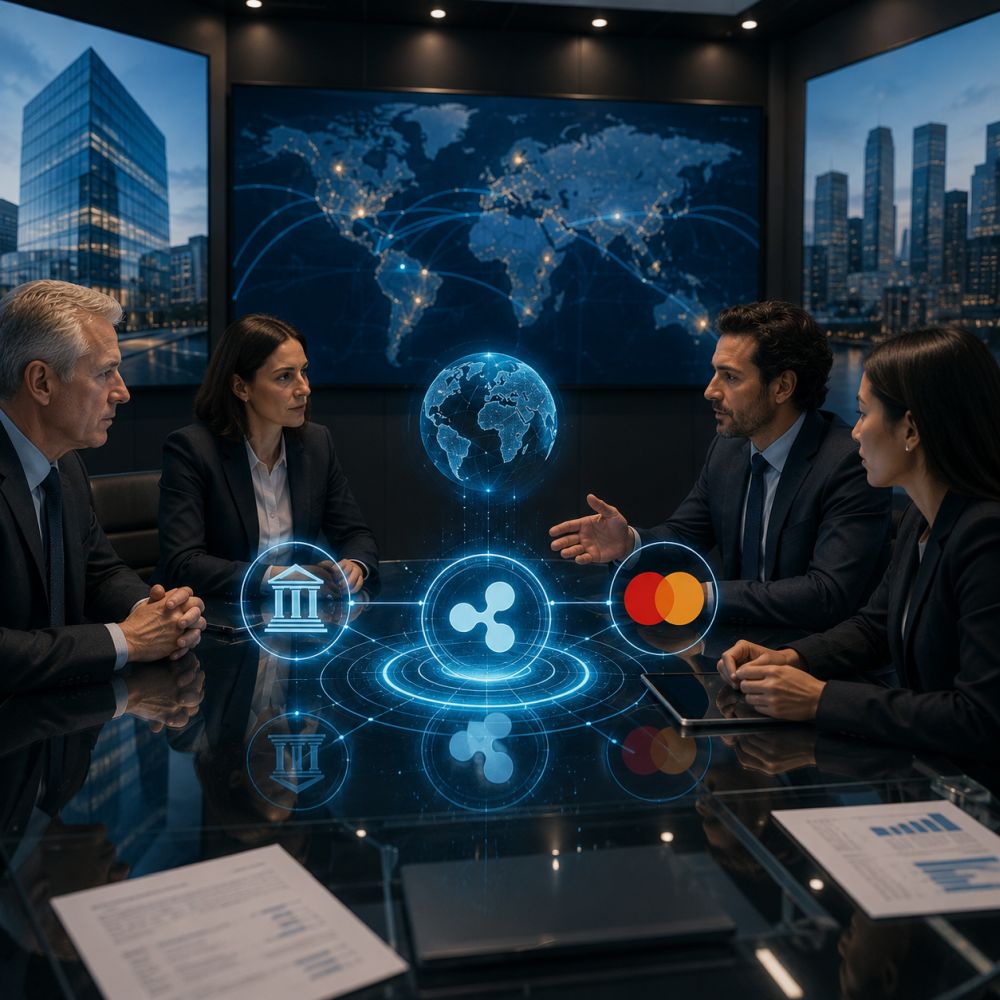
The Evolution of Global Finance Through Ripple and JPMorgan Collaboration
The global financial landscape is currently experiencing a monumental shift as traditional banking giants and blockchain innovators converge to redefine how money moves across borders. Recently, a landmark achievement was reached when JPMorgan, Mastercard, and Ripple successfully completed a pilot program for cross-border settlement involving tokenized United States Treasury funds. This collaboration represents more than just a technical trial; it is a profound signal that the infrastructure of the future is being built today. By integrating the high-speed capabilities of the XRP Ledger with the institutional weight of JPMorgan and the payment routing expertise of Mastercard, this group has demonstrated that the “last mile” of financial settlement can be bridged efficiently. The pilot focused on the redemption of tokenized assets, specifically the OUSG tokens from Ondo Finance, showing that a public blockchain can trigger a seamless payout through regulated banking rails even outside of traditional operating hours. This is a massive leap forward for liquidity management and institutional trust in digital assets.
The Role of XRP Ledger in Real-World Asset Tokenization
A critical component of this successful settlement was the utilization of the XRP Ledger to facilitate the record-keeping and transfer of the tokenized assets. In this specific use case, the XRP Ledger leg of the transaction was processed in less than five seconds, showcasing an incredible level of efficiency that traditional settlement systems simply cannot match. The pilot involved the redemption of Short-Term U.S. Government Treasuries, which were represented as digital tokens. When Ripple initiated the redemption of its OUSG holdings, the XRP Ledger provided the transparent and immutable ledger necessary to confirm the transaction. This proof of concept highlights why the tokenization of real-world assets, often referred to as RWA, is becoming one of the most significant trends in the crypto space. By placing assets like government bonds on a blockchain, institutions can achieve near-instantaneous settlement, reducing the risks associated with long waiting periods and manual oversight.
Integrating Mastercard Multi-Token Network and Kinexys by JPMorgan
The technical sophistication of this project was further enhanced by the participation of Mastercard and JPMorgan. Mastercard utilized its Multi-Token Network to serve as a secure instruction layer, ensuring that the request for payment was routed correctly and securely. Meanwhile, JPMorgan utilized its Kinexys platform, which was formerly known as its blockchain division, to handle the actual movement of fiat currency. Once the tokenized asset was burned or redeemed on the XRP Ledger, the instruction was passed through Mastercard to JPMorgan. The bank then debited the appropriate accounts and used its extensive correspondent banking network to deliver the final U.S. Dollar proceeds to Ripple’s bank account in Singapore. This hybrid approach is essential because it allows the speed of blockchain to handle the asset layer while the stability and regulation of the banking system handle the cash layer. It creates a “best of both worlds” scenario that satisfies regulators while providing the 24-7 availability that the modern digital economy demands.
The Future of Institutional Blockchain Adoption and Global Liquidity
Looking ahead, the success of this pilot between Ripple, JPMorgan, and Mastercard sets a new standard for the industry. It proves that public blockchains like the XRP Ledger are not just for speculative trading but are robust enough to handle institutional-grade financial products. The ability to settle a U.S. Treasury redemption across borders in a matter of seconds, rather than days, has massive implications for global liquidity. For corporate treasuries and large financial institutions, this means capital is no longer “trapped” in settlement cycles. Instead, funds can be moved and reinvested almost immediately. As we move further into this decade, we can expect to see more traditional assets, from real estate to private equity, being tokenized and traded on these advanced networks. This pilot is the starting gun for a new era where the distinction between “crypto” and “finance” begins to disappear, replaced by a single, unified, and highly efficient global monetary system.