


























































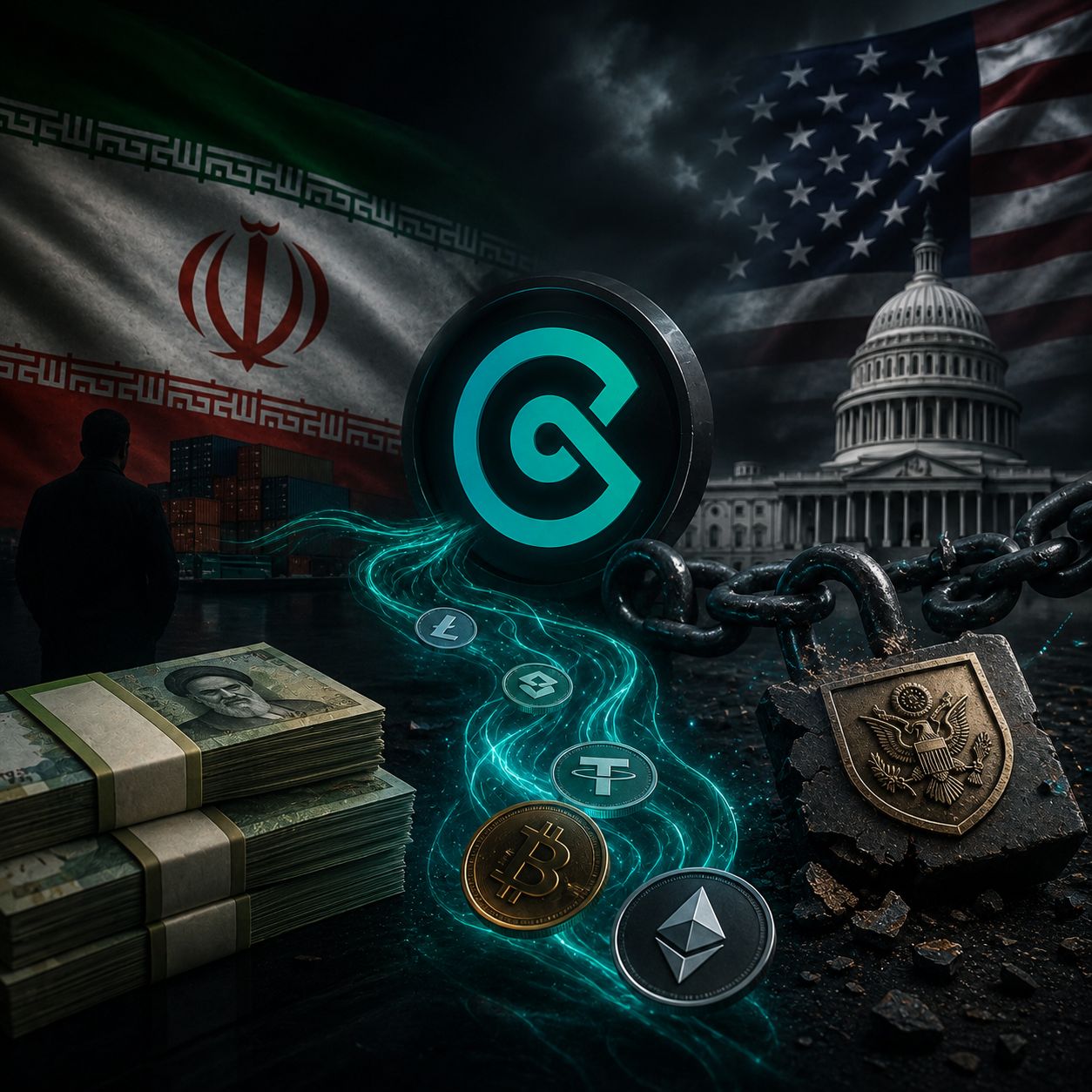
The global cryptocurrency landscape is confronting an unprecedented regulatory crisis as blockchain surveillance platforms uncover the massive scale of state-sponsored sanctions evasion networks. Cryptocurrency transactions are fundamentally designed to operate on open decentralized infrastructure, but when global trading platforms systematically interface with sanctioned government entities, the foundational integrity of the international financial system is directly threatened. A comprehensive on-chain investigation conducted by digital intelligence firm TRM Labs has exposed a multi-billion-dollar financial pipeline operating between CoinEx, a prominent global cryptocurrency exchange, and a complex network of state-backed Iranian entities. Over a continuous seven-year period, this quiet financial highway successfully moved billions of dollars in digital assets, allowing the Iranian regime to systematically bypass economic restrictions, preserve its access to global capital, and generate substantial alternative liquidity pools away from western enforcement frameworks.
To understand the immense magnitude of this enforcement breach, compliance officers and national security analysts must examine the structural mechanics of the cross-border flows. The investigative data confirms that more than three point eighty-four billion dollars in blockchain-verified transactions moved directly between the Seychelles-registered trading venue and over sixty distinct Iranian digital asset platforms. This operation was not a collection of isolated retail transactions or random market behavior by independent users. Instead, it represented a deeply coordinated, highly concentrated financial arrangement where CoinEx functioned as the primary international clearinghouse for the domestic cryptocurrency infrastructure of Iran. This comprehensive technical analysis provides an exhaustive look into the architecture of this sanctions-evasion network, detailing the close relationship between major domestic venues, the critical role played by global mining pool networks, and the sweeping international enforcement actions deployed to permanently disrupt this state-controlled shadow infrastructure.
The Strategic Partnership Between CoinEx and the Nobitex Exchange Network
The absolute core of the Iranian digital sanctions highway relies on a close, high-volume relationship between CoinEx and Nobitex, which stands as the largest domestic cryptocurrency exchange operating within Iran. On-chain transaction tracking reveals that out of the three point eighty-four billion dollars in aggregate flows, an astonishing two point seven billion dollars was routed directly between these two specific platforms. Since the operational inception of this channel in twenty-eighteen, capital moved between the two venues at an average velocity of approximately one million dollars per day, demonstrating a continuous, uninterrupted flow of liquidity that provided the Iranian economy with a permanent bridge to international digital asset markets.
By the year twenty-twenty-four, the structural concentration of this network had intensified to a level that completely contradicted independent, organic market behavior. Forensic blockchain data confirms that CoinEx had successfully transformed into Nobitex single largest external counterparty, processing a total volume that exceeded the next largest named international exchange by nearly nine times. This degree of concentration indicates a formal, strategic arrangement designed to consolidate state-controlled crypto flows through a single, compliant venue that deliberately ignored western compliance mandates. Instead of matching traditional retail patterns where users distribute their trading activity across dozens of global liquidity hubs, the Iranian domestic ecosystem intentionally routed between five percent and ten percent of its entire national transaction volume straight through this single processing engine, establishing a secure parallel financial plumbing infrastructure.
The Illicit Volume Discrepancy and Chronic Regulatory Penalties
When evaluating the compliance profile of a global digital asset exchange, risk management desks look closely at the percentage of total transaction volume tied to illicit, high-risk, or sanctioned wallet addresses. For a typical, legally compliant exchange operating under strict international guidelines, the baseline threshold for attributed illicit activity hovering near a minimal zero point three percent of aggregate volume. This fractional percentage typically represents isolated instances of retail fraud, malware payouts, or minor security breaches that are quickly flagged and isolated by compliance automation tools.
In stark contrast to these established industry norms, the structural data analyzed by forensic researchers revealed that the historical share of illicit transaction volume on CoinEx reached nearly eight percent, a figure that places the platform far outside the boundaries of standard commercial exchange operations. This extreme statistical deviation highlights a systemic organizational failure to implement basic anti-money-laundering procedures and know-your-customer verification loops. This deliberate lack of operational oversight did not pass unnoticed by international regulatory bodies, and over its operational lifetime, the platform accumulated a cascade of severe regulatory penalties. The exchange was systematically forced to strip its registrations with the United States Financial Crimes Enforcement Network, faced extensive lawsuits from the New York Attorney General, received heavy administrative fines from Canadian regulators, was placed under formal investigation by the German Federal Financial Supervisory Authority, and was officially blocked from operating by the Securities and Exchange Commission of Thailand in May twenty-twenty-five.
ViaBTC Mining Pools and Emergency Financial Liquidity Management
The structural complexity of the Iranian sanctions evasion network extends far beyond basic spot trading activity, reaching deep into the global cryptocurrency mining layer through specialized corporate parent structures. CoinEx operates as a subsidiary unit under the broader corporate umbrella of Viabtc Technology Limited, an enterprise that simultaneously manages ViaBTC, one of the largest and most powerful global digital asset mining pools in the cryptocurrency industry. Within a standard decentralized mining pool, thousands of independent computing nodes contribute their localized processing power to a centralized network to collectively solve cryptographic puzzles, receiving regular, proportional payouts from block rewards managed by the pool operator.
The investigation uncovered that the payout infrastructure of this global mining pool was directly integrated into the Iranian domestic cryptocurrency ecosystem. The platform funneled an additional one hundred fifty-four million dollars in traced blockchain exposure straight to Nobitex wallets through automated mining payout schedules, effectively allowing Iranian state-backed mining enterprises to convert their raw domestic energy resources into highly liquid, globally spendable digital currencies. Furthermore, the corporate alignment between the mining pool and the domestic exchanges provided a vital economic safety net during times of severe systemic distress. Following a devastating, high-profile cyberattack launched by the state-aligned hacking group known as Predatory Sparrow against the Iranian financial infrastructure in twenty-twenty-five, ViaBTC stepped in to supply emergency liquidity injections and secure treasury settlement backing to Nobitex, ensuring the domestic payment network could survive the infrastructure collapse and maintain its external transactional pipelines.
Direct On-Chain Exposures to Militant Factions and Militant Proxies
The national security anxieties surrounding this parallel financial highway are severely amplified by documented evidence showing that the network was actively utilized to route capital straight to militant factions and state-sponsored proxy organizations operating throughout the Middle East. Blockchain ledgers provide an unalterable, transparent ledger of transaction destinations, and forensic tracing tools successfully mapped direct on-chain connections between CoinEx treasury wallets and entities officially designated as global terrorist organizations by western governments.
The granular transaction logs confirm that the exchange maintained direct, unhindered exposure to the financial arms of the Islamic Revolutionary Guard Corps, facilitating the movement of approximately six million dollars in targeted funding. The tracking infrastructure simultaneously identified direct cryptographic transfers matching wallet architectures tied to Palestinian Islamic Jihad, totaling over three hundred seventy-four thousand dollars, alongside consistent, high-volume capital routing directed toward Hezbollah operational networks. By allowing militant actors to seamlessly interface with its primary global liquidity pools, the platform effectively operated as a decentralized funding highway, allowing proxy forces to secure operational capital, clear weapon-procurement invoices, and manage international logistics networks completely outside the tracking mechanisms of traditional legacy banking systems.
The Global Impact of the June Twenty-Twenty-Six Office of Foreign Assets Control Sanctions
Faced with a persistent, year-over-year baseline of approximately ten billion dollars in attributed Iranian cryptocurrency volume that continuously resisted localized enforcement pressure, the United States Department of the Treasury deployed a sweeping, coordinated regulatory strike. On June second, twenty-two-six, the Office of Foreign Assets Control officially enacted comprehensive sanctions against the four primary pillars of the Iranian domestic digital asset ecosystem, formally designating Nobitex, BitPin, Wallex, and Ramzinex under Executive Orders thirteen two hundred twenty-four and thirteen nine hundred two. These four dominant platforms together commanded over seventy-eight percent of the entire market share within the region, orchestrating an estimated seven point seven billion dollars in annual transactional volume.
The immediate market impact following this coordinated federal designation was swift and dramatic. The split second the official Office of Foreign Assets Control sanctions were broadcast to global compliance engines, the transactional volume moving between CoinEx and the newly designated Iranian domestic exchanges collapsed from its historic million-dollar-a-day baseline to below one hundred fifty thousand dollars. This massive contraction demonstrates the absolute power of targeted federal sanctions to instantly disrupt established on-chain clearing mechanisms, as global market-making desks and liquidity providers rushed to isolate their operations from the tainted venue. However, security analysts issue a stern warning that this sudden volume drop may represent a temporary operational pause rather than a permanent destruction of the sanctions highway. In past enforcement cycles, state-backed actors have repeatedly demonstrated an exceptional capacity to rapidly engineer entirely new, unmapped front companies, alter their digital routing nodes, and deploy obfuscated smart contract plumbing to quietly rebuild their access to global liquidity pools away from active surveillance radars.
The Role of Front Companies: Analyzing the Zedcex and Zedxion Enforcement Actions
The deployment of the June twenty-twenty-six designations represents the third separate, high-level enforcement action executed by western authorities against Iranian crypto networks within a compact five-month window, highlighting an intense cat-and-mouse game occurring behind the scenes of global digital compliance. Earlier in the year, during an aggressive January enforcement push, the Office of Foreign Assets Control joined forces with European intelligence partners to systematically sanction two prominent United Kingdom-registered corporate entities known as Zedcex and Zedxion.
The investigation into these specific enterprises revealed that they were explicitly engineered to function as sophisticated international front companies managed directly by the financial intelligence arms of the Islamic Revolutionary Guard Corps. By establishing corporate registries within fully regulated western jurisdictions like the United Kingdom, and building matching digital trading platforms under these corporate wrappers, the state security apparatus successfully created an artificial layer of corporate legitimacy. These front venues allowed the regime to secure banking relationships with traditional financial institutions, access premium global liquidity providers, and clear billions of dollars in cross-border trade invoices under the guise of everyday retail commercial activity, demonstrating the deep necessity for compliance officers to look far past superficial corporate registry papers to analyze the genuine on-chain beneficial ownership of every digital counterparty.
Strategic Compliance Frameworks for Mitigating Geopolitical Sanctions Risks
As international regulatory bodies accelerate their deployment of sophisticated on-chain enforcement actions, global cryptocurrency exchanges, institutional asset managers, and decentralized finance protocols must radically upgrade their defensive screening methodologies. Operating with a passive compliance posture that relies solely on traditional, retroactive database checks is a guaranteed path to severe legal liability and permanent brand destruction. To navigate this high-risk geopolitical landscape safely, compliant organizations must implement disciplined, rules-based operational practices designed to detect and isolate state-sponsored sanctions evasion networks in real time.
- Deploy Advanced Automated On-Chain Multi-Hop Tracking Platforms: Compliance departments must integrate sophisticated blockchain surveillance utilities that continuously monitor transaction paths far beyond the immediate next-hop counterparty. State-sponsored sanctions dodgers systematically utilize intermediate consolidation wallets and complex peeling keys to mask their trace. By enforcing automated multi-hop tracking logic, compliance software can instantly flag an incoming deposit if the underlying capital originated from a designated Iranian address several transactions back in the ledger chain.
- Implement Aggressive Corporate Registry and Beneficial Ownership Audits: When onboarding international corporate clients, digital asset desks must look past basic shell documentation to execute comprehensive beneficial ownership investigations. This protocol requires verifying the true identities of all major shareholders, analyzing corporate connection matrixes across high-risk geographic hubs, and checking corporate leadership names against global political exposure lists, preventing the onboarding of sophisticated front operations managed by entities like the Islamic Revolutionary Guard Corps.
- Enforce Complete Jurisdictional Geofencing and Hardware Fingerprinting: Digital asset venues must configure robust perimeter defense systems that combine strict IP-address geofencing with advanced browser and hardware fingerprinting analytics. Sanctions-evasion networks routinely deploy advanced virtual private networks and proxy routing systems to disguise their true geographic locations. Layering hardware component analysis and timing-packet verification allows platforms to identify and block connections originating from state-controlled digital clusters regardless of the reported network location.
- Establish Automated Low-Threshold Pool-Payout Sanctions Checks: Global mining pool operators must integrate automated, continuous compliance checkpoints straight into their reward-distribution engines. Prior to executing any automated block reward or fee-share distribution, the processing system must programmatically verify that the destination wallet address maintains zero historical connection to high-risk regional exchanges or sanctioned custody providers, fully neutralizing the threat of mining infrastructure being weaponized to generate un-monitored sovereign wealth.
The Future Matrix of Blockchain Regulation and Sovereign Financial Warfare
The sweeping exposure of the three point eighty-four billion dollar Iranian digital asset pipeline marks a permanent turning point in the historical evolution of blockchain regulation and modern sovereign financial warfare. The early romantic narrative that framed decentralized public ledgers as an uncontrollable Wild West where nation-states could permanently hide their wealth from international law has been decisively shattered by the cold reality of advanced forensic mathematics. The absolute transparency of public ledgers ensures that every single transaction, key interaction, and cross-border flow remains permanently etched into an immutable global record, waiting for advanced data-analytics clusters to inevitably unwrap the true identity of the actors managing the private keys.
As western governments continue to refine their regulatory toolkits, the definition of corporate compliance within the digital asset economy is being permanently redefined. Global trading venues can no longer hide behind structural abstractions or geographical shell registries to escape their legal obligations to secure the international financial perimeter. The platforms that choose to deliberately turn a blind eye to illicit state liquidity flows will find themselves completely cut off from the primary wealth pools of the western economic system, facing severe criminal indictments, asset seizures, and total systemic isolation. Ultimately, the successful containment of the Iranian sanctions highway demonstrates that the tools of blockchain intelligence are fully capable of protecting global financial security, ensuring that the decentralized technology revolution remains anchored within a transparent, accountable, and legally compliant framework for the human family.