



























































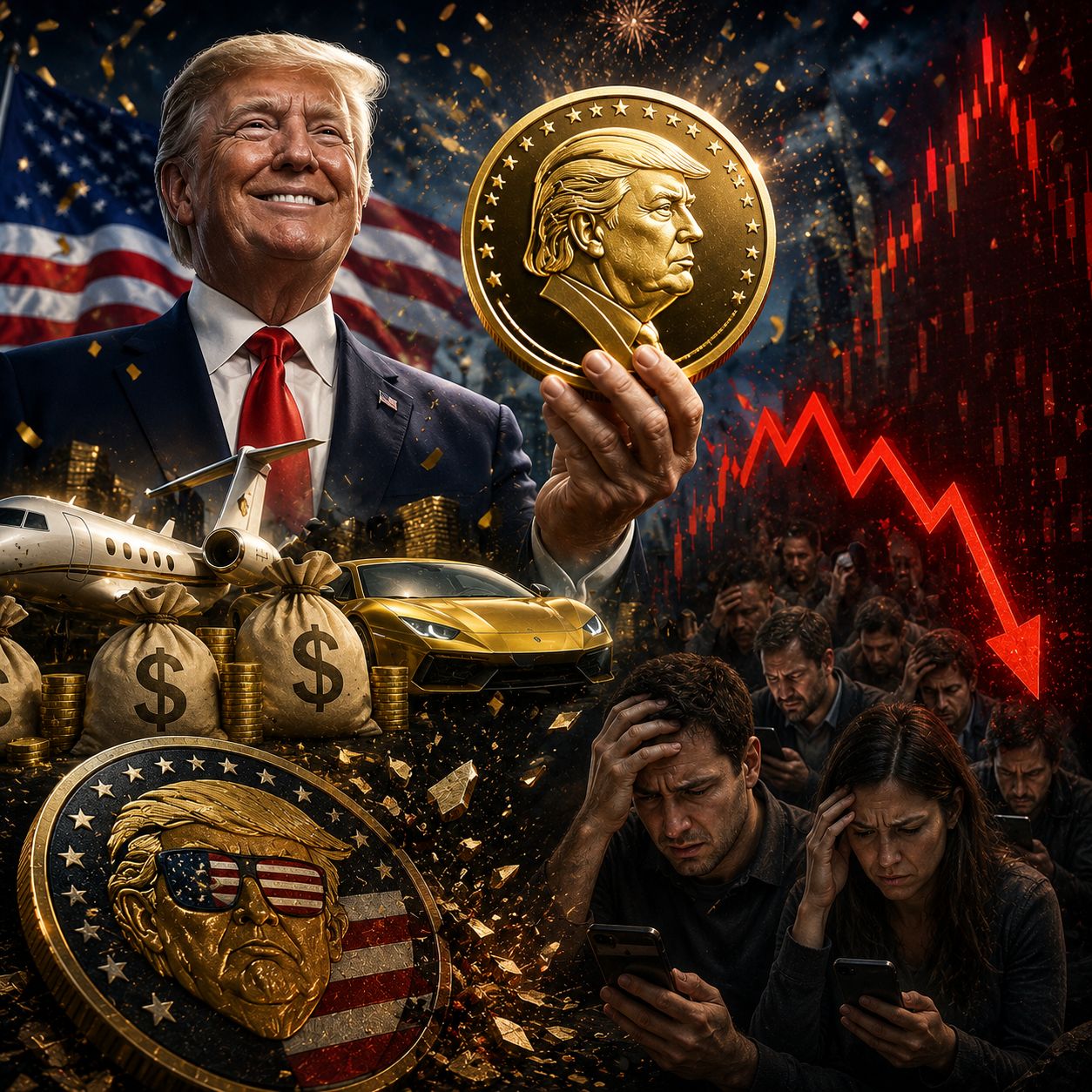
The intersection of state executive power and decentralized digital finance has entered an unprecedented historical phase, generating an intense public debate across Washington and the global financial community. According to a massive nine hundred twenty-seven page annual financial disclosure report officially released by the United States Office of Government Ethics, President Donald Trump generated more than one billion dollars in direct revenue from his family-backed cryptocurrency ventures and decentralized finance initiatives during the prior year. This staggering disclosure confirms that digital assets have rapidly evolved to become the single largest engine of the personal wealth multiplier for the sitting chief executive, completely eclipsing the traditional real estate and commercial property portfolios that took his family organization multiple decades to construct. However, this massive political windfall stands in stark, controversial contrast to the broader financial reality navigated by his base of retail backers. While the executive branch locked in historic, multi-million-dollar revenue allocations, on-chain data and market intelligence platforms confirm that nearly nine hundred eighty-nine thousand retail traders who pounced on these presidential tokens suffered combined losses exceeding three point eighty-one billion dollars as token prices collapsed across the open marketplace.
To accurately evaluate the structural scale of this unprecedented financial development, market analysts and constitutional legal scholars must look deep into the underlying asset configuration of the executive disclosure forms. The comprehensive filing covers the entire calendar year of twenty-twenty-five, capturing the rapid transformation of what were mere startup operations at the launch of his second term into multi-million-dollar cash-flow systems. The document reveals that the primary drivers of this historic windfall were two distinct digital business architectures: World Liberty Financial, a decentralized finance protocol managed directly by the immediate family of the president, and CIC Digital LLC, a specialized licensing enterprise that captured massive royalty streams through an exclusive agreement with Celebration Coins to distribute presidential themed meme tokens and digital souvenirs stamped with the face of the chief executive. This detailed investigative overview provides an exhaustive analysis of the data contained within the federal filing, examining the precise corporate mechanisms that guaranteed these executive revenues, the role played by international billionaire capital allocators, the complete absence of traditional conflict of interest protections, and the long-term systemic implications for the domestic digital currency industry under an administration committed to making America the crypto capital of the world.
The Core Mechanics of World Liberty Financial and the Governance Token Phenomenon
The primary institutional pillar driving the digital asset revenue of the president is World Liberty Financial, a decentralized finance platform formally launched in September twenty-twenty-four under a highly publicized corporate arrangement involving the adult sons of the president, Donald Trump Junior and Eric Trump, alongside the sons of prominent United States diplomatic envoy Steve Witkoff. Within the formal corporate registry profiles of the project, the president himself is officially designated under the elite title of Co-Founder Emeritus. According to the required annual disclosure report, this single decentralized business venture generated more than five hundred twenty-six million eight hundred thousand dollars in direct revenue for the first family enterprise over the course of twenty-twenty-five. This figure represents an astronomical nine-fold expansion compared to the prior calendar year, when the project initial token sales brought in just over fifty-seven million dollars, highlighting an intense acceleration of institutional and retail capital concentration following the political return of the founder to the white house.
The underlying financial mechanics that enabled World Liberty Financial to generate over half a billion dollars in executive revenue rely heavily on the public sale and distribution of its native crypto assets, which are structured as non-transferable governance tokens. These tokens were marketed to the public as premium utility instruments that grant holders direct voting rights over future protocol parameters, decentralized lending pool configurations, and strategic platform integrations. The financial disclosure documents reveal that a separate lump-sum payment of two hundred sixty million dollars was generated directly through the strategic sale of corporate equity and underlying ownership interests in the World Liberty business structure to select high-net-worth investment groups. Furthermore, despite the massive volume of tokens liquidated during the initial market rollout, the filing confirms that the president continues to maintain a substantial personal stake in the platform, holding fifteen point seventy-five billion native World Liberty Financial tokens within his private custody architectures. Although these remaining assets have experienced a steep, range-bound decline in value over the past year, the paper valuation of this specific token block remains pegged at an estimated nine hundred million dollars, providing the first family with a massive reserve of digital capital.
CIC Digital LLC and the Celebration Coins Empire: Analyzing Presidential Memecoin Royalty Streams
While World Liberty Financial operated as the institutional decentralized finance arm of the corporate network, an equally lucrative revenue pipeline was simultaneously constructed through the high-velocity speculative retail market. The federal disclosure forms show that the president generated an additional six hundred thirty-five million dollars in direct revenue through a specialized licensing and royalty framework managed by CIC Digital LLC. This corporate entity secured a highly exclusive license agreement with Celebration Coins, a prominent cryptocurrency developer that launched a series of high-profile, presidential-themed memecoins and souvenir digital tokens stamped with the name and physical likeness of the chief executive just days before the presidential inauguration ceremonies took place in Washington.
The economic engine driving this massive six hundred thirty-five million dollar windfall operates under a fundamentally different structure than traditional spot token sales. Instead of relying solely on the appreciation of a core asset, the contract signed by CIC Digital LLC guaranteed the presidential enterprise a continuous, non-discretionary percentage cut of all transaction fees and trading volumes processed across the memecoin ecosystem, alongside upfront licensing fees paid directly in liquid digital currencies. This contract design turned the presidential venture into an automated rent-collection mechanism that captured millions of dollars in real-time revenue every single second of the day, fully insulated from whether the tokens were climbing in value or crashing on public exchanges. The filing further reveals that CIC Digital LLC maintained an active balance of at least sixty million dollars worth of various alternative cryptocurrencies resting within its digital wallets at the close of the reporting cycle, proving that the organization systematically preserved its digital earnings directly on-chain rather than instantly converting all capital back into traditional fiat cash reserves.
The Missing Winners: How Nine Hundred Eighty-Nine Thousand Retail Traders Lost Over Three Billion Dollars
The extraordinary financial success of the first family crypto ventures stands in sharp, painful contrast to the devastating losses experienced by the vast community of everyday retail traders who pounced on these tokens during their initial market rollout. A comprehensive forensic analysis of public blockchain ledgers and exchange order books conducted by digital intelligence firms reveals a stark picture of wealth destruction across the presidential token ecosystem. The data indicates that approximately nine hundred eighty-nine thousand individual retail buyers who purchased the native tokens and accompanying memecoins ended up trapped in deeply under-water positions, suffering a massive collective loss calculated at three point eighty-one billion dollars as the speculative market underwent a severe macro contraction.
This widespread loss of retail capital highlights the inherent structural dangers of high-beta speculative investing within highly politicized token environments. Attracted by intensive social media marketing campaigns, high-profile promotional spaces managed by the first family, and an overwhelming wave of political excitement, nearly a million everyday retail investors allocated substantial portions of their personal savings into these assets near their historical price peaks. However, because these tokens lacked deep institutional utility mechanisms, stable market-making depth, or predictable cash-flow backdrops independent of political narratives, the initial wave of euphoric buying pressure quickly exhausted itself. As early venture capital allocators and insiders systematically distributed their holdings, the spot prices of both the governance tokens and the souvenir memecoins entered a brutal, multi-month downward spiral, collapsing over eighty percent from their local highs and leaving nearly a million credulous retail backers holding heavily depreciated digital assets with minimal near-term prospects for structural recovery.
The Geopolitical Connection: Justin Sun and the Seventy-Five Million Dollar Strategic Token Purchase
As federal investigators and financial oversight committees painstakingly unwrap the complex layer of capital flows that fueled the presidential crypto windfall, the role played by international billionaire digital asset developers has emerged as a central point of intense public scrutiny. The financial disclosure documents and accompanying on-chain tracking data confirm that a significant percentage of the corporate revenue generated by World Liberty Financial was driven by a massive, high-volume capital injection from a controversial foreign crypto mogul. Justin Sun, the billionaire founder of the Tron blockchain network and a high-profile figure within the global digital currency space, was identified as a primary authorized participant who single-handedly pounced on the presidential token rollout, deploying seventy-five million dollars to purchase World Liberty governance tokens alongside an additional two hundred million dollars to absorb massive blocks of the souvenir memecoins managed by CIC Digital LLC.
The timing and scale of this multi-million-dollar purchase have raised severe alarms across Washington due to a striking correlation with active federal legal matters. In February of the prior year, a major federal lawsuit spearheaded by the Securities and Exchange Commission charging Justin Sun with systematically duping investors, violating registration laws, and manipulating asset markets was officially paused before being abruptly settled for a nominal ten million dollar administrative fine. Although the international billionaire has repeatedly issued firm public denials insisting that his massive spending on the first family business ventures had absolutely nothing to do with his ongoing federal legal challenges, independent ethics watchdogs and congressional oversight committees continue to trace the transaction. Lawmakers are actively pushing to determine whether this massive half-billion-dollar capital injection from a foreign national functioned as an back-door mechanism to secure unprecedented diplomatic access and regulatory goodwill from the incoming executive administration.
Ethics Laws Exemptions and the Controversial Revocable Family Trust Framework
The multi-billion-dollar scale of the crypto earnings disclosed by the chief executive has re-ignited an intense constitutional and legislative debate regarding the total structural inadequacy of current federal conflict of interest laws when applied to the highest offices of the executive branch. Under established United States statutory frameworks, the vast majority of federal executive branch employees are subject to strict, non-negotiable ethics regulations that explicitly forbid them from maintaining substantial financial stakes or private business interests in any commercial venture that could be directly impacted by their public policy decisions. However, due to historical constitutional interpretations aimed at preventing the legislature from unduly restricting the executive branch, the President and the Vice President are explicitly exempt from these specific conflict of interest statutes, leaving the enforcement of ethical boundaries entirely dependent on historical norms and voluntary self-regulation.
To address these concerns while maintaining absolute control over his global commercial empire, the president chose to reject the traditional blind trust frameworks implemented by his recent predecessors in office, opting instead to place his digital asset investments, corporate shares, and real estate holdings into a formalized revocable trust. This trust framework is overseen directly by his eldest son, Donald Trump Junior, and the broader operations of the Trump Organization remain under the direct management of his immediate family members. Because the trust is explicitly revocable, the chief executive maintains the absolute legal authority to amend its terms, revoke its architecture entirely, or remove and replace individual trustees at his sole discretion. Ethics scholars argue that this arrangement provides zero real separation between public governance and private profit accumulation, as the president remains fully aware of exactly which business lines are enriching his family and can continuously modify executive policy to maximize the financial performance of his private corporate network.
Corporate Transparency vs Potential Conflict of Interest Concerns
Following the formal release of the nine hundred twenty-seven page document by the Office of Government Ethics, corporate spokespeople for the Trump Organization issued firm public statements defending the disclosure as a historic victory for corporate transparency. According to the official management team, the near-thousand-page filing represents one of the most comprehensive, detailed, and exhaustive financial disclosure reports ever submitted in the history of the American presidency, demonstrating a level of voluntary financial disclosure that is unmatched by any prior chief executive. The corporate defense team argues that by explicitly detailing every single royalty contract, token balance, and licensing fee down to the exact dollar amount, the organization has fully satisfied its transparency obligations, allowing the public to review its balance-sheet mechanics with absolute clarity.
However, independent ethics analysts and legal watchdogs counter that raw transparency does not equate to the mitigation of deep systemic conflicts of interest. The central issue under intense public scrutiny is not whether the revenues were documented, but rather the undeniable reality that the sitting president is actively profiting from an industry that is simultaneously the subject of sweeping executive orders, federal legislative restructuring, and regulatory rollbacks enacted by his own administration. Throughout his second term, the president has systematically utilized his executive authority to dismantle Biden-era restrictions on the cryptocurrency sector, remove aggressive enforcement directors from key federal commissions, and end active regulatory lawsuits against some of the largest companies in the digital currency space. The realization that the executive branch can execute major trade policy shifts that directly boost the market value of digital tokens held within the first family private trust creates a dangerous, unprecedented conflict pattern that threatens the foundational credibility of American public administration.
White House Official Statements and the Crypto Capital of the World Mandate
In response to the cascading wave of media scrutiny and legislative criticism surrounding the billionaire crypto windfall, White House Spokesperson Anna Kelly issued an aggressive, comprehensive press statement firmly rebuffing any allegations of ethical contamination or policy corruption. The official executive statement pushed back against what it characterized as a tired, false narrative recycled by partisan political opponents and legacy media organizations that have spent a decade attempting to delegitimize the business success of the first family. The White House insists that neither the president nor any member of his immediate family has ever engaged, or will ever engage, in actionable conflicts of interest, asserting that all administrative decisions are executed with absolute fidelity to the best interests of the American people.
The executive branch defense strongly links the rising profitability of the president private investments to the broader success of the national economy and his explicit campaign promise to make the United States the undisputed crypto capital of the world. According to the official administration narrative, the president has proudly executed a sequence of high-powered executive actions designed to unleash domestic technological innovation, foster capital accumulation, and position the domestic economy as the primary hub for global digital asset development. White House officials argue that because these pro-crypto policies have catalyzed a massive, industry-wide market rally that has benefited millions of independent American stock investors and digital token holders across the nation, the first family personal profit accumulation is simply a natural reflection of a rising economic tide that is lifting all corporate and retail boats simultaneously.
Comparing Crypto Revenue Streams with Decades of Traditional Real Estate Portfolios
One of the most fascinating macroeconomic takeaways revealed by a historical analysis of the president financial disclosures is the total structural displacement of his traditional legacy business engines by high-velocity digital asset platforms. For more than four decades, the core foundation of the Trump family financial empire was anchored almost exclusively within premium commercial real estate, luxury hospitality developments, and international golf resort networks. Constructing these physical assets required the allocation of massive amounts of long-term debt capital, intensive multi-year construction cycles, complex regional zoning battles, and extensive physical maintenance overhead, with the organization methodically building its book value block by block across global real estate markets.
The mid-twenty-twenty-six federal disclosure forms reveal that these traditional real estate holdings have been completely dwarfed in revenue generation by nascent crypto ventures that were mere startup concepts when the president returned to office. While legendary physical properties like Mar-a-Lago experienced a notable fifty percent jump in revenue, taking in seventy-seven million dollars as heads of state and international business leaders flocked to the club during the new term, this substantial real estate cash flow represents a mere fraction of the over one billion dollars pulled in through digital token royalties and decentralized finance equity sales. The reality that a newly launched digital licensing framework or a decentralized lending protocol can out-earn a vast global property portfolio within a single calendar year highlights a profound shift in the nature of modern corporate capitalization, demonstrating how public political figures can instantly monetize their global media footprints through advanced financial cryptography far more efficiently than through traditional physical industry sectors.
A Deep Technical Analysis of Token Price Collapses Following Presidential Open Market Launches
To fully comprehend the deep financial friction that resulted in over three point eight billion dollars in collective retail losses across the presidential token ecosystem, market makers and quantitative analysts must evaluate the specific technical chart configurations and order-book dynamics that took hold immediately following the open market launches. Forensic chart analysis of the native tokens reveals a highly volatile price discovery trajectory characterized by an initial, near-vertical price extension driven by intense social media hype, followed immediately by a prolonged, structural collapse in spot valuations due to an extreme imbalance between resting buy bids and aggressive sell-side distribution.
When the governance tokens and accompanying memecoins were first listed on major decentralized exchanges, the available liquid order-book depth within a two percent range of the market rate was remarkably thin, meaning that even modest retail buying blocks could cause dramatic upward price gap extensions. This vertical chart structure generated an intense wave of retail FOMO, drawing in hundreds of thousands of casual market participants who purchased assets at highly over-extended valuations. However, once prominent insider wallets and early corporate venture participants began executing large-scale distribution programs to lock in their initial capital allocations, the thin bid depth was instantly exhausted. With no organic, non-political utility mechanisms present to incentivize long-term asset locking, the spot prices broke through critical technical support floors, triggering a cascading sequence of stop-loss executions and panic selling that permanently trapped nearly a million retail buyers at the absolute historical peak of the chart.
The Role of Automated Transaction Fees and Royalty Contracts in Guaranteeing Executive Windfalls
The striking divergence between the billion-dollar profitability of the first family and the massive financial drawdowns experienced by their retail base is ultimately explained by the sophisticated structural layout of the underlying smart contracts and licensing agreements. In traditional equity investing, corporate founders and major insiders generally see their net worth move in direct synchronization with their public shareholders; if the company performance deteriorates and the stock price collapses, the founders experience a corresponding contraction in their personal wealth. However, the unique architectural design of the digital tokens managed by CIC Digital LLC and World Liberty Financial completely decoupled executive revenue from the ongoing asset performance of the open market.
The exclusive licensing frameworks signed with Celebration Coins were engineered to prioritize automated real-time transaction fee collection over long-term token price appreciation. Under these smart contract agreements, a fixed percentage royalty fee was programmatically extracted from every single buy, sell, or transfer transaction executed across the memecoin ecosystem, routing the digital capital straight to the private wallets of the corporate registry regardless of whether the trade was executed at a profit or a devastating loss. This meant that during phases of extreme market panic, when hundreds of thousands of retail buyers were frantically dumping their tokens at a massive loss, the resulting spike in transaction velocity actually accelerated the revenue generation for the presidential enterprise. By operating as a systemic toll-collection mechanism that profited from the raw movement of digital data rather than the preservation of asset value, the corporate architecture guaranteed a historic multi-million-dollar windfall for its founders while their investor base navigated a total liquidation wave.
How Institutional Investment Teams Manage a Sitting President Net Wealth Multiplier
The rapid expansion of the president documented net worth, which Forbes currently estimates at a historic six billion dollars—up from approximately two point three billion dollars in the prior cycle—has forced international wealth management groups and institutional investment desks to closely analyze the unique mechanics of the presidential wealth multiplier. On July first, twenty-two-six, while preparing to embark on his first diplomatic flight aboard a newly redesigned Air Force One plane gifted by the state of Qatar, the president openly defended his massive digital currency earnings to reporters, asserting that his personal profitability was simply a natural byproduct of a booming macro financial market where everyone is profiting.
When pressed by the White House press pool regarding criticisms that he was utilizing the power of the presidency to directly enrich his personal corporate network, the billionaire chief executive insisted that his personal finances are managed through an isolated, blind trust framework handled exclusively by major external institutional funds. The president asserted that because large corporate asset management firms direct his capital allocations without his operational input or ongoing communication, his private wealth accumulation remains fully insulated from his daily policy decisions. However, because the official Office of Government Ethics filing clearly details a revocable family trust framework managed by his immediate children rather than a certified independent institutional blind trust, financial analysts emphasize that the portfolio remains deeply captive to the strategic decisions of the first family, creating a highly unique corporate investment vehicle that continuously captures outsized returns due to its proximity to the center of global political power.
The Public Response: How Retail Communities Balance Ideology with Significant Financial Drawdowns
The publication of the massive digital asset windfall has triggered a complex, highly fractured psychological response across the global retail cryptocurrency community, exposing a deep ideological divide among market participants. Within dedicated political trading networks and pro-administration community channels, a large faction of retail token holders continues to fiercely defend the president crypto income, viewing his billion-dollar validation of the digital currency economy as an absolute badge of honor that cements the legitimacy of the entire industry on the global stage. To these dedicated backers, the multi-million-dollar losses incurred during the token collapses are simply viewed as a natural, accepted cost of participating in the highly volatile frontier of digital asset speculation, with many expressing an ongoing willingness to hold their under-water positions out of absolute loyalty to the broader political movement.
Conversely, a rapidly expanding cohort of independent retail investors, consumer protection watchdogs, and decentralized finance purists view the massive transfer of wealth from everyday citizens to the executive branch as a total betrayal of the foundational principles of the blockchain revolution. The early ethos of crypto technology was explicitly constructed around the concepts of financial decentralization, peer-to-peer empowerment, and the elimination of predatory rent-seeking intermediaries who exploit structural information asymmetries to extract wealth from public ecosystems. Critics within the space argue that by deploying high-velocity memecoin royalty contracts and non-transferable governance frameworks that explicitly enrich a centralized political dynasty at the direct expense of nearly a million retail buyers, the presidential ventures have effectively twisted the tools of open-source financial cryptography into a hyper-efficient mechanism for legacy political self-enrichment, damaging the moral credibility of the broader digital currency movement.
Strategic Compliance Guidelines for Investors Interfacing with Politically Backed Digital Assets
As the global digital asset marketplace continues to complete its integration with mainstream political infrastructure and high-stakes executive governance, independent investors, corporate risk managers, and multi-strategy hedge funds must rapidly upgrade their operational screening frameworks. Interfacing with digital assets that maintain direct proximity to active political figures or familial corporate trusts introduces an entirely new matrix of severe regulatory, legal, and systemic counterparty risks that can instantly destroy institutional capital allocations if not managed with absolute, unemotional discipline.
- Execute Deep-Dive Corporate Registry and Beneficial Ownership Audits: Prior to deploying significant liquidity reserves into any decentralized finance protocol, utility token, or memecoin ecosystem, compliance departments must execute exhaustive background reviews to determine whether any politically exposed persons maintain hidden equity stakes, active royalty collection mechanisms, or unilateral governance overrides within the project architecture, fully isolating your fund from potential public corruption scandals.
- Establish Strict Rules-Based Technical Stop-Loss Parameters: For market positions that maintain unavoidable proximity to highly volatile, narrative-driven digital assets, traders must implement strict, automated stop-loss commands placed near major historical volume profile support floors. These automated liquidation triggers ensure that if a sudden federal ethics probe, congressional subpoena, or negative media disclosure breaks across the wire, the market position is safely closed out before panic-driven order-book collapses freeze liquid entry points.
- Prioritize Assets Secured by Productive Protocol-Level Staking Consensus: Focus core digital currency allocations onto mature, blue-chip layer-one infrastructure networks and fully collateralized stablecoins that generate real, transparent yields driven exclusively by organic transaction velocity and network-wide utility. Aligning your portfolio with assets that feature decentralized, math-based consensus mechanisms ensures your long-term wealth remains entirely immune to the flash-in-the-pan volatility characteristic of politically backed speculative tokens.
- Maintain Complete Control via Offline Sovereign Self-Custody Protocols: Protect your accumulated digital wealth from the systemic platform risks, counterparty delivery failures, and administrative account freezes associated with leaving assets on centralized exchange platforms or family-managed corporate venues. Executing mandatory migrations of your spot token balances out of exchange environments and into secure, private hardware vaults guarantees that your digital property remains under your absolute personal operational sovereignty at all times.
Permanent Legacy of Presidential Crypto Integration and the Future of Sovereign Finance
Historic disclosures contained within the nine hundred twenty-seven page Office of Government Ethics report stand as a permanent, undeniable monument to the total transformation of modern corporate finance and executive statecraft in the digital era. The realization that a sitting American president can generate over one billion dollars in direct revenue from decentralized token networks within a single calendar year completely shatters the historical boundaries that previously separated legacy government administration from the frontier of financial technology. While the first family crypto ventures have delivered an unparalleled masterclass in digital wealth accumulation, the parallel reality of three point eight billion dollars in collective retail losses serves as a severe, long-term warning sign regarding the extreme structural dangers of blending public state power with speculative asset engineering.
As the administration continues its push to permanently cement the United States as the crypto capital of the world through sweeping executive rollbacks and pro-industry legislation, the complex legal and ethical questions raised by this disclosure will continue to dominate the global financial landscape. The ultimate legacy of this historic cycle will be determined by whether the digital currency ecosystem can successfully leverage this unprecedented executive backing to build robust, transparent, and globally compliant financial infrastructure, or whether the sector will remain a highly volatile arena where public policy and private profit are permanently blurred. For forward-looking investors, corporate treasuries, and independent capital allocators navigating this complex new reality, maintaining a disciplined, highly objective, and risk-mitigated perspective remains the absolute strategic blueprint required to successfully safeguard wealth and navigate the uncharted waters of the sovereign digital future.









