






















































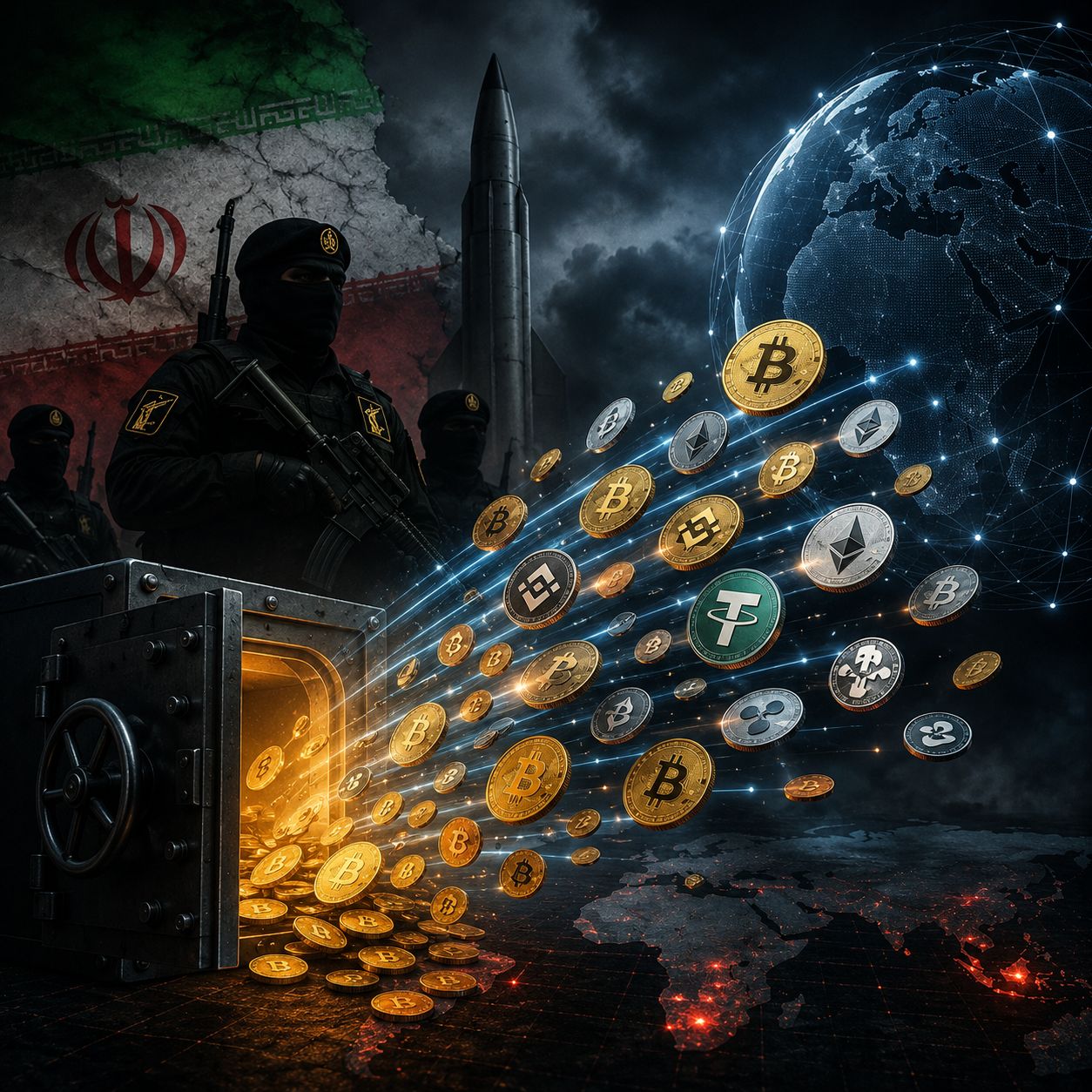
The global cryptocurrency market is currently facing a massive liquidity exodus as over 1.47 billion dollars in digital assets have been pulled from exchanges in a single 24-hour window. This sudden flight of capital comes directly on the heels of escalating geopolitical rhetoric from the Middle East, specifically involving threats from Iran-s Revolutionary Guard Corps (IRGC). For investors who viewed Bitcoin and Ethereum as digital gold or safe-haven assets, the current price action serves as a harsh reminder that crypto remains deeply tethered to global stability and macro-economic shifts. As military tensions rise near the Strait of Hormuz, the market has entered a risk-off phase, triggering liquidations that have shaken even the most seasoned traders.
The mass sell-off was catalyzed by statements from senior IRGC officials regarding potential responses to recent regional developments, which immediately sent shockwaves through both traditional energy markets and the digital finance ecosystem. Historically, periods of heightened military tension lead to a flight toward cash or traditional gold, and this time, crypto has not been an exception. The 1.47 billion dollar outflow represents one of the largest single-day withdrawals of the year, signaling a lack of confidence in short-term market stability. Institutional players and retail investors alike are opting to move their holdings into cold storage or stablecoins to weather what many fear could be a prolonged period of volatility.
Furthermore, the impact of these geopolitical threats is being magnified by the current fragility of the global economy. With inflation concerns already weighing heavy on investor sentiment, the threat of conflict in a region vital to global oil supplies has created a “perfect storm” for high-risk assets. Analysts have noted that the correlation between Bitcoin and traditional stock indices like the S&P 500 has spiked during this crisis, debunking the narrative of crypto as an independent hedge. As the IRGC continues to issue warnings, the market is bracing for further corrections, with key support levels for major tokens being tested for the first time in months.
In the midst of this turmoil, the specific behavior of the 1.47 billion dollar outflow reveals a strategic retreat. A significant portion of these funds consists of Bitcoin and Ethereum, but altcoins have also been hit hard, with some losing double-digit percentages in value within hours. The technical damage to the charts is significant, as the panic-selling has triggered automated stop-loss orders, further accelerating the downward spiral. For those looking to enter the market, the current climate is one of extreme caution. While some “buy the dip” enthusiasts see this as a long-term opportunity, the prevailing sentiment remains fearful as the world watches the diplomatic and military situation unfold in real-time.
Institutional Capital Flight and the Global Risk-Off Sentiment
The departure of nearly 1.5 billion dollars from the crypto space is not just a retail phenomenon; it represents a calculated retreat by institutional entities. Large-scale hedge funds and treasury managers often operate on strict risk-management protocols that mandate the reduction of exposure to volatile assets during times of war or significant geopolitical threats. The IRGC-s recent posture has increased the “geopolitical risk premium,” making it more expensive and riskier to hold digital assets. This institutional “exit to safety” is a primary driver behind the massive volume of outflows we are witnessing today.
When billions of dollars leave the ecosystem in such a short timeframe, it creates a vacuum of buy-side liquidity. This means that even small sell orders can have a disproportionate impact on price, leading to the “flash crashes” observed across various trading pairs. The psychological impact of seeing 1.47 billion dollars leave the market cannot be understated; it creates a feedback loop of fear where investors sell simply because they see others selling. This cascading effect is what transforms a standard market correction into a full-scale liquidity crisis.
The Strait of Hormuz and the Crypto Energy Connection
One of the less discussed but vital links between the IRGC threats and the crypto market is the issue of energy. Iran-s influence over the Strait of Hormuz means that any military escalation could lead to a spike in global energy prices. Since Bitcoin mining is an energy-intensive process, rising electricity costs directly impact the profitability of miners. If mining becomes too expensive, smaller operations may be forced to shut down and sell their remaining Bitcoin holdings to cover costs, adding even more sell pressure to an already saturated market.
The market is currently pricing in the possibility of an energy supply disruption, which would have a ripple effect across all Proof-of-Work blockchains. Investors are keeping a close eye on the hash rate, which measures the total computational power of the network. If the hash rate begins to drop alongside the price, it could signal a deeper structural issue within the mining industry. This intersection of military strategy, energy logistics, and digital finance is what makes the current situation with Iran particularly dangerous for the crypto sector.
Seeking Stability- The Rise of Stablecoin Dominance
As 1.47 billion dollars leaves the more volatile sectors of the crypto market, a large portion of that capital is seeking refuge in stablecoins like USDT and USDC. This shift highlights a change in strategy- rather than exiting the crypto ecosystem entirely to return to fiat currency, many traders are “parking” their wealth in assets pegged to the dollar. This allows them to remain ready to buy back into the market the moment a de-escalation occurs. The dominance of stablecoins typically rises during periods of geopolitical unrest, acting as a temporary bridge until the “risk-on” appetite returns.
However, the high demand for stablecoins during a crisis can sometimes lead to minor de-pegging events or increased transaction fees on networks like Ethereum. During the height of the IRGC threats, gas fees spiked as thousands of users scrambled to convert their tokens. This congestion often prevents smaller investors from moving their funds quickly, leaving them “trapped” in losing positions while whales and institutional bots move with precision. Understanding these market dynamics is crucial for anyone trying to navigate the current 1.47 billion dollar liquidity drain.
Looking Ahead- Can the Market Recover from Geopolitical Shocks
The path to recovery for the crypto market depends almost entirely on the de-escalation of tensions in the Middle East. If the rhetoric from the IRGC softens or if diplomatic channels succeed in lowering the threat level, we could see a “relief rally” that is just as fast as the initial sell-off. Markets tend to overreact to bad news, and once the initial shock wears off, the underlying value of blockchain technology remains unchanged. However, as long as the threat of active conflict remains on the table, the 1.47 billion dollar outflow serves as a warning that the “crypto winter” could return if global peace is compromised.
For the remainder of the quarter, traders should expect heightened sensitivity to news headlines. The traditional “support” and “resistance” levels found in technical analysis may hold less weight than a single statement from a world leader or a military commander. In this new era of “geopolitics-first” trading, staying informed on international relations is just as important as reading a price chart. The 1.47 billion dollar exit is a milestone of the current tension, but whether it is the bottom of the move or just the beginning remains to be seen.
Morgan Stanley Updates Strategic Vision for Solana ETF Offerings
In a separate but equally significant development for the long-term future of the industry, Morgan Stanley has submitted an amended filing for a Solana ETF. This move indicates that despite the current geopolitical chaos and the 1.47 billion dollar market outflow, major financial institutions are still betting on the institutional adoption of crypto. By refining their application, Morgan Stanley is signaling to the SEC and the broader market that Solana remains a top-tier asset with significant investor demand. This filing could serve as the catalyst needed to bring institutional liquidity back into the market once the current geopolitical storm passes.
The decision to push forward with a Solana ETF during a market downturn shows a remarkable level of conviction. Solana has often been dubbed the “Visa of the crypto world” due to its high transaction speeds and low costs, making it an attractive candidate for a regulated exchange-traded fund. If approved, a Solana ETF would provide a secure, regulated pathway for billions of dollars of institutional capital to enter the ecosystem, potentially offsetting the losses seen during the current Iran-related crisis. Morgan Stanley-s persistence suggests that the long-term trend of crypto integration into the global financial system is still very much alive.
SEC Scrutiny and the Road to Approval for Solana
The amended filing from Morgan Stanley likely addresses specific concerns raised by the SEC regarding market manipulation and custody solutions. Historically, the SEC has been hesitant to approve ETFs for assets other than Bitcoin and Ethereum, citing the need for robust oversight and “surveillance-sharing” agreements. By amending their filing, Morgan Stanley is likely incorporating new data and safety measures to satisfy these regulatory requirements. The success of this filing would be a historic win for the altcoin market, proving that there is room for more than just the “Big Two” in the world of regulated finance.
Investors are watching this development closely, as the approval of a Solana ETF would drastically reduce the “volatility risk” associated with the asset. ETFs allow institutional investors to gain exposure without the technical hurdles of managing private keys or navigating unregulated exchanges. This layer of professionalization is exactly what the market needs to mature beyond its current state of being easily rattled by geopolitical headlines. While the 1.47 billion dollar outflow is the story of today, the Morgan Stanley filing is the story of the next decade of digital finance.
Market Resilience and Future Outlook
The current landscape of the cryptocurrency market is a study in contrasts. On one hand, we see a massive 1.47 billion dollar flight of capital triggered by the IRGC and geopolitical instability. On the other hand, we see giants like Morgan Stanley doubling down on the future of Solana and institutional ETFs. This “push and pull” defines the current era of digital assets. While the short-term outlook is clouded by the threat of conflict and macro-economic uncertainty, the underlying infrastructure is becoming more robust and more integrated with traditional finance every day.
Survivability in this market requires a balance of caution and vision. While it is necessary to protect capital during spikes in volatility like the one we are currently experiencing, it is equally important to recognize the institutional shifts that are happening behind the scenes. The IRGC threats may cause a temporary dip, but the arrival of regulated ETFs and the continued development of high-performance blockchains like Solana suggest that the digital economy is here to stay. As we move forward, the 1.47 billion dollar lesson will be remembered as a moment when the market learned to respect the power of global politics.