





















































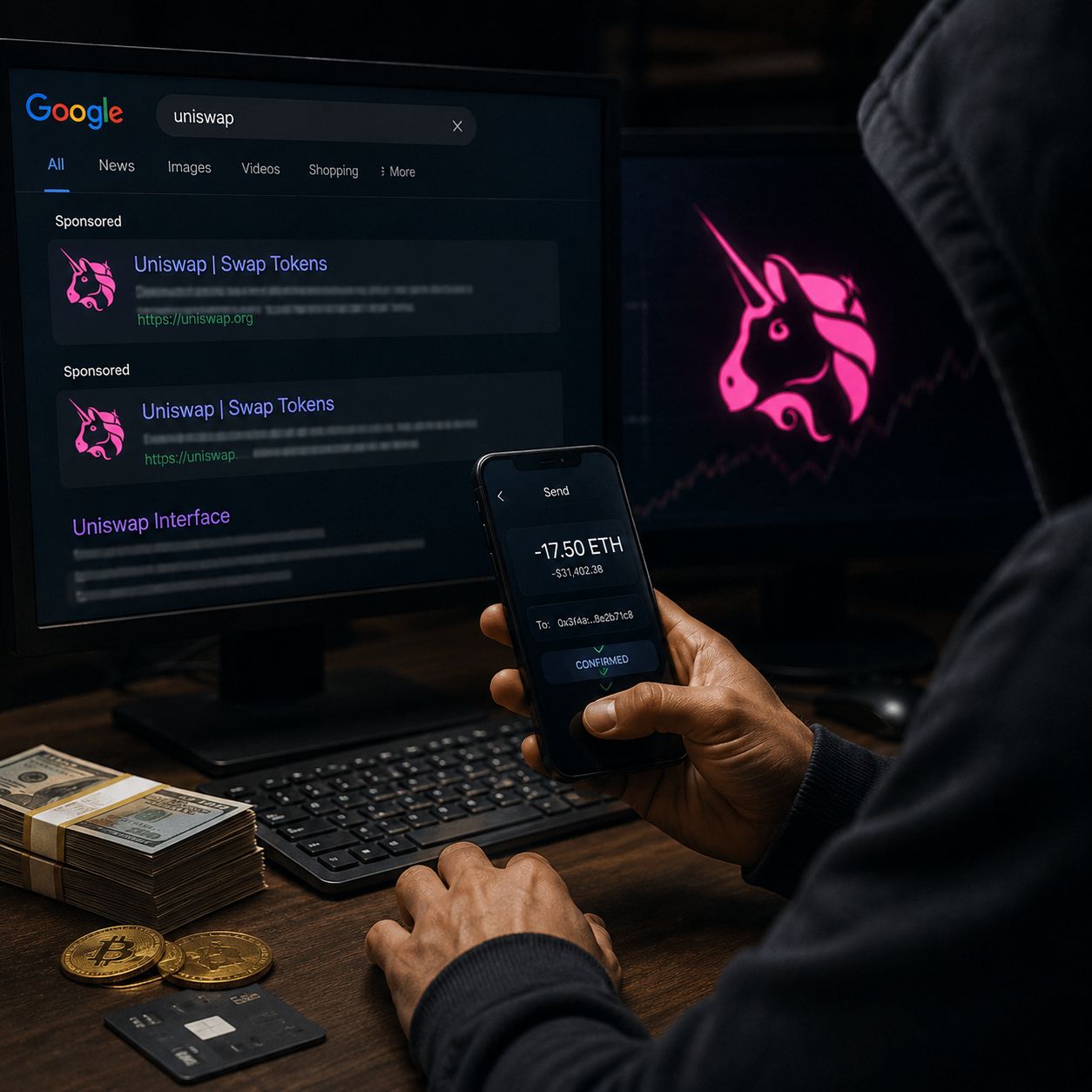
The world of decentralized finance or DeFi is a frontier of innovation but it is also a landscape filled with hidden dangers. Recently a sophisticated phishing campaign targeted Uniswap users through fraudulent Google Ads leading to a staggering loss of approximately 400,000 dollars. This incident serves as a stark reminder that even the most experienced crypto enthusiasts can fall victim to well-engineered scams that exploit the tools we use every day. By purchasing top-tier ad placements on the world-s largest search engine scammers were able to divert legitimate traffic to malicious clones of the Uniswap interface.
Understanding the mechanics of this heist is crucial for anyone navigating the crypto space. The attackers did not hack the Uniswap protocol itself but rather exploited the human element of search behavior. When users searched for terms like Uniswap or Uniswap Exchange they were presented with sponsored results that looked identical to the official platform. These ads utilized deceptive URLs that often differed by only a single character or used different domain extensions. Once a user clicked the link and connected their wallet the scammers used malicious smart contracts to gain approval for fund transfers effectively draining the assets from the victim-s digital wallet in seconds.
The rise of Google Ad phishing marks a shift in how cybercriminals target retail investors. Historically phishing was confined to email or direct messages on social media platforms like Telegram and Discord. However by leveraging search engine marketing scammers can target users at the exact moment they are looking to trade. This high-intent traffic is more likely to trust the results provided by a trusted search engine. The 400,000 dollar loss reported in this specific Uniswap case is likely just the tip of the iceberg as many smaller thefts go unreported due to the pseudonymous nature of blockchain transactions.
To protect yourself from these evolving threats it is essential to adopt a security-first mindset. Never click on sponsored search results for financial services or crypto platforms. Instead manually type the official URL into your browser or use a trusted bookmark. Additionally always verify the permissions you are granting when connecting your wallet to a new site. Using hardware wallets and multi-signature setups can add layers of defense that make it significantly harder for scammers to access your funds even if you interact with a malicious site. Stay vigilant and remember that in the world of DeFi you are your own bank.
The Evolution of Search Engine Phishing in the Crypto Market
The transition of phishing tactics from simple email lures to sophisticated search engine manipulation represents a significant escalation in cybercrime. Scammers are now willing to invest thousands of dollars into Google Ads campaigns because the return on investment is incredibly high. For a few thousand dollars in ad spend they can net 400,000 dollars or more in stolen cryptocurrency. This business model relies on the speed at which search engines index and display ads often bypassing the initial security checks that might otherwise flag a malicious domain.
The technical execution of the Uniswap ad scam involved cloning the front-end interface of the decentralized exchange. To the average user the site appeared fully functional and authentic. The danger lies in the connect wallet button which triggers a signature request. Many users have become accustomed to clicking through these requests without carefully reading the permissions. In this case the request was not for a simple login but for an unlimited spend approval on the user-s most valuable tokens. Once this approval is signed the scammer-s script automatically initiates a transfer to their own private address.
Why Google Ads Remain a Primary Target for Crypto Thieves
Search engines are the primary gateway to the internet for most people. Even though the crypto community is often more tech-savvy than the general population the convenience of searching for a platform rather than typing a URL is a habit that scammers exploit. Google has implemented stricter policies for crypto-related advertising but malicious actors find ways to circumvent these rules by using cloaking techniques. Cloaking allows them to show a legitimate-looking site to Google-s automated reviewers while serving the phishing site to actual users who click the ad.
The impact of these scams extends beyond the immediate financial loss. They erode trust in the decentralized ecosystem and provide ammunition for regulators looking to crack down on crypto activities. When 400,000 dollars disappears from a community due to a search engine error it highlights the need for better user education and more robust security integrations within browser extensions and wallet providers. Until search engines can perfectly filter out these malicious actors the responsibility of verification remains entirely on the individual user.
Critical Safety Measures to Avoid Malicious Crypto Advertisements
To safeguard your digital assets against the next wave of Google Ad scams you must implement several key practices. First and foremost you should install a reputable ad-blocker in your browser. This simple step eliminates the risk of clicking on a sponsored result entirely because the ads will never appear. Second always cross-reference the URL with official social media profiles or documentation. Uniswap and other major protocols typically list their official links in their Twitter bio or on platforms like CoinMarketCap.
Another vital layer of protection is the use of a dedicated security browser extension. Tools like Revoke.cash or specialized crypto-security plugins can warn you if you are about to sign a transaction that grants excessive permissions to an unknown contract. Furthermore consider using a separate hot wallet with minimal funds for daily trading while keeping the bulk of your assets in cold storage. By isolating your wealth you minimize the potential damage if a single interaction goes wrong. The Uniswap 400,000 dollar scam is a lesson in the high cost of a single oversight.
The Future of DeFi Security and User Protection
As the DeFi sector continues to grow the methods used by scammers will only become more complex. We are likely to see an increase in AI-driven phishing where site clones are generated in real-time to match the latest updates of legitimate platforms. This means that static lists of malicious URLs will no longer be enough to protect users. The industry must move toward more dynamic security models where wallets and browsers work together to verify the intent of every transaction before it is broadcast to the blockchain.
In the meantime the best defense is a combination of skepticism and education. If a deal looks too good to be true or if a site asks for permissions that seem unnecessary you should immediately disconnect and report the incident. The 400,000 dollars stolen from Uniswap users is a tragic loss but it also provides a valuable case study for the community. By sharing these stories and highlighting the tactics used by scammers we can build a more resilient and informed user base that is capable of navigating the decentralized world safely.
Summary of the Uniswap Scam and Its Lessons
The theft of 400,000 dollars through fake Uniswap Google Ads is a reminder that the entry points to the blockchain are just as vulnerable as the chain itself. Scammers are clever and they will always follow the money. As long as users rely on search engines to find DeFi platforms there will be a market for phishing ads. The key takeaway for every crypto investor is to never trust the first link you see. Always verify and always double-check the fine print of every transaction you sign in your wallet.
For bloggers and educators in the space it is our duty to keep the community informed. By rewriting and sharing these incidents we ensure that the lessons learned from others- losses are not forgotten. The path to mass adoption of cryptocurrency requires a safe environment where users can participate without the constant fear of being fleeced by a search engine ad. Together we can promote a culture of security that prioritizes the protection of assets above the convenience of a quick search.
How to Identify a Fake Uniswap Site in Seconds
Spotting a fake site requires a keen eye for detail. Look for subtle misspellings in the domain name such as using a zero instead of the letter O or adding an extra letter at the end. Check the SSL certificate by clicking the padlock icon in the browser bar although be aware that even scam sites can have valid certificates today. The most telling sign is often the user experience. If the site feels sluggish or if certain buttons lead to dead ends it is likely a malicious clone. Always test a new site with a small amount of funds if you are unsure.
Finally consider the source of the link. If you found it through a search engine ad it is statistically much higher risk than if you found it through a direct link on an official site. The 400,000 dollar scam succeeded because it looked real enough to trick people in a hurry. By slowing down and taking the time to verify you can ensure that your journey through the world of decentralized finance remains a profitable and secure one.
Taking Responsibility for Your Crypto Security
In conclusion the Uniswap Google Ad scam is a wake-up call for everyone in the cryptocurrency industry. It demonstrates that the greatest threat to your funds is often not a flaw in the code but a flaw in the process. By losing 400,000 dollars to a simple phishing link victims have highlighted a vulnerability that we all share. The solution is not to wait for Google or Uniswap to fix the problem but to take full responsibility for our own digital safety.
Use hardware wallets use ad-blockers and never sign a transaction you do not fully understand. The decentralized world offers incredible freedom but that freedom comes with the price of absolute personal responsibility. Stay informed stay skeptical and keep your private keys safe. The future of finance is decentralized and by following these simple rules you can make sure you are a part of that future rather than a victim of its growing pains.









