

























































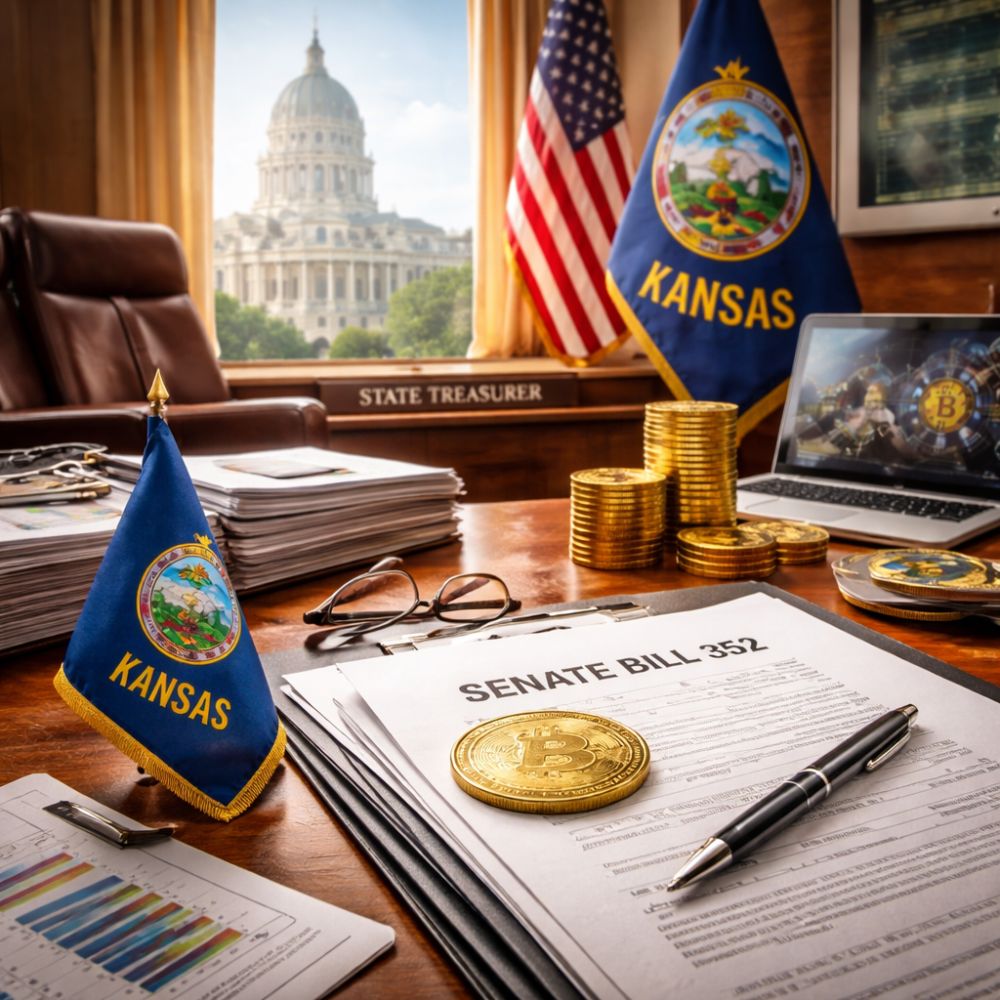
Kansas has taken a notable step into the evolving world of digital finance with the introduction of Senate Bill 352. On January 22, 2026, lawmakers formally presented legislation that would establish a state-managed Bitcoin and Digital Assets Reserve Fund under the supervision of the Kansas State Treasurer. This initiative highlights the increasing willingness of U.S. states to engage with blockchain-based assets and integrate them into official governmental structures.
The proposal reflects a broader national trend in which state governments are reassessing how digital assets are classified, managed, and potentially utilized within public finance systems. As cryptocurrencies and blockchain technologies continue to mature, states like Kansas are exploring new ways to handle digital value responsibly while positioning themselves for long-term financial and technological relevance.
By proposing a state-run framework rather than relying on private custodians or ad hoc asset liquidation, Kansas lawmakers appear to be signaling a strategic approach to digital asset governance. While the bill primarily addresses unclaimed digital assets, its broader implications extend into reserve management, fiscal policy, and the future role of blockchain technology at the state level.
The Emergence of Senate Bill 352
Senate Bill 352 was introduced by State Senator Craig Bowser, who has been increasingly active in discussions surrounding digital assets and blockchain-related initiatives. The legislation proposes the creation of a Bitcoin and Digital Assets Reserve Fund, a structure designed to manage digital holdings that fall under state custody due to inactivity or lack of ownership claims.
Under the proposed framework, digital assets such as Bitcoin would be transferred to the state after remaining inactive for a period of three years. Once classified as unclaimed property, these assets would be managed by the Kansas State Treasurer rather than immediately liquidated or absorbed into the general fund. This distinction is significant, as it suggests a departure from traditional asset handling practices used for cash, securities, or physical property.
The bill does not position digital assets as speculative investments acquired through taxpayer funding. Instead, it focuses on the responsible administration of assets already subject to state control. By formalizing custody, management, and potential utilization, Kansas lawmakers aim to provide clarity and consistency in an area that has historically been ambiguous.
State Oversight and Custodial Responsibilities
One of the most defining elements of Senate Bill 352 is its emphasis on state oversight. If enacted, the Kansas State Treasurer would be responsible for the custody, management, and potential disposition of digital assets held within the reserve fund. This includes decisions related to secure storage, liquidation, or alternative uses such as staking where applicable.
State-level custody introduces both opportunities and challenges. On one hand, centralized oversight may enhance transparency and accountability. On the other, it requires technical expertise, cybersecurity measures, and operational safeguards that are not traditionally associated with state treasurer offices.
The bill acknowledges these challenges implicitly by granting flexibility to the treasurer’s office. Management activities could include selling digital assets when deemed appropriate, holding them as long-term reserves, or participating in blockchain-based mechanisms that generate passive returns. This adaptability suggests that lawmakers recognize the dynamic nature of digital assets and the need for responsive governance structures.
Managing Unclaimed Digital Assets
Unclaimed property laws have long governed dormant bank accounts, uncashed checks, and abandoned financial instruments. Senate Bill 352 extends this concept into the digital asset realm, addressing a growing category of value that does not always fit neatly into existing regulatory frameworks.
Digital assets can become unclaimed for various reasons. Lost private keys, deceased owners, abandoned wallets, and inactive exchange accounts all contribute to a pool of assets that lack clear custodianship. By establishing a defined process for handling these assets, Kansas aims to reduce legal uncertainty while protecting potential future claimants.
The three-year inactivity threshold aligns with traditional unclaimed property timelines while accounting for the unique characteristics of blockchain-based assets. Once transferred to state custody, the assets would remain subject to reclamation by rightful owners, preserving consumer protections while allowing the state to manage the assets in the interim.
A Strategic Reserve Approach
A key distinction within Senate Bill 352 is the decision not to automatically deposit digital assets into the general fund. Instead, the creation of a separate reserve fund implies a strategic mindset that views digital assets differently from conventional revenue sources.
Traditional unclaimed property is often liquidated quickly, with proceeds directed toward general government spending. In contrast, Kansas lawmakers appear to be considering the potential long-term value of holding certain digital assets, particularly Bitcoin, as reserves rather than immediately converting them into fiat currency.
This approach mirrors discussions occurring at both state and federal levels regarding digital assets as potential hedges against inflation, currency depreciation, or macroeconomic instability. While the bill does not explicitly frame Bitcoin as a strategic hedge, the structural design of the reserve fund leaves room for such interpretations.
Financial Implications and Budgetary Considerations
Despite its forward-looking structure, Senate Bill 352 does not outline specific funding allocations or projected revenue impacts. The absence of detailed financial projections reflects the inherent uncertainty surrounding digital asset valuation and long-term performance.
Unclaimed digital assets may represent a relatively small portion of total state holdings in the near term. However, as digital asset adoption increases, the cumulative value of these assets could become more significant over time. The bill allows Kansas to benefit from potential appreciation while avoiding speculative acquisitions.
From a fiscal responsibility standpoint, the proposal minimizes taxpayer exposure. The state is not purchasing digital assets on the open market, nor is it allocating budgetary resources toward speculative investments. Instead, it is managing assets already subject to state control, aligning with prudent financial stewardship principles.
Implications for State-Level Digital Asset Policy
Senate Bill 352 may influence how other states approach digital asset governance. Kansas joins a growing group of jurisdictions that are experimenting with blockchain integration at the governmental level, following earlier initiatives in states known for their crypto-friendly regulatory environments.
By focusing on unclaimed assets and reserve management rather than active investment, Kansas offers a model that may appeal to states seeking cautious entry points into digital asset policy. This incremental approach reduces political and financial risk while allowing policymakers to gain experience with blockchain-based systems.
The bill also underscores the importance of state autonomy in digital asset regulation. While federal agencies continue to debate oversight frameworks, states are increasingly asserting their ability to develop tailored solutions that reflect local priorities and risk tolerances.
Regulatory Context and Federal Considerations
As of the current information available, Senate Bill 352 has not prompted public commentary from federal regulatory bodies such as the Securities and Exchange Commission or the Commodity Futures Trading Commission. This absence is not unusual for state-level initiatives that primarily address asset custody rather than market regulation.
Nevertheless, the bill operates within a broader regulatory landscape that continues to evolve. Federal agencies maintain jurisdiction over securities, commodities, and market participants, while states retain authority over property laws and treasury operations. Kansas’s proposal navigates this division by focusing on asset management rather than transactional oversight.
The lack of federal opposition at this stage may indicate a growing acceptance of state-level experimentation in digital asset governance. As long as state initiatives do not conflict with federal mandates, they may serve as valuable testing grounds for future policy development.
Learning from Other States
Kansas is not alone in exploring the intersection of digital assets and public finance. States such as Wyoming and Texas have previously implemented policies designed to attract blockchain businesses and integrate digital assets into regulatory frameworks.
Wyoming, for example, has established comprehensive digital asset legislation that recognizes cryptocurrencies as distinct asset classes. Texas has explored Bitcoin mining and energy integration, positioning itself as a hub for blockchain infrastructure.
Kansas’s approach differs in scope and intent, focusing on asset custody rather than economic development. However, the experiences of other states provide valuable insights into operational challenges, legal considerations, and public perception issues that Kansas may encounter as Senate Bill 352 progresses.
Long-Term Prospects for Blockchain Integration
Beyond immediate asset management concerns, Senate Bill 352 raises broader questions about the future role of blockchain technology in state operations. Digital asset custody requires secure wallet management, transaction monitoring, and compliance mechanisms that could pave the way for additional blockchain-based applications.
Over time, the infrastructure developed to support the reserve fund could be adapted for other use cases, such as recordkeeping, identity verification, or payment processing. While these possibilities are not explicitly addressed in the bill, they represent potential secondary benefits of early adoption.
Long-term reserves may also influence investment strategies or policy decisions related to financial innovation. As states gain experience managing digital assets, they may become more comfortable exploring complementary technologies and frameworks.
Political and Institutional Dynamics
The introduction of Senate Bill 352 reflects a growing awareness among lawmakers that digital assets are no longer a fringe phenomenon. By proposing structured oversight rather than outright prohibition or passive neglect, Kansas legislators demonstrate a pragmatic approach to emerging financial technologies.
However, the bill’s success will depend on political consensus, institutional readiness, and public perception. Concerns related to volatility, security, and regulatory uncertainty remain prominent in discussions surrounding cryptocurrencies. Addressing these concerns transparently will be critical to building trust in the initiative.
The absence of public statements or quotes from key stakeholders suggests that the legislation is still in an early phase. As discussions progress, input from financial experts, technologists, and constituents is likely to shape the final form of the bill.
Senate Bill 352 represents a measured yet meaningful step toward integrating digital assets into state-level financial management. By proposing a Bitcoin and Digital Assets Reserve Fund overseen by the Kansas State Treasurer, lawmakers aim to modernize unclaimed property laws while positioning the state for future financial and technological developments.
The initiative does not seek to transform Kansas into a speculative crypto investor. Instead, it emphasizes responsible custody, strategic reserve management, and long-term flexibility. In doing so, it contributes to a growing national conversation about how governments can engage with digital assets in a prudent and forward-looking manner.
As blockchain technology continues to reshape financial systems, state-level initiatives like this may play a crucial role in defining best practices and regulatory norms. Whether Senate Bill 352 ultimately passes or evolves through legislative debate, it signals that digital assets are becoming an increasingly important consideration in public finance policy.









