























































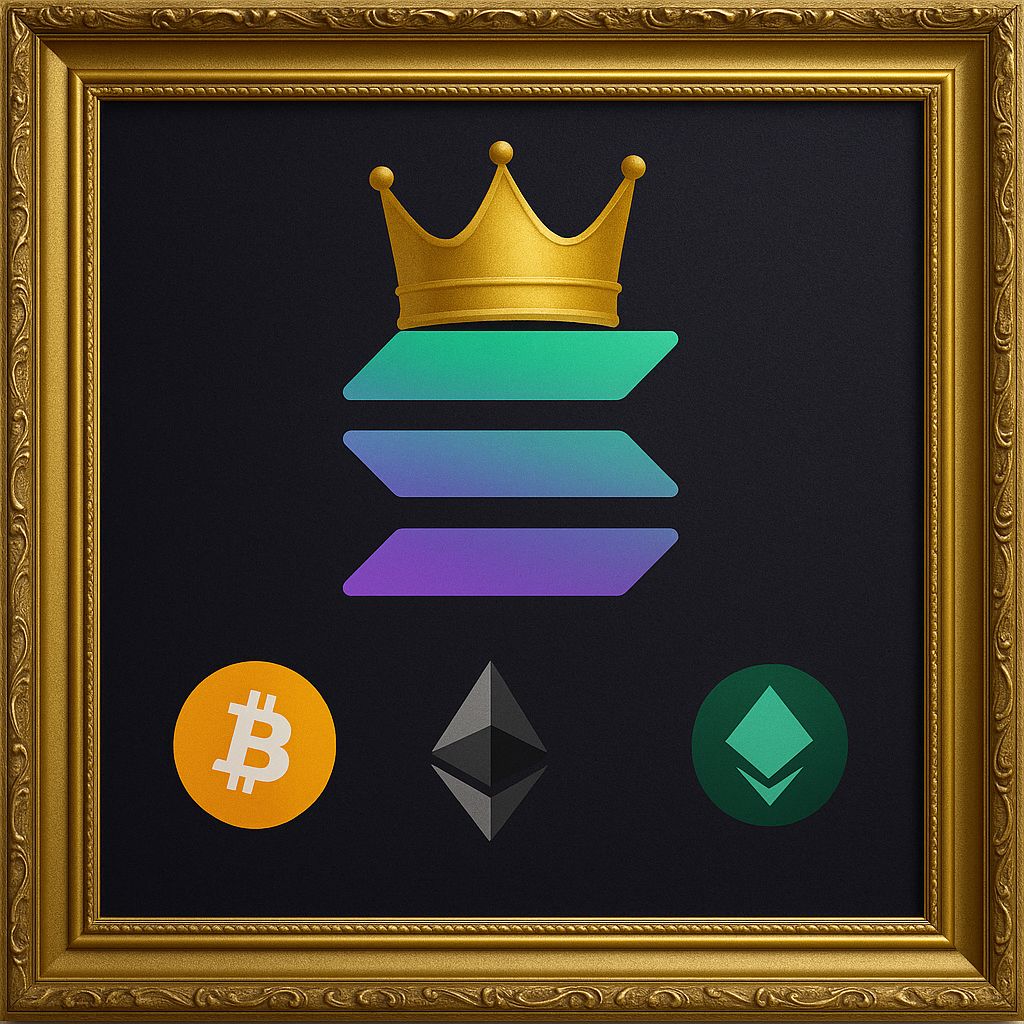
A Historic Day for Solana
On August 17, 2025, the Solana blockchain achieved a groundbreaking milestone by recording an astonishing 107,664 transactions per second (TPS). This figure not only marks the fastest throughput ever reached on the Solana network but also positions Solana as one of the most powerful and scalable Layer 1 blockchains in the cryptocurrency industry.
The achievement has already sparked global conversations in the blockchain space, from DeFi innovators to NFT creators and institutional investors, all of whom see this breakthrough as a sign that blockchain scalability is moving into a new era. Solana’s record is not just a number—it reflects years of engineering innovation, scalability research, and the determination of its developer community to push boundaries.
In this article, we will dive deep into the significance of this milestone, what it means for Solana’s ecosystem, how it compares to other major blockchains such as Ethereum and Bitcoin, and why this record could shape the future of decentralized applications (dApps), finance, and Web3 as a whole.
What Does 107,664 TPS Really Mean?
To appreciate Solana’s achievement, we must understand what TPS (Transactions Per Second) represents in the blockchain industry. TPS is the measure of how many individual transactions a blockchain can process within one second.
- Bitcoin (BTC) processes around 7 TPS, which is enough for store-of-value use cases but not scalable for mass adoption.
- Ethereum (ETH) averages 15–30 TPS, with scaling solutions like rollups and Layer 2s attempting to push this further.
- Visa, the global payments giant, processes around 65,000 TPS at peak load.
Now, Solana’s 107,664 TPS surpasses Visa’s peak capacity and sets a new industry benchmark. This figure is not theoretical but was measured in an actual block produced on August 17, 2025.
This accomplishment underscores Solana’s ability to process massive transaction volumes in real time, opening doors to global-scale decentralized finance, gaming ecosystems, and NFT platforms that require near-instant settlements.
How Did Solana Achieve This Record?
Solana’s architecture is unique in the blockchain world. Instead of relying purely on traditional proof-of-work or proof-of-stake models, Solana combines innovative technologies such as:
- Proof of History (PoH): A time-stamping mechanism that orders transactions efficiently without requiring nodes to communicate constantly.
- Tower BFT (Byzantine Fault Tolerance): A consensus mechanism that allows faster agreement between validators.
- Turbine and Gulf Stream: Protocols that enhance block propagation and transaction forwarding.
- Sealevel Runtime: Enables parallel processing of smart contracts.
These innovations allow Solana to handle thousands of smart contracts and token transfers simultaneously, without bottlenecking like traditional blockchains.
For the 107,664 TPS record, the core developer team optimized validator software, adjusted consensus handling, and implemented enhanced parallelization methods. Although official confirmations from Anatoly Yakovenko (Solana Labs co-founder) and Raj Gokal (Solana Foundation co-founder) are still pending, engineering leadership and validator community participation were key drivers in this achievement.
Why This Milestone Matters for Blockchain Adoption
Blockchain technology faces one persistent challenge: scalability. While Bitcoin pioneered decentralization and Ethereum introduced smart contracts, both have historically struggled with congestion and high fees during peak activity.
Solana’s 107,664 TPS breakthrough could address these long-standing issues by offering:
- Near-instant transaction finality for DeFi platforms.
- Seamless scalability for gaming and NFT ecosystems that require millions of microtransactions.
- Low transaction costs (fractions of a cent) even at high network loads.
This event has the potential to boost investor confidence, attract enterprise-level partnerships, and strengthen Solana’s reputation as a high-performance Layer 1 blockchain capable of supporting Web3 adoption on a global scale.
Impact on DeFi and NFT Ecosystems
DeFi (Decentralized Finance)
The DeFi sector depends heavily on transaction speed and cost efficiency. Platforms for decentralized exchanges (DEXs), lending, borrowing, and stablecoin settlements need blockchains that can process high volumes quickly. With Solana’s new TPS record, DeFi developers can build systems that rival traditional financial infrastructure.
Imagine decentralized exchanges processing trades as fast as centralized platforms like Binance or Coinbase, but without intermediaries. This is where Solana could shine.
NFTs and Gaming
For NFT marketplaces and blockchain-based gaming platforms, transaction throughput is everything. Millions of gamers making in-game microtransactions or NFT transfers require a network capable of high capacity without crashing or inflating gas fees.
With 107,664 TPS, Solana can host entire gaming ecosystems and NFT drops without slowing down. This puts it ahead of many competitors in the metaverse and Web3 gaming race.
Comparing Solana with Ethereum and Bitcoin
While Bitcoin and Ethereum dominate in terms of market capitalization and adoption, Solana’s achievement highlights how different blockchains serve different purposes.
- Bitcoin remains the store-of-value asset, prioritizing decentralization and security over speed.
- Ethereum is the smart contract pioneer, with Layer 2 scaling solutions like Optimism, Arbitrum, and zkSync helping boost throughput.
- Solana, however, is emerging as the high-speed infrastructure layer, aiming to power applications that need instant transactions and low fees.
Solana’s achievement doesn’t immediately diminish Ethereum or Bitcoin, but it reinforces the multi-chain future of blockchain – where each network specializes in different functions.
Investor Sentiment and Market Impact on SOL
Whenever a blockchain sets a new record, the native token often experiences increased attention. For Solana, the SOL token could benefit from:
- Increased demand due to more developers building on Solana.
- Higher liquidity in Solana-based DeFi protocols.
- Positive investor sentiment is pushing SOL’s price upward.
Historically, such breakthroughs tend to boost token valuations, mainly if adoption follows quickly. While this TPS record doesn’t directly affect Ethereum or Bitcoin, it strengthens Solana’s position as a leading Layer 1 blockchain, making it more attractive to both retail and institutional investors.
Regulatory and Technological Implications
Solana’s speed record also draws the attention of regulators, policymakers, and global institutions. As governments explore the use of blockchain for CBDCs (Central Bank Digital Currencies) and large-scale payment systems, Solana’s technology could become a model for adoption.
Furthermore, advancements like this encourage healthy competition across the industry, motivating other blockchains to continue innovating. In the long run, this benefits the entire crypto ecosystem by improving scalability, security, and interoperability.
The Road Ahead: What’s Next for Solana?
This milestone is significant, but it’s only one step in Solana’s broader vision. The blockchain still faces challenges such as:
- Network outages have been a recurring issue in the past.
- Validator centralization concerns that critics often raise.
- Ecosystem competition from fast-rising Layer 2 solutions on Ethereum.
However, Solana’s leadership is determined to address these issues while continuing to push the boundaries of blockchain performance.
Looking forward, Solana could:
- Attract large-scale enterprises seeking blockchain integration.
- Dominate in Web3 gaming and NFT adoption.
- Collaborate with financial institutions to build next-gen DeFi infrastructure.
- Expand into cross-chain interoperability, linking Solana seamlessly with Ethereum, Bitcoin, and other ecosystems.
A Defining Moment for Solana
The 107,664 TPS record is not just a technical achievement – it’s a statement of intent. Solana has demonstrated that blockchain networks can achieve speeds once thought impossible, positioning itself as a leader in the race for scalability.
For developers, investors, and users, this milestone means faster, cheaper, and more reliable blockchain applications. For the crypto industry as a whole, it signals a future where decentralized finance, NFTs, gaming, and digital economies can operate at global scale without limitations.
As CoinLive News put it, “With this milestone, Solana stands out in the competitive landscape of blockchain networks, significantly impacting the DeFi and NFT ecosystem.”
The world is watching – and Solana has just raised the bar.









