






















































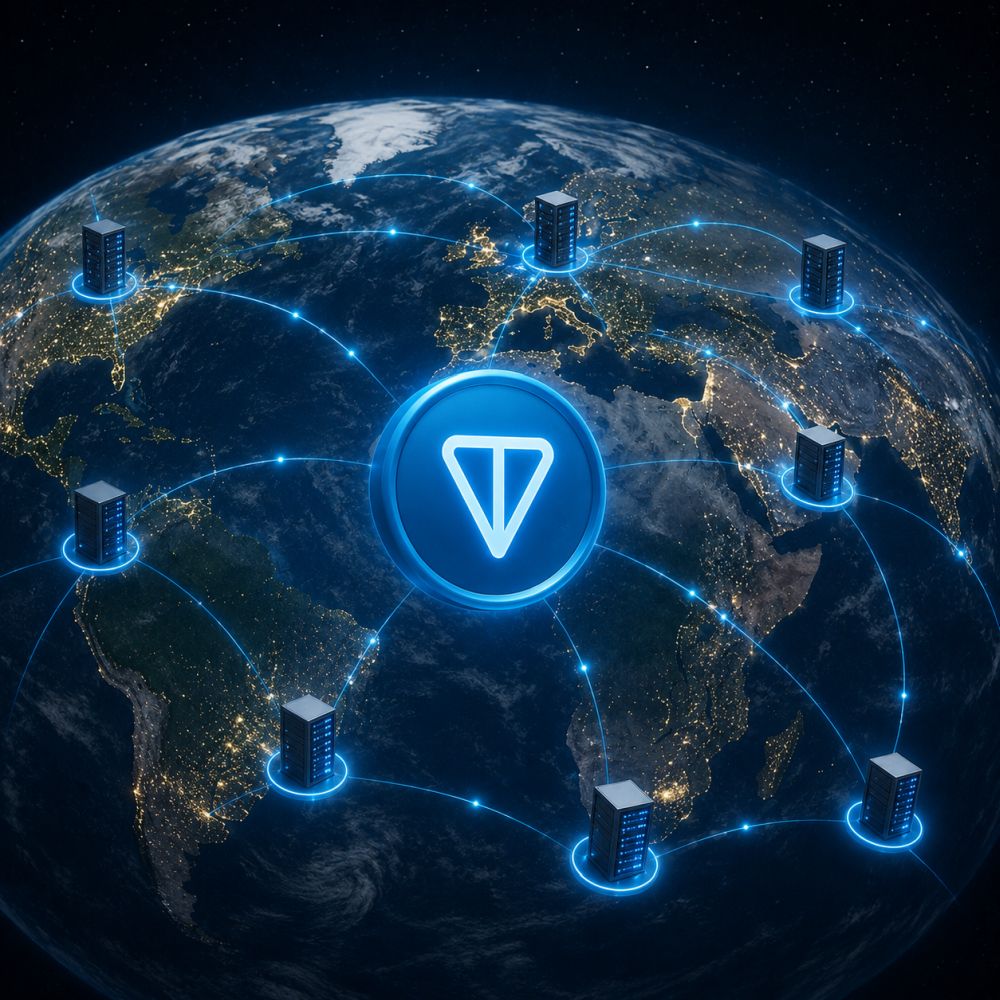
The digital landscape of blockchain technology is undergoing a massive shift toward true decentralization and global accessibility. At the center of this revolution is The Open Network, commonly known as TON. Originally envisioned by the creators of Telegram, TON has evolved into a robust, independent ecosystem that is setting new standards for network security and geographical distribution. Recent data highlights a significant milestone for the project: the presence of 400 independent validators spanning 6 continents. This distribution is not just a numerical achievement but a testament to the network’s resilience and its ambition to become the most decentralized blockchain in the world. By spreading its infrastructure across diverse jurisdictions and hardware providers, TON ensures that no single entity or government can compromise the integrity of its ledger. This level of decentralization is rare in the crypto space, where many networks remain clustered in a few data centers or specific geographic regions.
The significance of having hundreds of validators distributed globally cannot be overstated. In a proof-of-stake system like TON, validators are the backbone of the network. they are responsible for verifying transactions, proposing new blocks, and maintaining the overall security of the chain. When these validators are concentrated in one area, the network becomes vulnerable to localized events such as power outages, internet censorship, or restrictive local regulations. By achieving a presence on 6 continents, TON has effectively immunized itself against these localized risks. Whether it is a validator running a node in a high-tech facility in Europe or an independent participant in South America, every node contributes to a collective wall of security. This global footprint makes TON one of the most reliable platforms for developers who require a stable and censorship-resistant environment for their decentralized applications.
Beyond security, the decentralization of TON serves as a beacon for the broader crypto community. It demonstrates that a high-performance blockchain can maintain its speed and scalability without sacrificing its core values. Many “fast” blockchains achieve their performance by limiting the number of validators or centralizing them to reduce latency. TON, however, utilizes a unique sharding architecture that allows it to scale horizontally while still welcoming a growing number of global participants. This balance of performance and decentralization is what attracts institutional investors and retail users alike. As the network continues to expand, the goal of reaching even more continents and thousands of nodes remains a top priority for the foundation and the community. This journey toward absolute decentralization is a marathon, and the current milestone of 400 validators is a powerful indication that TON is leading the race.
Why Geographic Diversity Is The Ultimate Shield For Blockchain Networks
The concept of geographic diversity in blockchain infrastructure is often discussed but rarely executed to the extent seen with TON. For a blockchain to be truly “unstoppable,” its physical nodes must be scattered across as many legal and physical environments as possible. When 400 validators are active across 6 continents, it means the network is operating under a mosaic of different legal frameworks and infrastructure providers. This diversity creates a fail-safe mechanism: if one country decides to crack down on crypto mining or validation, the impact on the global TON network remains negligible. The remaining nodes in other continents simply pick up the slack, ensuring that the blockchain continues to produce blocks without interruption. This is the definition of a resilient, anti-fragile system that can withstand external shocks that would cripple more centralized competitors.
Furthermore, geographic distribution helps in reducing the “latency-centralization” trap. In many networks, validators cluster in places like Virginia or Frankfurt because the proximity to major internet exchanges provides a slight speed advantage. However, TON’s design focuses on a global scale where transaction finality is achieved through a sophisticated consensus protocol that does not rely on physical proximity. This allows a validator in Australia to participate as effectively as one in North America. By encouraging participation from every corner of the globe, TON creates a more inclusive economic model where anyone with the required stake and hardware can contribute to the network’s health. This inclusivity is a core pillar of the decentralization movement, moving away from the “walled gardens” of traditional finance and toward a truly open and permissionless internet.
The technical implications of this 6-continent spread are also noteworthy. It forces the network protocol to be highly optimized for varying internet speeds and conditions. This “battle-tested” nature ensures that the TON blockchain remains functional even in regions with less-than-perfect connectivity. For the end-user, this translates to a more stable experience. Whether you are sending Toncoin from a mobile wallet in Africa or interacting with a DeFi protocol in Asia, the underlying network is supported by a global web of validators that ensures your transaction is processed securely. This global reliability is why TON is increasingly seen as the preferred layer-1 solution for mass-market applications that aim to serve billions of users.
The Role Of The TON Foundation In Fostering A Decentralized Ecosystem
While the TON blockchain is decentralized by design, the role of the TON Foundation has been instrumental in coordinating the growth of the validator set. The foundation does not control the validators, but it provides the tools, documentation, and incentives necessary to attract high-quality participants. By launching programs that reward geographic diversity and technical excellence, the foundation has ensured that the growth of the network is balanced and sustainable. The transition from a project managed by a central team to a community-driven ecosystem is a delicate process, and the successful deployment of 400 validators is a clear sign that this transition is working. The community now holds the power to vote on protocol upgrades and the future direction of the network through a transparent governance process.
This shift toward community governance is essential for the long-term survival of any blockchain. When the power is distributed among 400 independent actors, the risk of a “hostile takeover” or a single point of failure is virtually eliminated. Each validator has a vested interest in the success of the network, as they have staked significant amounts of Toncoin to participate. This economic alignment, combined with geographic separation, creates a robust defense against both internal and external threats. The TON Foundation continues to work on lowering the barriers to entry for new validators, with the aim of increasing the count from 400 to thousands. This roadmap toward hyper-decentralization is what sets TON apart from other layer-1 projects that have stalled in their distribution efforts.
Moreover, the foundation’s commitment to transparency has been a key driver in building trust within the validator community. Regular reports on network health, validator performance, and geographic distribution are made public, allowing anyone to audit the state of the network. This level of openness is crucial for attracting institutional validators who require high standards of reliability and security. By fostering an environment where technical merit and geographic diversity are prioritized, the TON Foundation has laid the groundwork for a network that can serve as the backbone of the decentralized web for decades to come. The 6-continent milestone is just the beginning of a much larger vision to bring blockchain technology to every person on the planet.
Analyzing The Technical Architecture That Enables Global Scalability
At the heart of TON’s success is its revolutionary multi-chain architecture. Unlike traditional blockchains that process transactions in a single, linear sequence, TON utilizes a “block-of-blocks” structure. This includes a masterchain and multiple workchains, which can further be split into shardchains. This sharding capability is what allows the network to handle millions of transactions per second while maintaining its decentralized nature. When 400 validators are spread across the globe, the network can assign specific shards to different groups of validators, optimizing the workload and ensuring that no single node is overwhelmed. This parallel processing power is the “secret sauce” that makes TON one of the fastest blockchains in existence.
The consensus mechanism used by TON is a variant of Byzantine Fault Tolerant (BFT) Proof-of-Stake. This means that as long as more than two-thirds of the validators are honest and functioning, the network remains secure. With 400 validators distributed across 6 continents, the likelihood of a coordinated attack or a simultaneous failure of two-thirds of the nodes is astronomically low. This mathematical certainty provides peace of mind to users and developers who rely on TON for high-value transactions. The network’s ability to reach consensus quickly, even with a globally dispersed validator set, is a feat of engineering that highlights the sophistication of the TON protocol.
In addition to its sharding and consensus models, TON also features a unique virtual machine called the TVM (TON Virtual Machine). The TVM is designed to execute smart contracts with extreme efficiency, supporting asynchronous calls and parallel execution. This architecture is perfectly suited for a decentralized network with a global validator set, as it allows for the seamless interaction of various components across different shards. As more validators join the network, the capacity of the TVM to handle complex applications only grows. This scalability ensures that TON can support everything from simple payments to complex decentralized social networks and gaming platforms without experiencing the congestion or high fees that plague other networks.
The Future Of Decentralization: Moving Toward A Billion Users
The ultimate goal of TON is not just to have 400 validators, but to provide a decentralized infrastructure for a billion users. The integration with the Telegram messaging app provides a unique distribution channel that no other blockchain can match. With nearly 800 million active users on Telegram, the potential for mass adoption is unprecedented. By building a network that is already distributed across 6 continents, TON is preparing for the day when these millions of users start interacting with on-chain services daily. The infrastructure is being built today to handle the traffic of tomorrow.
As the ecosystem grows, we can expect to see an even greater diversification of the validator set. New technologies such as “light nodes” and improved staking protocols will make it easier for individuals to participate in the security of the network, even without massive hardware setups. This “democratization of validation” will further push the boundaries of what it means to be a decentralized blockchain. The 400 validators we see today are the pioneers of a new digital economy, one that is global, inclusive, and truly owned by its participants.
The fact that 400 validators across 6 continents are now securing the TON blockchain is a landmark achievement for the entire industry. It proves that the vision of a truly global and decentralized network is not only possible but is actively being realized. As TON continues to innovate and expand, it will undoubtedly remain at the forefront of the blockchain revolution, providing the security, scalability, and decentralization needed to power the next generation of the internet. The journey from a promising idea to a global powerhouse is well underway, and the numbers speak for themselves: TON is here to stay, and its decentralized foundation is stronger than ever.









