

























































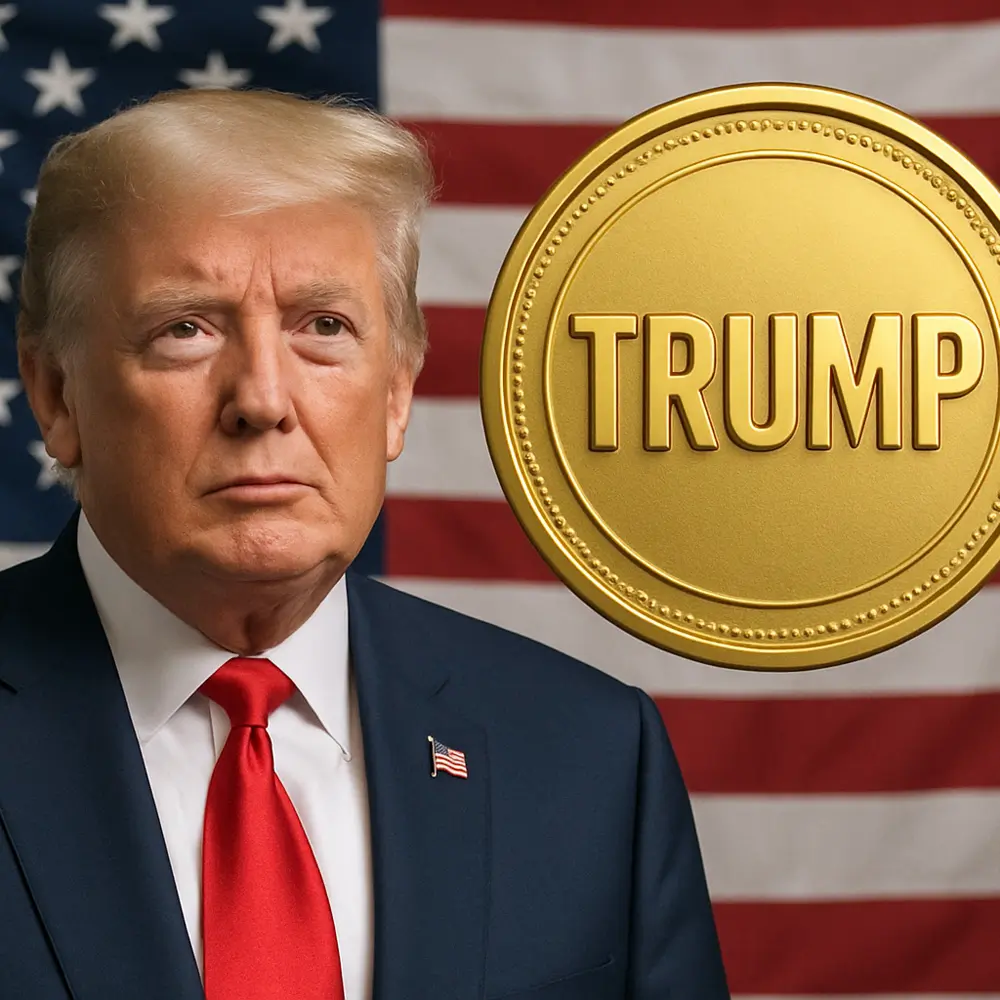
The political meme coin ecosystem has experienced another major shift following updated reports of insider and team related token movements surrounding the Official Trump token. Digital asset tracking platforms and blockchain analytics monitoring tools recently highlighted fresh token transfers linked to developer wallets and team allocated reserves, triggering renewed discussions among traders, retail investors, and market analysts. The emergence of team token sales within speculative digital asset networks frequently introduces short term price volatility, alters market liquidity, and prompts broader questions regarding project governance, tokenomics distribution schedules, and long term market stability.
Meme coins associated with political figures, prominent cultural movements, or viral internet trends rely heavily on social sentiment, speculative momentum, and community trust. When entities holding large portions of a token’s total supply choose to liquidate allocations or transfer reserves to centralized exchanges, market dynamics can adjust rapidly. This detailed analysis examines the recent team sales associated with the Trump memecoin, explores the mechanics of tokenomics and insider allocations, evaluates historical price responses to insider selling, and provides actionable insights for market participants navigating volatile digital asset environments.
Understanding the Recent Team Sales and On Chain Movements
On chain data monitors revealed a series of coordinated wallet transfers involving addresses tied to the initial distribution and core operations of the Trump memecoin. In the digital asset sector, blockchain transparency allows market observers to track large token movements in real time. According to blockchain analytics data, several multi signature wallets and development accounts transferred significant batches of tokens directly to major centralized trading venues and decentralized liquidity pools.
These transfers were quickly categorized by market analysts as active team sales or reserve reallocations. In many cryptocurrency projects, development teams, early advisers, and institutional partners receive token allocations that vest over specified periods. When these vested tokens are unlocked and moved onto trading platforms, the immediate market assumption is that the holders intend to execute market sales or provide liquidity for trading pairs. The recent activity involving the Trump memecoin represents one of the most notable insider wallet movements observed for the asset in recent months.
The timing of these sales has drawn particular attention from retail traders. Market transactions executed by team entities during periods of price consolidation or heightened market activity often amplify existing price swings. While team members and affiliated entities may sell tokens to fund operational costs, pay for marketing campaigns, or rebalance treasury holdings, large scale selling pressure from core insiders can easily outweigh incoming retail buying demand, leading to sudden downward pressure on token valuations.
Tokenomics Structure and Allocation Risks in Political Tokens
To evaluate the broader impact of team sales on the Trump memecoin, it is essential to examine the token’s underlying tokenomics architecture. Unlike traditional utility cryptocurrencies or decentralized network assets that employ algorithmic issuance models and widespread initial distributions, political meme coins often features heavy concentration of supply among a small number of founding entities, marketing wallets, and team reserves.
When a project allocates a significant percentage of its total token supply to core creators, affiliated companies, or strategic reserve funds, the market structure becomes inherently vulnerable to supply shocks. If token lockup periods are relatively short or if vesting schedules lack strict enforcement through smart contracts, insider entities possess the capability to sell substantial quantities of tokens into public order books. This concentration of holding power represents a fundamental risk factor for speculative digital assets.
In the case of the Official Trump token and similar politically themed assets, initial supply metrics revealed that a dominant fraction of the total token count was retained by associated corporate entities, promotional funds, and early distribution wallets. When insider wallets hold hundreds of millions of tokens while public circulating supply remains comparatively limited, any decision by team members to realize profits or liquidate positions exerts an outsized effect on market capitalization and order book depth across major exchanges.
Market Response and On Chain Liquidity Dynamics
Following the detection of the team sales, order book data across prominent cryptocurrency exchanges reflected immediate shifts in bid ask spreads and localized liquidity. As incoming sell orders hit automated market makers and centralized order books, the spot price of the Trump memecoin experienced increased volatility, testing key technical support levels established during previous trading cycles.
Liquidity dynamics play a vital role in determining how well a digital asset can absorb large volume sales. In high liquidity markets, such as those for major digital assets like Bitcoin or Ethereum, multi million dollar sales can be absorbed with minimal price slippage. However, in meme coin markets where available buy side liquidity is often thin and fragmented across multiple decentralized pools, even moderate insider sell orders can trigger cascading price declines.
Furthermore, on chain metrics showed a notable shift in wallet balances among retail holders. Data indicated that a portion of smaller addresses began liquidating their positions in response to the news of team sales, reflecting a common phenomenon in speculative markets where retail panic compounds insider selling pressure. Conversely, sophisticated short term traders and algorithmic bots took advantage of the increased volatility, engaging in rapid arbitrage and short positioning across derivatives markets.
Historical Context of Insider Selling in the Crypto Space
The occurrence of team sales and treasury liquidations is a recurring theme within the broader history of the cryptocurrency industry. Since the early days of initial coin offerings and the subsequent rise of decentralized finance and meme tokens, insider selling has repeatedly served as a major catalyst for structural price adjustments and community debates over project governance.
In many historical instances, early stage development teams have utilized token liquidations to secure profits following rapid price surges. While profit taking is a standard financial activity across all asset classes, the lack of standardized reporting and regulatory oversight in the meme coin sector often leaves retail participants at a distinct information disadvantage. When insiders sell without prior public announcements or clear disclosures, retail investors frequently absorb the economic impact of the resulting price corrections.
Analyses of historical meme coin cycles demonstrate that projects experiencing aggressive early team liquidations often struggle to maintain upward price momentum over extended periods. Once retail traders perceive that core project entities are continuously selling into price rallies, overall market sentiment can deteriorate, leading to reduced trading volume, diminishing social media engagement, and a gradual migration of speculative capital toward newer, less burdened digital assets.
Evaluating the Impact on Retail Investor Sentiment
Social sentiment serves as the primary engine driving valuation in the meme coin sector. Unlike traditional financial assets that are evaluated based on earnings reports, cash flow projections, or balance sheet metrics, meme coins derive their value almost exclusively from community engagement, viral trends, media coverage, and collective speculative interest.
The news of fresh team sales has had a direct impact on social media channels, community forums, and investor discussion groups dedicated to the Trump memecoin. Expressions of concern and skepticism have increased across digital platforms, with community members debating whether the wallet movements represent routine treasury management or a fundamental reduction in long term support from core stakeholders.
When retail confidence is shaken by insider selling, the reflexivity loop that typically propels meme coin prices upward can quickly reverse. In a rising market, positive sentiment attracts new buyers, which pushes prices higher and generates further media attention. However, when news of team sales introduces doubt, potential buyers hesitate, existing holders seek to de-risk, and falling prices reinforce negative narrative trends. Rebuilding retail trust after a wave of insider sales usually requires prolonged price stability, clear communication from project leaders, and verifiable hold periods for remaining treasury reserves.
Regulatory Considerations and Oversight in Political Digital Assets
The intersection of political branding, personality driven digital assets, and insider financial transactions has increasingly caught the attention of legal experts, policy makers, and financial regulators. The launch and trading of tokens tied to political figures or campaigns introduce complex legal questions regarding consumer protection, conflicts of interest, and financial disclosure standards.
Regulatory authorities around the world have progressively tightened their scrutiny of digital asset markets, focusing particularly on token issuance structures, celebrity endorsements, and potential market manipulation by project insiders. In jurisdictions with active regulatory frameworks, entities that issue digital tokens to the public while retaining large insider holdings may face inquiries regarding whether the distribution mechanisms comply with existing securities statutes or fair trading practices.
For investors participating in politically themed meme coins, regulatory uncertainty adds an additional layer of risk. If regulatory bodies initiate formal inquiries into token distribution practices, insider trading activities, or promotional disclosures, the associated market uncertainty can lead to sharp declines in token liquidity and exchange support. As the digital asset industry matures, the distinction between decentralized public goods and centralized, team controlled speculative tokens remains a primary focus for international regulatory bodies.
Comparative Analysis of Political Tokens Versus Traditional Meme Coins
To better evaluate the strategic position of the Trump memecoin, it is helpful to compare its performance metrics and structural characteristics with other major categories within the meme coin ecosystem. The broader meme coin market can be broadly divided into traditional culture coins, internet meme tokens, and political or event driven tokens.
Traditional meme coins, such as Dogecoin or Shiba Inu, benefit from broad community bases, long operational histories, and widespread distribution across millions of independent wallets. Over time, these legacy meme coins have developed deep liquidity profiles and established exchange infrastructure that help absorb market fluctuations and reduce the price impact of individual large holder transactions.
In contrast, political tokens tend to exhibit much higher concentration of ownership and extreme sensitivity to real world political events, campaign developments, and news headlines. Because political tokens are closely tied to the public standing and ongoing activities of specific individuals, their market dynamics differ significantly from traditional meme coins. The addition of active team sales within a highly concentrated political token environment creates a unique risk profile, where political news shocks and insider wallet liquidations can combine to produce heightened price volatility.
Technical Analysis Indicators and Key Price Thresholds
From a technical analysis perspective, the recent price action following the team sales has pushed the Trump memecoin into critical chart zones. Technical traders utilize a variety of indicators to assess whether an asset is experiencing temporary consolidation or entering a broader bearish trend following major supply events.
Key technical metrics monitored by market analysts include the Relative Strength Index, moving average convergence divergence indicators, and volume profile distributions across major exchanges. Following the news of insider liquidations, short term relative strength indicators moved toward oversold territory, reflecting heavy selling pressure. Meanwhile, moving average crossovers signaled potential trend shifts, prompting technical traders to identify major support and resistance levels.
For short term traders, key support levels represent price zones where historical buying interest has previously emerged to absorb selling volume. If the spot price of the Trump memecoin breaks below primary support thresholds under the weight of ongoing team sales, technical models suggest the potential for further downside exploration toward secondary support levels. Conversely, reclaiming overhead resistance levels would require a substantial surge in organic buying volume capable of neutralizing the additional token supply introduced by team entities.
Strategic Implications for Market Participants and Risk Management
Navigating speculative digital asset markets during periods of team liquidations requires strict adherence to risk management principles and realistic portfolio allocation strategies. Given the inherent volatility of meme coins and the added complexity of insider token movements, market participants must carefully evaluate their exposure and risk tolerance.
Financial analysts typically advise retail investors to approach highly concentrated meme coins with heightened caution. Implementing fundamental risk mitigation techniques, such as position sizing, stop loss orders, and rigorous research into on chain wallet activity, can help protect capital from unexpected market drops. Understanding the difference between short term speculative momentum and sustainable long term asset value is critical when evaluating assets that lack underlying cash flows or formal governance rights.
Furthermore, monitoring on chain analytics tools and token tracking dashboards allows investors to remain informed about wallet movements before they fully manifest in public order books. By tracking major developer addresses, vesting contract release dates, and exchange deposit trends, market participants can gain valuable visibility into potential supply changes and make more informed decisions regarding entry and exit timing.
Potential Future Trajectories for the Trump Memecoin Project
As the market continues to process the impact of the fresh team sales, several future scenarios could unfold for the Trump memecoin project, depending on team actions, community response, and overall cryptocurrency market conditions.
In a constructive scenario, project managers and affiliated entities could implement transparent vesting schedules, publicize wallet addresses, and establish formal treasury management guidelines designed to restore market confidence. If team entities provide clear disclosures regarding the purpose of token sales—such as funding ecosystem development, liquidity provision, or operational expansion—and commit to long term lockup periods for remaining reserves, retail sentiment could gradually stabilize, allowing the asset to recover over time.
In an alternative scenario, continued token sales by core entities without clear public communication could perpetuate selling pressure and further erode retail trust. If ongoing liquidations coincide with broader market downturns or declining social media interest, the token could experience prolonged price stagnation and reduced trading volume across major exchanges. Under these conditions, speculative capital would likely shift toward alternative digital assets offering higher transparency and more favorable supply distributions.
Navigating Information Asymmetry in Meme Coin Markets
The recent team sales involving the Trump memecoin serve as a powerful reminder of the unique risks and market dynamics defining the speculative digital asset landscape. While meme coins offer high volatility and short term trading opportunities, they also expose market participants to structural risks associated with concentrated token ownership, rapid supply shifts, and information asymmetry between project insiders and the general public.
As the cryptocurrency market continues to evolve, the transparency offered by blockchain technology remains one of the most effective tools for retail investors seeking to evaluate project integrity. By actively monitoring on chain data, analyzing tokenomics structures, and maintaining disciplined risk management protocols, investors can better navigate the unpredictable market cycles characteristic of political meme coins and the broader digital asset ecosystem.