






















































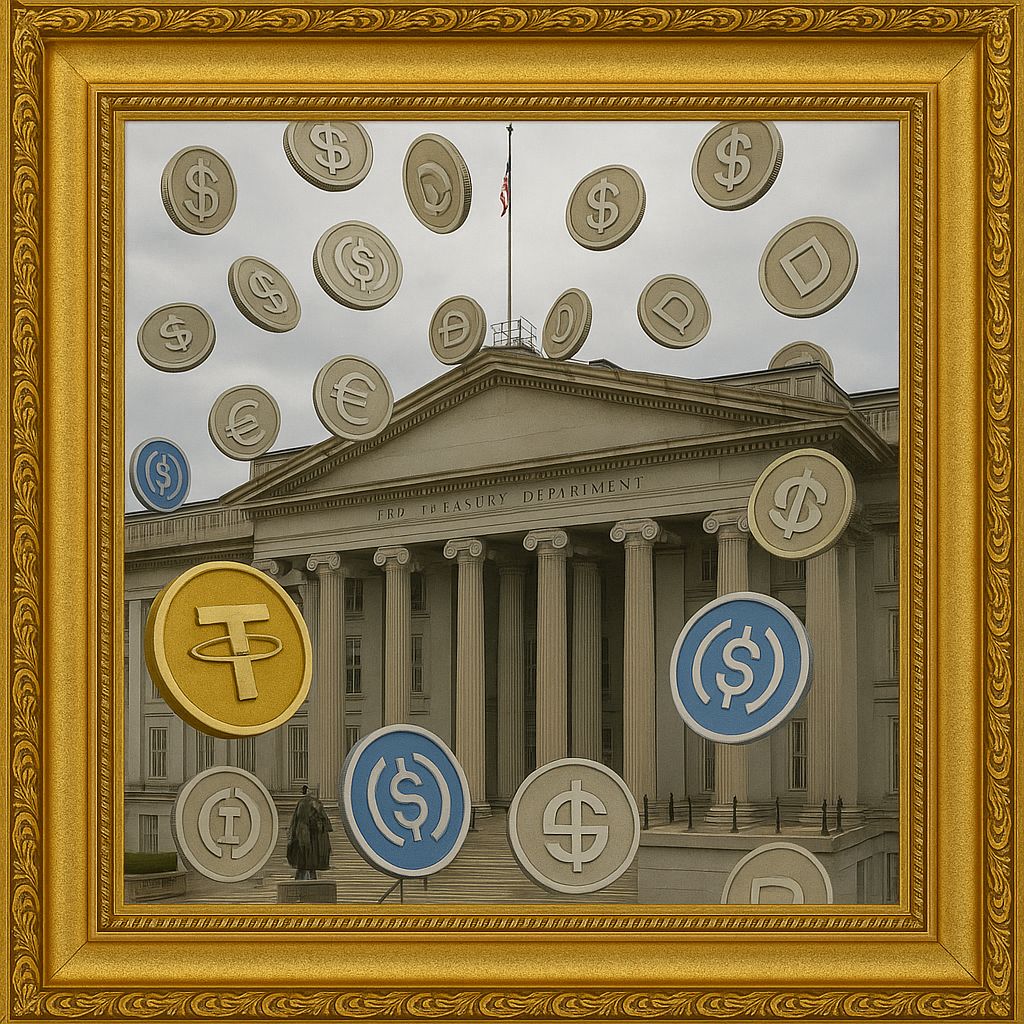
A Landmark Shift in Stablecoin Regulation
The United States Treasury has taken a historic step toward redefining the future of digital currencies by opening a public consultation on stablecoin regulations under the newly signed GENIUS Act. Signed into law by President Donald J. Trump on July 18, 2025, this legislation sets strict requirements for stablecoin issuers like USDT (Tether), USDC (Circle), and other leading digital assets.
At its core, the GENIUS Act mandates 100% reserve backing of all stablecoins in U.S. dollars or other approved low-risk assets such as U.S. Treasury bills. This regulatory framework signals a massive shift in the management, issuance, and overall market dynamics of stablecoins, reshaping their role in the global financial system.
But what does this mean for the crypto industry, investors, and the future of decentralized finance (DeFi)? In this deep-dive analysis, we’ll explore the full scope of these changes, their market impact, and how they could cement the U.S. dollar’s dominance in the digital economy.
The GENIUS Act: Setting a New Gold Standard for Stablecoins
The GENIUS Act – short for “Global Economic Network for Integrated U.S. Stability” – represents one of the most comprehensive frameworks ever introduced for stablecoin regulation in the U.S. Unlike previous proposals, this law eliminates regulatory ambiguity by clearly defining reserve requirements, auditing standards, and issuer eligibility.
Key Provisions of the GENIUS Act
- 100% Reserve Requirement
Stablecoins must be fully backed by U.S. dollars or Treasury bills, leaving no room for fractional reserve practices. - Independent Auditing
All issuers must undergo monthly audits conducted by independent, government-approved firms. - Issuer Restrictions
Only insured depository institutions and approved nonbank financial entities may issue stablecoins. - Treasury Oversight
The U.S. Treasury Department will play a central role in enforcing compliance and supervising operational transparency.
President Trump described the act as a “monumental step toward financial stability”, stating:
“The GENIUS Act will generate increased demand for U.S. debt and cement the dollar’s role as the world’s reserve currency by requiring stablecoin issuers to back their assets with U.S. Treasuries and dollars.”
This is not just a regulatory move – it’s an economic strategy aimed at reinforcing global trust in the U.S. financial system.
Why the U.S. Treasury Wants Your Input
Unlike previous crypto-related bills, the Treasury has opened a public consultation process, inviting feedback from:
- Financial institutions
- Crypto companies
- Developers
- Investors
- Everyday stablecoin users
This move indicates that policymakers recognize the complexity of the stablecoin ecosystem and want to balance innovation with security. By seeking diverse opinions, the Treasury hopes to:
- Prevent loopholes that could destabilize markets.
- Encourage responsible innovation in the DeFi space.
- Build a regulatory framework that fosters investor confidence.
Market Reactions: Immediate Impact on USDT, USDC, and DeFi
The announcement of the GENIUS Act has already triggered significant ripples across the crypto markets. While Bitcoin and Ethereum have remained relatively stable, USD-backed stablecoins—particularly Tether (USDT) and USD Coin (USDC)—are at the center of attention.
USDT and USDC Adjust Strategies
- Tether (USDT) has accelerated efforts to increase its Treasury holdings, ensuring compliance readiness.
- Circle’s USDC has begun integrating real-time reserve disclosure systems to maintain market trust.
Impact on DeFi Protocols
DeFi ecosystems that rely heavily on stablecoins – including liquidity pools, lending protocols, and cross-chain payment systems – are revisiting their collateral strategies to ensure compatibility with new U.S. compliance standards.
This creates a dual challenge:
- Increased operational costs for stablecoin issuers.
- Tighter liquidity across decentralized markets.
How the GENIUS Act Strengthens the U.S. Dollar’s Global Role
One of the strategic objectives behind the GENIUS Act is to amplify demand for U.S. Treasury securities and reinforce the dollar’s position as the global reserve currency.
Why This Matters
- By forcing stablecoin issuers to hold Treasuries, the U.S. government ensures consistent demand for its debt instruments.
- In turn, this anchors the dollar’s dominance in international trade and cross-border settlements.
- Competing stablecoin frameworks in Europe and Asia may struggle to match the liquidity depth provided by U.S.-backed reserves.
This dynamic positions the U.S. not just as a regulator, but as the backbone of global digital finance.
Crypto Community Divided: Innovation vs. Regulation
Reactions from the crypto community have been polarized. While some view the GENIUS Act as a necessary safeguard for investors, others argue it undermines decentralization.
Supporters Applaud Transparency
- Institutional investors welcome clearer rules that reduce regulatory uncertainty.
- Banks and fintech firms see opportunities to integrate stablecoin rails into traditional payment systems.
Critics Warn of Overreach
- DeFi developers fear that strict auditing and reserve mandates could stifle innovation.
- Privacy advocates argue that centralized enforcement undermines the open-source ethos of blockchain.
This debate highlights a broader tension:
How do regulators protect consumers without killing innovation?
Broader Economic Implications: Liquidity, Debt, and Investor Confidence
The GENIUS Act doesn’t just affect crypto – it has far-reaching consequences across the entire financial ecosystem.
1. Liquidity Shifts
By mandating Treasury-backed reserves, the Act redirects massive capital flows into U.S. government debt, potentially affecting bond yields and money market stability.
2. Rising Demand for Auditing Services
The compliance burden creates a booming market for financial auditors specializing in digital asset verification.
3. Enhanced Investor Confidence
Clear rules may attract institutional capital that previously avoided crypto due to regulatory ambiguity.
Future Outlook: Stablecoins Enter a New Era
The GENIUS Act sets the stage for a new wave of innovation in the stablecoin sector:
- Programmable stablecoins with real-time reserve tracking could emerge.
- Cross-border settlement systems may integrate on-chain Treasuries as collateral standards.
- Startups will likely focus on compliance-first DeFi protocols to bridge traditional finance with Web3 ecosystems.
- This legislative milestone underscores one undeniable truth:
- Stablecoins are no longer fringe instruments – they are now critical to global finance.
So, the main word is
The GENIUS Act represents a turning point in the evolution of digital finance. By mandating full reserve backing and enforcing rigorous audits, the U.S. government aims to stabilize the stablecoin ecosystem while strengthening the dollar’s global supremacy.
For investors, developers, and institutions alike, the message is clear:
Adapt quickly or get left behind.
As regulatory frameworks tighten, the winners will be those who embrace transparency, trust, and compliance – ushering in a safer, more resilient digital economy.









