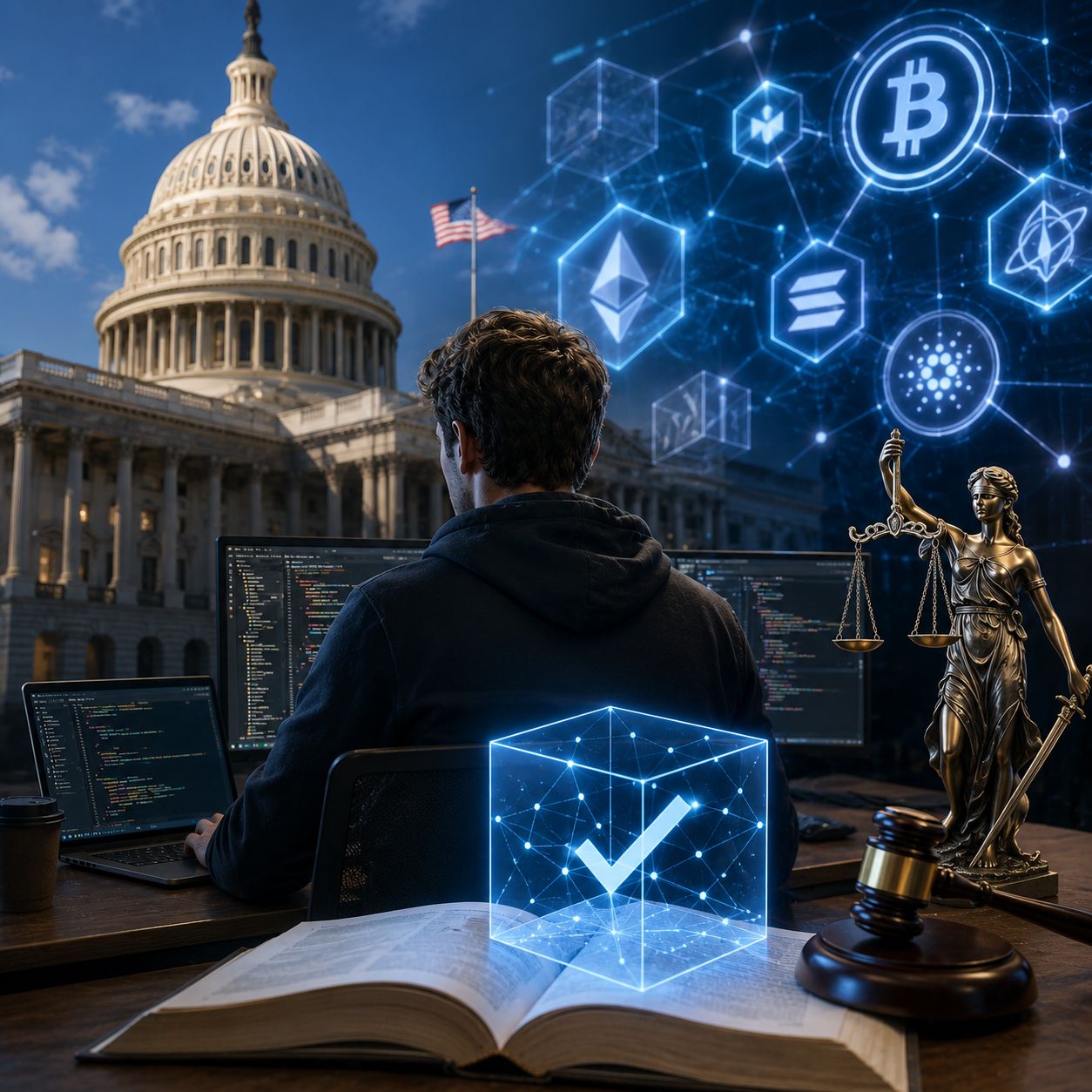


























































United States lawmakers are returning to Capitol Hill following weather-related delays that postponed several committee meetings and scheduled votes. As congressional activity resumes, attention is turning toward how senators will address a growing list of proposed amendments to one of the most closely watched pieces of digital asset legislation in recent years. The crypto market structure bill under consideration is expected to shape how digital assets are regulated in the United States for years to come, making the upcoming discussions particularly significant for the industry.
At the center of the debate is a renewed effort by the Senate to advance a comprehensive framework governing digital commodity intermediaries and broader crypto market operations. The bill represents one of the first major attempts by the current Senate to clarify jurisdictional authority, regulatory standards, and oversight mechanisms for the rapidly evolving digital asset sector. While progress has been slow, the upcoming markup signals a critical moment in the legislative process.
Lawmakers face mounting pressure from industry stakeholders, regulators, and constituents to provide regulatory clarity while avoiding provisions that could stifle innovation or push crypto activity offshore. The amendments proposed thus far reflect a wide range of priorities, from ethics and national security to market competition and regulatory readiness. How these amendments are handled may determine whether the bill advances smoothly or encounters further delays.
Senate Agriculture Committee Moves Forward With Digital Asset Markup
Senators serving on the Senate Agriculture Committee are scheduled to convene for a markup session focused on the Digital Commodity Intermediaries Act, commonly referred to as the DCIA. The bill aims to establish a formal market structure for digital assets by defining how intermediaries operate, how oversight is allocated, and which federal agencies hold primary authority.
The markup session represents a key procedural step in the legislative process, during which committee members debate, modify, and vote on proposed amendments before determining whether the bill should advance to the full Senate. For the crypto industry, this moment is especially important because it offers insight into lawmakers’ priorities and the likelihood of bipartisan cooperation.
This effort comes amid broader uncertainty in Congress regarding digital asset legislation. While there has been growing consensus on the need for regulatory clarity, disagreements persist over the scope of regulation and the balance between investor protection and innovation. The Agriculture Committee’s willingness to move forward highlights its growing role in shaping crypto policy, particularly as digital commodities fall under its traditional jurisdiction.
Legislative Momentum Slowed by Banking Committee Setbacks
The Senate’s progress on crypto market structure legislation has been uneven, in part due to delays in the Senate Banking Committee. A previously scheduled markup by that committee was postponed after a major industry player withdrew its support for the bill, raising concerns about the viability of certain provisions.
The setback underscored the fragile nature of consensus around crypto regulation. While some lawmakers emphasize consumer protection and systemic risk, others warn that overly restrictive measures could undermine the competitiveness of US financial markets. The postponement has shifted more attention to the Agriculture Committee, which is now seen as leading the Senate’s initial push on market structure.
Despite these challenges, lawmakers remain committed to advancing a framework that clarifies regulatory authority. Many view the DCIA as a foundational step that could later be refined through additional legislation or coordination between committees.
Overview of Proposed Amendments Under Consideration
As of the most recent public disclosures, at least eleven amendments to the DCIA have been introduced for consideration during the markup process. These proposals span a wide range of policy concerns, reflecting the complexity of regulating a fast-moving and globally interconnected industry.
Some amendments focus on ethics and governance, including proposals that would restrict members of Congress and senior executive branch officials from engaging with the crypto industry. Supporters argue that such measures are necessary to prevent conflicts of interest and restore public trust in policymaking. Critics, however, warn that overly broad restrictions could discourage informed engagement with emerging technologies.
Other amendments address competition and consumer costs, such as proposals aimed at increasing transparency and competition in payment processing fees. While not exclusively crypto-focused, these measures reflect broader concerns about market concentration and financial fairness.
There are also amendments targeting national security and foreign influence, seeking to strengthen safeguards against external interference in US digital asset markets. These proposals highlight the growing recognition of crypto’s geopolitical implications, particularly as digital assets become more integrated into global financial systems.
Amendment Ties Implementation to Regulatory Readiness
One of the most consequential amendments would delay the implementation of the DCIA until the Commodity Futures Trading Commission has a minimum number of confirmed commissioners. This proposal reflects concerns about the agency’s capacity to oversee expanded responsibilities under the new framework.
The amendment was introduced by Senator Amy Klobuchar of Minnesota, who cited staffing shortages at the CFTC as a potential obstacle to effective regulation. Following several departures in recent years, the commission has operated with fewer members than its full complement, raising questions about governance, enforcement capacity, and decision-making resilience.
Under the proposal, the market structure law would not take effect until at least four commissioners have been confirmed by the Senate. Proponents argue that this condition would ensure the regulator is adequately staffed before assuming expanded oversight of digital asset markets.
Critics, however, caution that tying implementation to confirmation timelines could introduce further delays and uncertainty. They note that the Senate confirmation process can be lengthy and politically contentious, potentially postponing regulatory clarity at a time when it is urgently needed.
Current State of the CFTC Leadership
The CFTC is statutorily designed to operate with five commissioners, one of whom serves as chair. However, recent resignations have left the agency with a significantly reduced leadership team. As of the latest developments, only Chair Michael Selig remains in office following the departure of acting chair Caroline Pham and other commissioners in late 2025.
This leadership gap has fueled debate over whether the agency is prepared to take on an expanded role in regulating digital asset markets. Supporters of the Klobuchar amendment argue that a fully staffed commission is essential for fair and effective oversight, particularly given the technical complexity of crypto markets.
Others counter that the agency’s professional staff and existing regulatory expertise provide sufficient continuity, even during periods of leadership transition. They emphasize that delaying implementation could leave markets operating in a regulatory gray area for longer than necessary.
Clarifying Jurisdiction Between Federal Regulators
A central feature of the DCIA is its attempt to clarify the division of authority between the Securities and Exchange Commission and the CFTC. For years, overlapping and sometimes conflicting interpretations of regulatory jurisdiction have created uncertainty for crypto companies and investors.
The bill seeks to define which digital assets fall under securities law and which qualify as commodities, assigning primary oversight accordingly. Supporters argue that this clarity would reduce compliance costs, encourage innovation, and improve investor protection by establishing consistent rules.
However, the proposed framework has sparked debate within Congress and the industry. Some stakeholders contend that certain provisions could inadvertently restrict emerging business models or impose requirements ill-suited to decentralized systems.
These disagreements have prompted calls for revisions and additional safeguards, many of which are reflected in the amendments now under consideration.
Industry and Lawmaker Pushback Intensifies
Pushback against the DCIA has emerged from multiple fronts, including lawmakers, industry associations, and advocacy groups. Critics have raised concerns about provisions related to stablecoin incentives, tokenized equities, decentralized finance protocols, and ethical standards for market participants.
Industry leaders warn that some draft language could place US-based companies at a disadvantage relative to international competitors. They argue that overly prescriptive rules may drive innovation offshore, undermining the United States’ leadership in financial technology.
Lawmakers sympathetic to these concerns have urged a more measured approach, emphasizing the need for flexibility and ongoing dialogue with industry experts. At the same time, proponents of stricter regulation stress the importance of consumer protection and systemic stability.
This tension underscores the challenge of crafting legislation that balances innovation with oversight in a rapidly evolving sector.
Uncertainty Surrounding Amendment Outcomes
As the Agriculture Committee prepares for its markup session, it remains unclear which amendments will gain sufficient support to be included in the final version of the bill. Committee members may choose to adopt, modify, or reject individual proposals based on political considerations, stakeholder feedback, and strategic priorities.
There is also uncertainty about how the Agriculture Committee’s version of the bill will ultimately be reconciled with the Banking Committee’s work. The Banking Committee has yet to reschedule its postponed markup, leaving open questions about coordination and consolidation between the two panels.
Some observers anticipate that significant revisions could occur during later stages of the legislative process, including potential conference negotiations if differing versions emerge from each committee.
Broader Implications for the US Crypto Market
The outcome of the DCIA markup and subsequent legislative steps will have far-reaching implications for the US crypto market. A clear and workable market structure could provide long-sought regulatory certainty, encouraging investment and innovation while strengthening consumer protections.
Conversely, prolonged delays or contentious amendments could perpetuate uncertainty, prompting companies to reconsider their presence in the US market. This dynamic has already played out in other jurisdictions, where regulatory clarity has attracted crypto businesses seeking stable operating environments.
For policymakers, the challenge lies in crafting a framework that addresses legitimate risks without stifling technological progress. The current debate reflects a broader effort to integrate digital assets into the existing financial system while acknowledging their unique characteristics.
The Road Ahead for Crypto Market Structure Reform
As senators return to Capitol Hill and committees resume their work, the coming weeks are likely to be decisive for crypto market structure reform in the United States. The Agriculture Committee’s markup represents an important milestone, but it is only one step in a complex and often unpredictable legislative journey.
Stakeholders across the crypto ecosystem will be watching closely, analyzing amendment outcomes and signaling their positions as the bill moves forward. While consensus remains elusive, the renewed focus on market structure suggests that lawmakers recognize the urgency of addressing regulatory gaps.
Whether the DCIA ultimately becomes law in its current form or undergoes substantial revision, the process itself marks a turning point in how the US approaches digital asset regulation. The decisions made now will shape the industry’s trajectory and the country’s role in the global crypto economy.