
































































Why Bitcoin is Falling as Oil Prices Surge Amid Middle East Tension
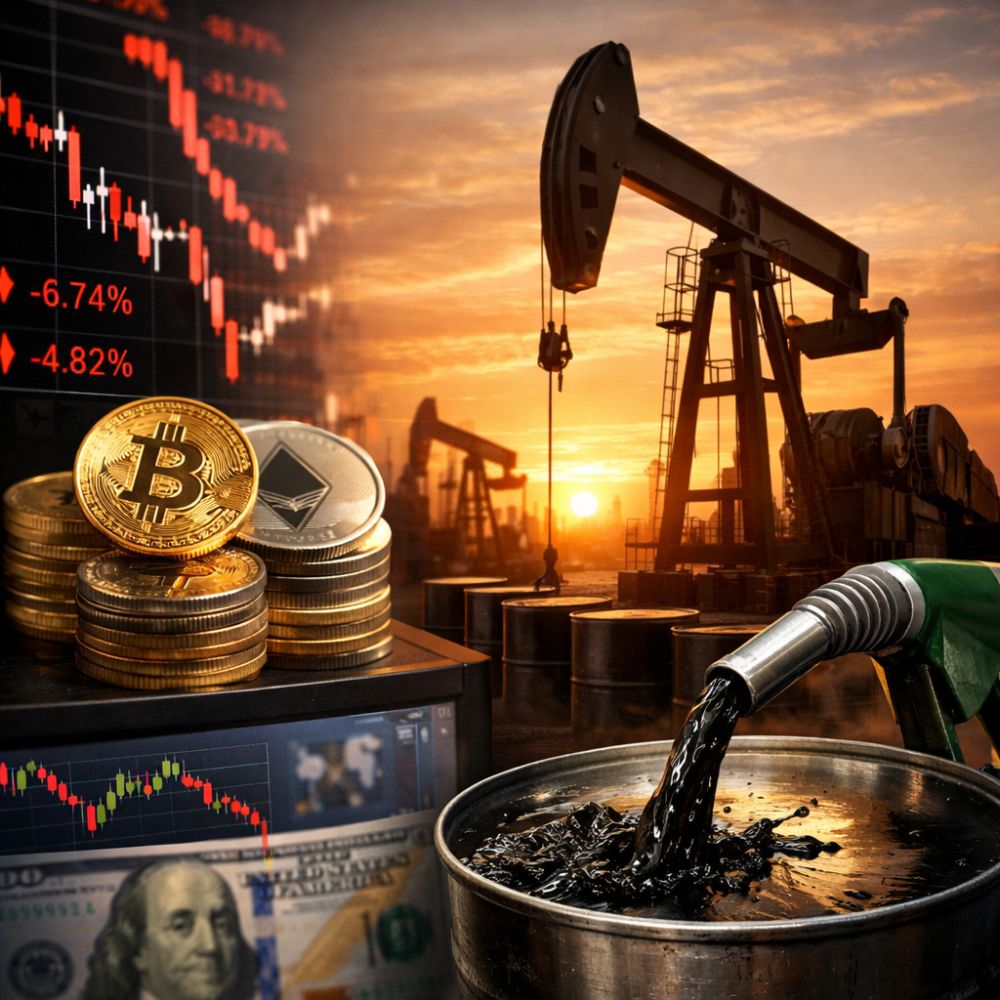
The global financial landscape is currently navigating a period of intense volatility as geopolitical instability and energy market fluctuations converge to create a challenging environment for digital assets. On this Sunday, March 8, 2026, the cryptocurrency market is experiencing a significant downward trend that has caught the attention of investors worldwide. This decline is largely attributed to the escalating conflict in Iran, which has sent shockwaves through the energy sector and pushed crude oil prices to levels not seen in years. As investors brace for the upcoming United States consumer inflation report, the interplay between traditional energy commodities and modern digital currencies has become a focal point of market analysis.
The current situation highlights the intricate connection between global energy security and the perceived value of high-risk assets. While Bitcoin was once heralded by many as a potential hedge against traditional market turmoil, its recent performance suggests a high sensitivity to macroeconomic shifts. When energy prices rise sharply, the cost of living and production increases, often leading to a more hawkish stance from central banks. This chain reaction typically results in a withdrawal of liquidity from speculative markets, which explains why we are seeing such a pronounced dip in crypto valuations today.
Oil Price Surges and the Impact of the Strait of Hormuz
The primary catalyst for the current market movement is the dramatic rise in crude oil prices. Following the closure of the Strait of Hormuz, a critical maritime chokepoint for global oil transit, West Texas Intermediate has surged from its weekly close of $90 to a staggering $115 per barrel. Brent crude is also rapidly approaching a major resistance level of $120. This spike is further exacerbated by news that major producers like Kuwait and the United Arab Emirates are slashing their production levels in response to the ongoing regional conflict. These supply-side shocks are creating an environment of scarcity that naturally drives prices upward, impacting everything from transport costs to the manufacturing of consumer goods.
From a technical perspective, the breach of previous resistance levels in the oil market signals a significant shift in market sentiment. Traders on platforms like Hyperliquid are watching the $120 mark for Brent crude with extreme caution, as a sustained move above this level could indicate a longer-term inflationary trend. For the crypto sector, this means that the “cheap money” era that often fuels bull runs is appearing more distant. As long as energy remains expensive and supply chains are threatened by military activity, the broader investment community remains on edge, favoring cash or defensive assets over the volatility of the blockchain space.
Inflation Expectations and the Federal Reserve Outlook
A core reason why soaring oil prices weigh so heavily on Bitcoin and Ethereum is the direct link to the Consumer Price Index. Recent data from the United States had initially suggested that inflation was on a steady downward trajectory. However, the sudden spike in energy costs is expected to reverse this progress, potentially pushing the inflation rate higher in the coming months. This creates a difficult dilemma for the Federal Reserve. If inflation begins to climb again, the central bank will likely find it impossible to implement the interest rate cuts that many investors were banking on for the second half of 2026.
Market sentiment on Polymarket and other prediction platforms has already begun to shift. Traders have significantly scaled down their expectations for rate cuts this year, recognizing that the Federal Reserve must prioritize price stability over market growth. Higher interest rates generally lead to a stronger dollar, which inversely impacts the price of Bitcoin. Because Bitcoin is priced in USD, a strengthening dollar makes the digital asset more expensive to acquire, while simultaneously making fixed-income investments like bonds more attractive due to higher yields. This transition away from “risk-on” assets is a major driver of the 1.29% drop in the top 20 cryptocurrency index.
The Myth of Bitcoin as an Inflation Hedge
This period of instability has reignited the debate regarding Bitcoin’s role as a “digital gold.” Historically, proponents have argued that Bitcoin serves as a reliable hedge against geopolitical risk and currency devaluation. However, the events of early March 2026 have shown the opposite. As the war in Iran intensified, Bitcoin price dropped from a high of $74,000 last week to $67,000 today. At the same time, the Crypto Fear and Greed Index has plummeted to a score of 18, indicating extreme fear among retail and institutional participants. This suggests that in times of genuine global crisis, investors still treat crypto as a speculative asset rather than a safe haven.
The failure of Bitcoin to maintain its value during this energy crisis highlights its correlation with traditional tech stocks and high-growth equities. When global stability is threatened, the immediate reaction of the market is to seek liquidity and safety. The volatility of the crypto market makes it an easy target for sell-offs when investors need to cover losses in other sectors or move into more stable instruments. As we look ahead to the Wednesday inflation report, the market remains cautious. With expectations that the headline CPI will rise to 2.5%, the pressure on digital assets is unlikely to subside until there is a clear sign of de-escalation in the Middle East.
Key Tokens to Watch and Upcoming Market Catalysts
Despite the general market gloom, there are specific projects that traders are monitoring closely for idiosyncratic movements. This week is particularly significant for the Pi Network community, as the Pi Day event scheduled for Saturday is expected to bring updates regarding the project’s roadmap and potential mainnet developments. Similarly, Polkadot is approaching a critical juncture with its scheduled tokenomics upgrade on March 12. These events often create localized volatility that can decouple specific assets from the broader market trend, at least temporarily.
However, these individual success stories are unlikely to turn the tide for the entire market if the macroeconomic environment remains hostile. The core inflation rate, which excludes volatile food and energy prices, is also expected to sit at 2.5%, suggesting that price pressures are becoming more entrenched across the economy. For crypto enthusiasts, the next few weeks will be a test of patience and risk management. Until the energy markets stabilize and the trajectory of US interest rates becomes clearer, the digital asset space will likely continue to face significant headwinds. Investors are encouraged to keep a close eye on both the geopolitical news feed and the technical levels of crude oil as leading indicators for the next move in the crypto charts.





