



























































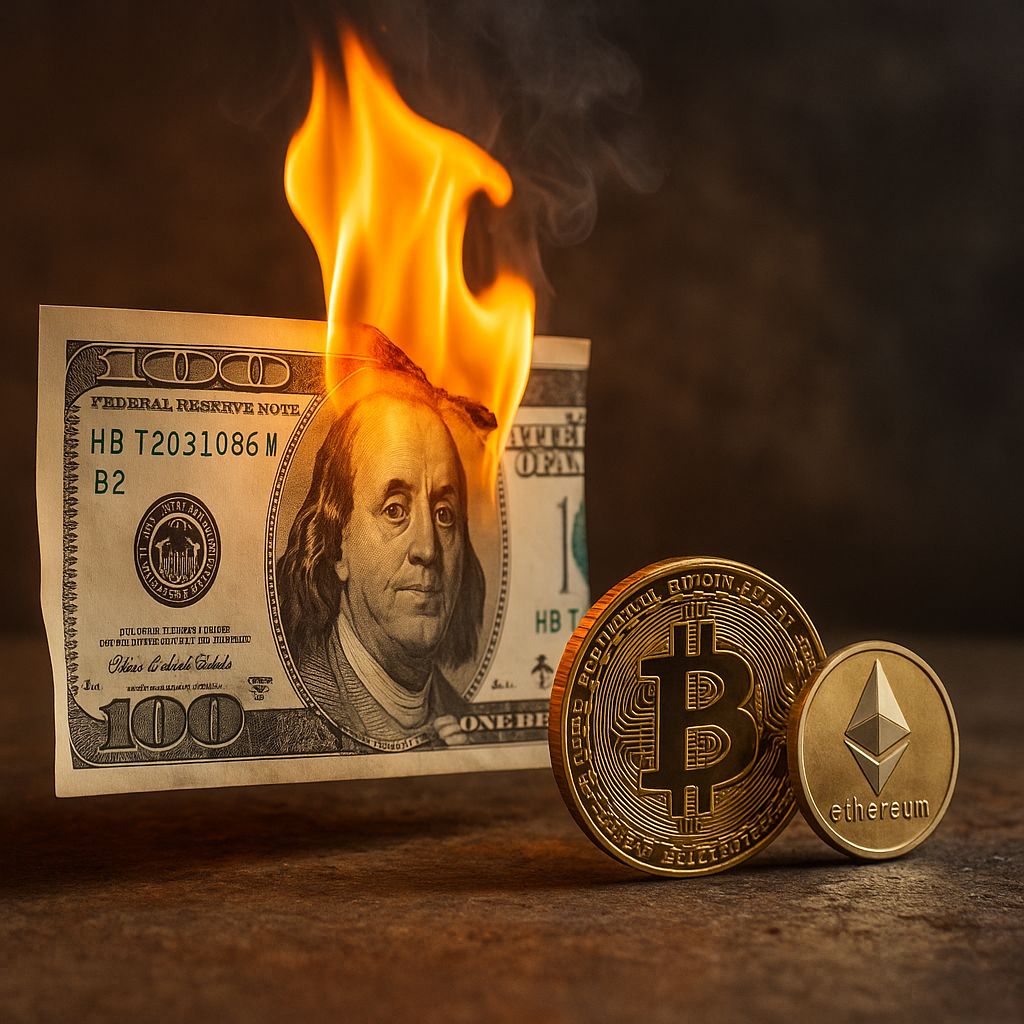
The Disappearing Power of Your Money
Have you ever wondered why your paycheck seems to stay the same while everything around you gets more expensive? A few decades ago, a $100 bill could easily cover dinner, drinks, and a night out. Today, that same $100 often barely pays for one meal. In another decade, it may not even be enough for a casual lunch.
This is not a random coincidence or bad luck. It is a built-in feature of the modern financial system. The culprit is inflation – the silent force that steadily erodes the purchasing power of your money year after year.
Understanding why this happens, who benefits from it, and what you can do to protect yourself is crucial in today’s volatile economy.
How We Got Here – The Bretton Woods Agreement and the Nixon Shock
To understand why your money buys less every year, we need to look back at 1944. That year, global leaders gathered in Bretton Woods, New Hampshire, to create a new financial framework after World War II.
Key takeaways from Bretton Woods:
- The U.S. dollar was pegged to gold at $35 per ounce
- Other currencies were tied to the dollar
- The U.S. became the anchor of the global financial system
This system worked for nearly three decades. But by the late 1960s, heavy government spending on the Vietnam War and domestic programs strained U.S. gold reserves. In 1971, President Richard Nixon made a historic move: he ended the dollar’s direct convertibility to gold.
This moment, known as the Nixon Shock, transformed the U.S. dollar – and every other major currency – into fiat money. Fiat currency has value not because it is backed by gold or tangible assets, but because governments declare it legal tender and people trust it.
The Fiat Era – Why Inflation Is Built Into the System
Once currencies were no longer tied to gold, central banks gained the ability to create money at will. This flexibility allowed governments to fund spending, manage crises, and stimulate economies. But it came at a cost: perpetual inflation.
- In 1971, $1 had the purchasing power of more than $7 today
- A $100 bill back then is equivalent to over $700 today
- Everyday items, from groceries to homes, have skyrocketed in price
Central banks argue that a steady 2 percent inflation rate is “healthy” for economic growth. But the long-term effect is unavoidable: your savings lose value over time.
Inflation acts like an invisible tax, quietly taking away your wealth without you noticing.
Why Governments Want Inflation
If inflation hurts consumers, why would governments allow – or even encourage – it? The answer is simple: inflation benefits debt-driven economies.
Here is why:
- Government debt becomes easier to manage: Paying off old debts with “cheaper” future dollars
- Consumer spending rises: As prices rise, people are encouraged to spend today rather than save
- Wage growth appears positive: Nominal wages often rise with inflation, creating the illusion of prosperity
In short, inflation keeps the economy moving and governments solvent. But for savers and retirees, it is a wealth killer.
How Inflation Impacts Your Daily Life
The effects of inflation are everywhere:
- Groceries: Items like bread, milk, and eggs cost significantly more than a decade ago
- Housing: Home prices and rents have outpaced wage growth in most countries
- Education: College tuition has soared, saddling graduates with massive debt
- Healthcare: Medical bills rise faster than inflation in almost every developed economy
While these price increases are noticeable, what is less visible is how inflation silently reduces the real value of your savings and long-term investments.
The Role of Central Banks and Interest Rates
Central banks like the U.S. Federal Reserve play a central role in managing inflation. They primarily use interest rates to control economic activity:
- Raising rates slows borrowing, cooling down the economy
- Cutting rates stimulates spending but increases inflation risk
Over the past decade, central banks have leaned toward low interest rates and quantitative easing to support economic growth. The result? An explosion of liquidity that has fueled asset bubbles in stocks, real estate, and yes, even cryptocurrencies.
Energy Shocks, Supply Chains, and Global Trends
Inflation is not caused by central banks alone. Other global factors contribute to rising prices:
- Energy crises and oil price shocks
- Supply chain disruptions due to pandemics or geopolitical conflicts
- Rising wages as labor markets tighten
- De-dollarization efforts by emerging economies seeking alternatives to the U.S. dollar
All these dynamics combine to create a world where prices are structurally biased upward.
Can You Escape Inflation? Exploring Alternatives
As inflation erodes the purchasing power of fiat currencies, more investors are turning to scarce assets for protection.
Gold
- Long considered a safe-haven asset
- Historically retains value during currency devaluation
- Central banks still hold massive gold reserves
Bitcoin and Ethereum
- Bitcoin is often referred to as “digital gold” due to its fixed supply of 21 million coins
- Ethereum powers decentralized finance and tokenization, making it a strategic hedge
- Crypto offers portability, transparency, and global access unmatched by traditional assets
By holding hard assets like gold or crypto, investors seek to preserve wealth and hedge against fiat collapse.
Why Bitcoin and Crypto Are Gaining Attention
Cryptocurrencies offer unique advantages in an inflationary world:
- Scarcity: Bitcoin’s supply is capped, unlike fiat currencies
- Decentralization: No single government can manipulate its supply
- Accessibility: Global markets are open 24/7
- Hedging potential: Digital assets often outperform during periods of fiat weakness
Historically, Bitcoin rallies have coincided with declines in the U.S. dollar index, suggesting a growing role as an alternative store of value.
The Future of Fiat – Where Are We Headed?
If inflation continues unchecked, fiat currencies may lose even more purchasing power in the coming decades. Some experts predict:
- A gradual shift toward central bank digital currencies (CBDCs)
- Stablecoins pegged to commodities or mixed currency baskets are gaining traction
- Increased adoption of tokenized assets and decentralized finance
The world is moving toward a multi-currency financial system, and crypto is becoming an integral part of it.
How to Protect Your Wealth in an Inflationary World
To safeguard your financial future, consider these strategies:
- Diversify across assets: stocks, commodities, crypto, and real estate
- Allocate part of your portfolio to scarce assets like Bitcoin and gold
- Use stablecoins to hedge against local currency volatility
- Stay informed about central bank policy and global economic shifts
The key is to stay proactive. In a world where fiat currencies are designed to lose value, inaction guarantees a loss of purchasing power.
Inflation Is Not Going Away
Inflation is not a temporary glitch. It is an inherent feature of modern monetary systems. Since the end of the gold standard, governments have relied on money printing and debt-driven growth to sustain economies. The cost is borne by savers, workers, and future generations.
The good news? You do not have to be a victim. By understanding how inflation works and strategically diversifying your investments, you can preserve wealth and thrive in a changing financial landscape.
The era of passive saving is over. The future belongs to those who adapt, invest wisely, and embrace innovation.









