




























































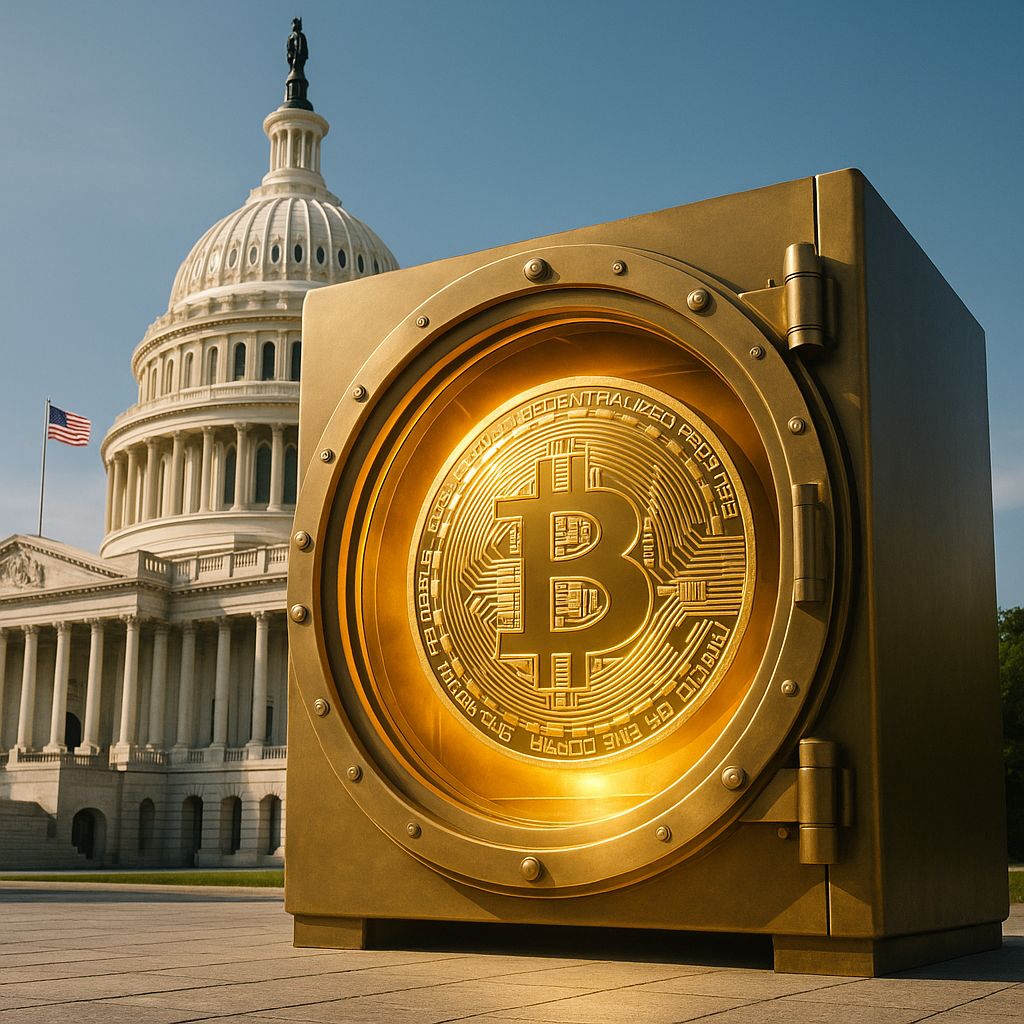
Washington Takes Bitcoin Reserves to the Next Level
The U.S. government is accelerating its Bitcoin strategy as lawmakers move closer to integrating digital assets into the nation’s financial framework. On September 6, 2025, Representative David P. Joyce introduced House appropriations bill H.R. 5166, requiring the U.S. Treasury Department to deliver a comprehensive study on the creation, security, and implementation of a Strategic Bitcoin Reserve and U.S. Digital Asset Stockpile.
The legislation, already approved by the House Appropriations Committee, signals a monumental shift in how the federal government views Bitcoin and other cryptocurrencies. Within 90 days of enactment, the Treasury must present a detailed report outlining custody standards, cybersecurity protocols, legal authority, and operational feasibility for integrating Bitcoin into the U.S. balance sheet.
This move builds on the momentum created by President Trump’s March 2025 executive order establishing a framework for a national Bitcoin reserve strategy. With both federal and state-level initiatives gaining traction, the U.S. is positioning itself as a global leader in the digital asset reserve race.
What H.R. 5166 Means for Bitcoin and the U.S. Treasury
The newly introduced bill mandates the Treasury Department to produce a comprehensive operational roadmap for managing a federal Bitcoin reserve. The report must cover:
- Feasibility analysis for holding Bitcoin and other digital assets
- Custody solutions, including self-custody and third-party contractors
- Cybersecurity measures to protect federally held Bitcoin
- Accounting guidelines showing how Bitcoin appears on government balance sheets
- Interagency transfer protocols between federal departments
- Impacts on the Treasury Forfeiture Fund, which currently manages seized digital assets
Representative Joyce explained that this legislation aims to enhance fiscal responsibility while preparing the U.S. government to leverage emerging financial technologies for national security and economic stability.
By formalizing operational standards, the bill sets the stage for the U.S. to integrate Bitcoin reserves into its broader fiscal and security strategies.
How the Trump Executive Order Set the Stage
This congressional action follows President Trump’s March 2025 executive order directing federal agencies to explore the creation of a strategic Bitcoin reserve. While the order established the framework, it left operational details unresolved.
Now, lawmakers are pushing the Treasury to provide:
- Clear custodial frameworks
- Risk assessments for holding volatile assets like Bitcoin
- Strategies to integrate blockchain technology into the national financial infrastructure
The timing is critical as global governments increasingly view Bitcoin reserves as strategic assets in a rapidly evolving financial system.
State-Level Momentum Adds Pressure
Federal action is not happening in isolation. Throughout 2025, at least 15 U.S. states have introduced Bitcoin reserve legislation. Notable examples include:
- Wyoming: Proposed allocating a portion of state reserves into Bitcoin holdings
- Pennsylvania: Advanced a bill supporting Bitcoin reserves for fiscal diversification
- Ohio: Proposed allowing state pension funds to hold a percentage in Bitcoin
This state-level activity underscores the growing bipartisan consensus on the strategic importance of Bitcoin. As states lead the charge, federal lawmakers are under increasing pressure to align national policies with evolving financial realities.
Treasury’s Expanding Role in Digital Assets
Treasury Secretary Scott Bessent recently confirmed that the department is exploring budget-neutral pathways to expand Bitcoin holdings. The U.S. government currently controls approximately 198,000 BTC, worth around $18.3 billion, primarily obtained through criminal asset seizures involving cases like Silk Road and Bitfinex.
If approved, the new federal strategy would:
- Formalize Bitcoin reserves within U.S. fiscal policy
- Standardize custodial frameworks for federally held digital assets
- Lay the foundation for integrating tokenized assets into national infrastructure
This marks a significant turning point in the federal government’s approach to cryptocurrency adoption.
The Global Race for Bitcoin Reserves
The U.S. initiative comes amid a growing international competition for digital asset reserves. Governments around the world are rapidly accumulating Bitcoin to secure strategic advantages:
- U.S. currently leads with 198,000 BTC
- China follows closely with 190,000 BTC, primarily from the PlusToken seizure
- Kazakhstan announced plans for a national digital asset fund targeting blockchain projects
- The Philippines is considering legislation to establish a 10,000 BTC strategic reserve, which would make it the first Southeast Asian nation to adopt Bitcoin at this scale
- El Salvador continues daily Bitcoin purchases, raising its holdings to 6,135 BTC
- Bhutan has quietly accumulated over 8,500 BTC through hydroelectric-powered mining
As governments diversify away from traditional foreign exchange reserves, Bitcoin’s scarcity and decentralized nature make it an increasingly strategic financial instrument.
Why the U.S. Cannot Afford to Fall Behind
With over 517,000 BTC already held by governments worldwide – roughly 2.46 percent of the total Bitcoin supply – the U.S. faces geopolitical and economic pressure to secure its leadership position in the digital asset space.
Advantages of building a strategic Bitcoin reserve include:
- Hedging against inflation and fiat currency debasement
- Enhancing national security by controlling scarce digital assets
- Gaining a competitive edge in future blockchain-powered economies
- Supporting technological innovation in Web3, DeFi, and tokenization
By proactively formalizing its Bitcoin strategy, the U.S. is positioning itself at the forefront of the next generation of global finance.
Potential Challenges Ahead
While momentum is growing, establishing a federal Bitcoin reserve is not without challenges:
- Volatility risks: Bitcoin’s price fluctuations can affect balance sheet stability
- Cybersecurity threats: Federal holdings would become high-value targets for hackers
- Custody concerns: Debates continue between self-custody and third-party solutions
- Regulatory conflicts: Aligning state, federal, and global crypto regulations remains complex
These challenges underscore why the Treasury’s upcoming report will play a critical role in shaping implementation strategies.
Strategic Bitcoin Reserves and National Security
Beyond economics, lawmakers view Bitcoin reserves as a national security priority. In a world where digital currencies are reshaping global trade, controlling a portion of Bitcoin’s fixed supply provides:
- Greater leverage in international negotiations
- Protection against foreign currency manipulations
- Enhanced sovereignty over financial infrastructure
By combining fiscal strategy with technological innovation, the U.S. aims to secure its leadership in the digital economy of the future.
Smaller Nations Lead the Way in Adoption
While the U.S. is drafting policy, smaller nations are moving faster:
- El Salvador was the first country to adopt Bitcoin as legal tender and continues expanding its holdings
- Bhutan’s stealth mining strategy positions it as a quiet leader in sustainable Bitcoin accumulation
- Kazakhstan and the Philippines are drafting forward-looking policies to integrate Bitcoin reserves into national planning
These countries are betting on early adoption to gain technological and economic advantages before the rest of the world catches up.
How This Could Reshape the Future of Finance
If the U.S. establishes a formal Bitcoin reserve, it could trigger:
- Greater institutional confidence in digital assets
- Expansion of tokenized government securities
- Mainstream adoption of blockchain-powered payment systems
- Acceleration of central bank digital currency (CBDC) development
This shift would represent one of the most significant transformations in U.S. financial policy in decades.
The U.S. Joins the Global Bitcoin Reserve Race
The introduction of H.R. 5166 marks a historic milestone in U.S. financial policy. By requiring the Treasury to deliver a comprehensive plan for securing, managing, and expanding a Strategic Bitcoin Reserve, lawmakers are acknowledging the growing importance of digital assets in shaping global economic power.
With other nations racing ahead, the U.S. cannot afford to delay. By leveraging Bitcoin’s scarcity and decentralization, America is preparing to strengthen its economic resilience, technological leadership, and national security for the decades ahead.
The next 90 days will be critical, as the Treasury’s findings could redefine how the U.S. approaches Bitcoin reserves, digital asset custody, and global monetary policy.









