




















































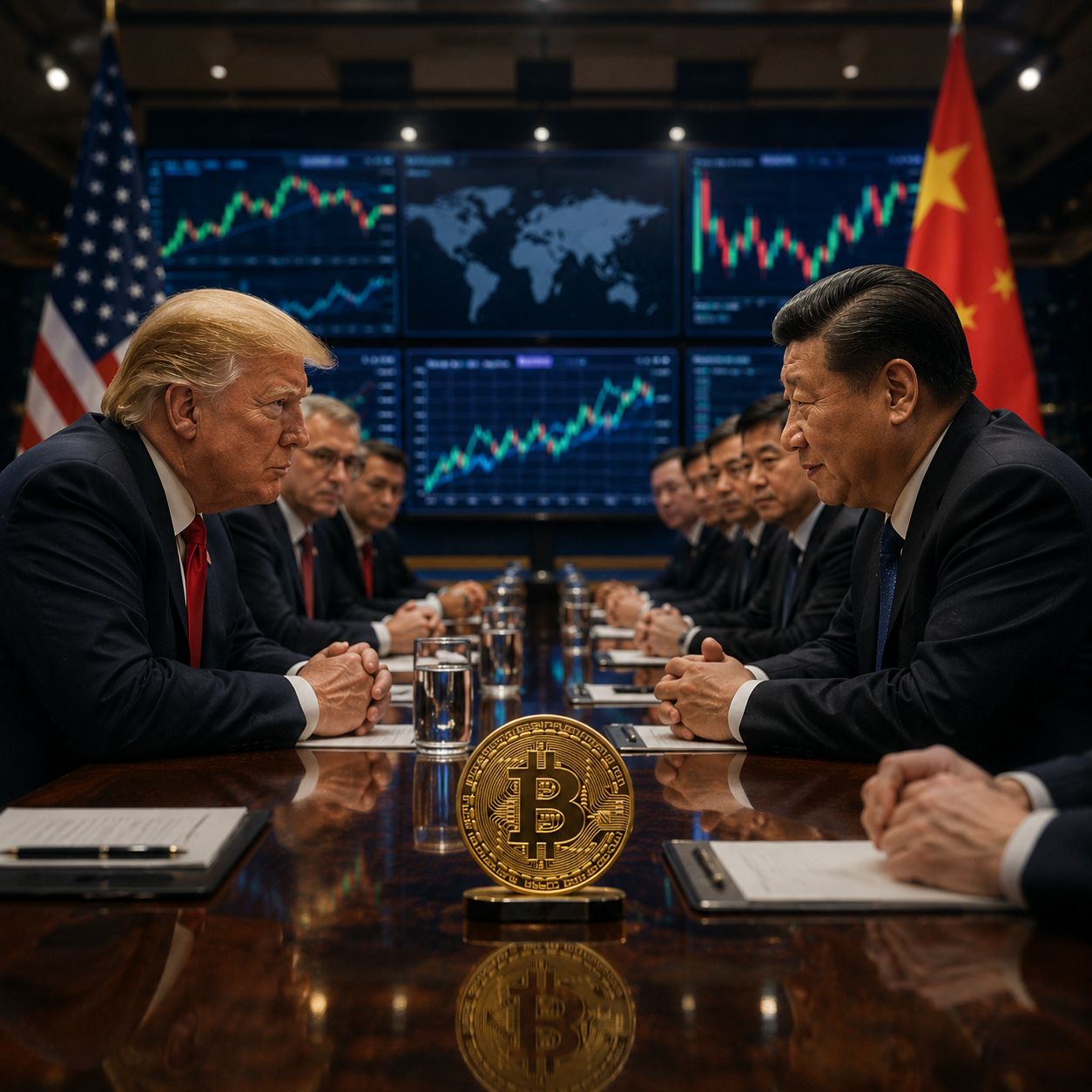
The geopolitical landscape of 2026 is currently centered on a single location: Beijing. As United States President Donald Trump meets with Chinese President Xi Jinping for a high-stakes summit, the ripples are being felt far beyond the halls of the Great Hall of the People. For global markets and specifically the cryptocurrency sector, this meeting represents more than just a diplomatic photo op. It is a pivotal moment that could dictate the flow of capital, the stability of supply chains, and the valuation of digital assets for the remainder of the decade. Investors are currently navigating a complex environment where traditional trade disputes meet the new frontier of digital finance and artificial intelligence.
The primary reason why Bitcoin investors are glued to the headlines from this summit involves the administration’s stated goal of making the United States a global crypto superpower. President Trump has previously advocated for a strategic Bitcoin reserve and has integrated high-profile tech leaders like Elon Musk and Jensen Huang into his diplomatic entourage. Any agreement that signals a reduction in trade friction could lead to a massive risk-on environment. Historically, de-escalation between these two economic titans has provided a short-term boost to major tokens, often resulting in a 2-4 percent price increase. However, the stakes are higher now as Bitcoin tests critical psychological levels near 80,000 dollars, making the outcome of these talks a make-or-break moment for market sentiment.
Beyond the immediate price action of Bitcoin and Ethereum, global markets are scrutinizing the summit for signs of a new trade framework. Reports indicate the potential creation of a Board of Trade to oversee the implementation of tariff reductions on non-sensitive goods. This move is intended to provide the predictability that institutional investors crave. The global economy can survive tension, but it cannot survive systemic uncertainty. If Trump and Xi can establish clear guardrails for competition, it allows global portfolio managers to allocate capital without the constant fear of a sudden geopolitical flashpoint. This is especially true for the semiconductor and AI sectors, where supply chain stability is the lifeblood of corporate earnings and stock market growth.
Furthermore, the summit addresses critical bottlenecks that impact the tech industry and the crypto mining sector. Rare earth minerals, essential for everything from EV batteries to high-end mining rigs, are a central bargaining chip in these negotiations. China’s dominance in this area means that any relaxation of export controls would be a significant win for US-based tech firms. Conversely, the market remains wary of the “geopolitical insurance premium” currently embedded in valuations. If the meeting ends without a clear joint statement or if rhetoric turns sour, the risk of a “liquidation cascade” in crypto derivatives remains high. Investors are looking for selective flexibility – an acknowledgment that total technological containment is impractical in a deeply interconnected global economy.
Economic Stability and the Future of Digital Assets
One of the most significant themes of this 2026 summit is the intersection of traditional monetary policy and digital innovation. While the Federal Reserve continues to signal caution due to sticky inflation and high producer prices, a successful Trump-Xi meeting could provide the “soft landing” that markets have been dreaming of. A reduction in reciprocal tariffs would directly lower costs for American consumers and businesses, potentially easing the inflationary pressures that have kept interest rates elevated. For Bitcoin, which often acts as a hedge against currency debasement and a barometer for global liquidity, a stable dollar-yuan relationship is foundational for a sustained bull run.
The role of the US dollar as the world’s primary reserve currency is also on the table, albeit indirectly. Discussions regarding stablecoin oversight and the potential for a digital asset stockpile suggest that the US is looking to modernize its financial influence. If the summit results in a “tariff truce” rather than “tariff peace,” it still provides a much-needed breathing room. The presence of leaders like Nvidia’s Jensen Huang at the summit highlights that the tech war and the trade war are now the same conflict. For the Bitcoin community, the hope is that this new era of “strategic competition” includes a recognition of digital assets as a legitimate component of the global financial architecture.
Navigating Geopolitical Risks in a Volatile Year
As we look toward the final day of the summit, the “Crypto Fear and Greed Index” remains a vital tool for assessing investor psychology. Markets have shown that they are sensitive to the tone of the communication as much as the content. Phrases like “partners not rivals” from President Xi and “better than ever before” from President Trump have helped to stabilize a nervous market. However, seasoned traders know that the devil is in the details – specifically the timing of tariff rollbacks and the specifics of technology transfer agreements. The 2026 investment landscape is defined by this duality: the incredible potential of AI and crypto innovation versus the old-world risks of trade barriers and regional conflicts.
Ultimately, the Trump-Xi meeting is a test of whether the world’s two largest economies can coexist in a way that allows for global growth. For the Bitcoin investor, the summit is a reminder that digital gold does not exist in a vacuum. It is tied to the movement of the yuan, the health of the Nasdaq, and the stability of the Strait of Hormuz. By creating a framework for “manageable tension,” the two leaders may just provide the spark needed for the next leg of the crypto bull cycle. Whether this results in a “Bitcoin superpower” status for the US or a more balanced multipolar financial system, the outcome of this week in Beijing will be studied by economists and investors for years to come.









