


























































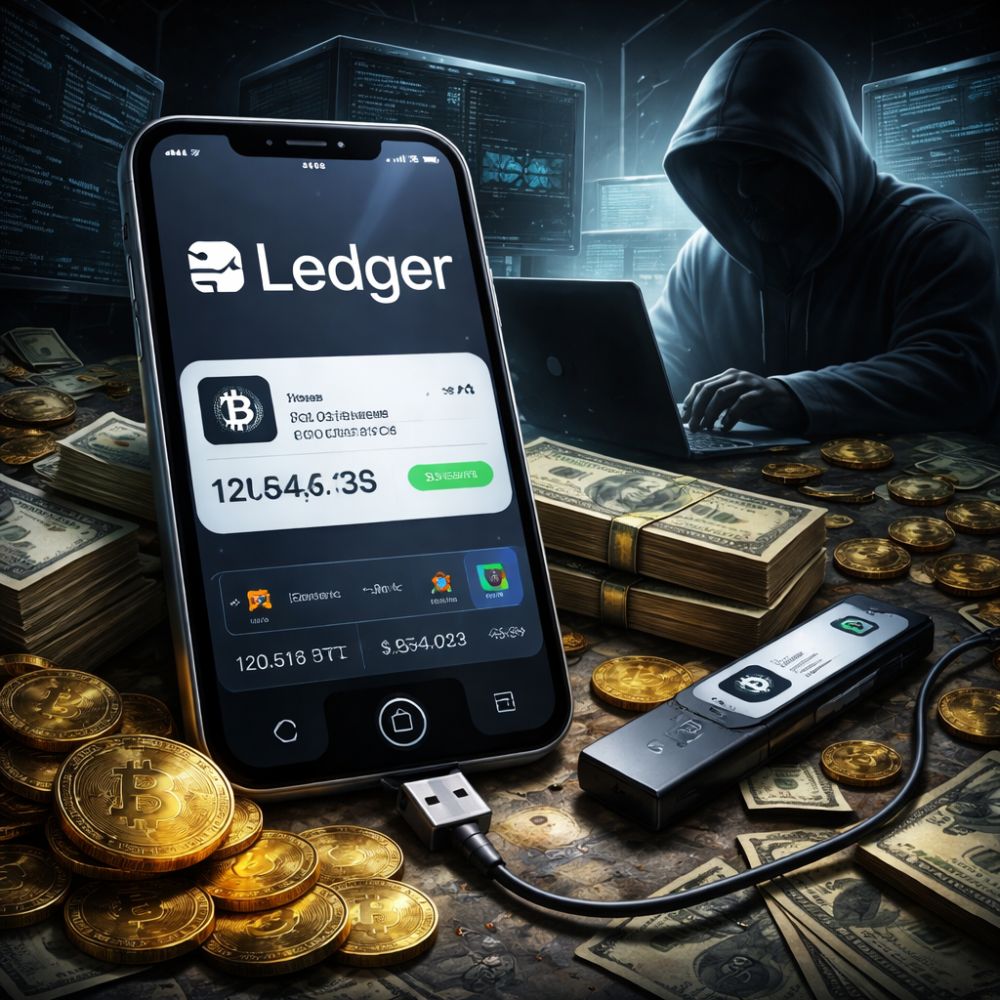
The cryptocurrency world was recently shaken by a sophisticated heist that bypassed one of the most trusted digital storefronts. A fraudulent application, masquerading as the official Ledger Live software, managed to infiltrate the Apple Mac App Store, resulting in the theft of approximately $9.5 million from unsuspecting users in just one week.
Below is a comprehensive breakdown of the incident, the mechanics of the scam, and essential security protocols for every crypto investor.
High Alert- Fake Ledger App on Apple Store Steals $9.5 Million
The digital asset community is reeling after a malicious application titled “Ledger Live” successfully bypassed Apple’s rigorous App Store review process. While Apple is often lauded for its “walled garden” security, this incident proves that even the most curated platforms are not immune to sophisticated social engineering and developer fraud. Between April 7 and April 13, 2026, over 50 victims reported their wallets were completely drained after downloading what they believed was a legitimate update for their hardware wallet manager.
The scam specifically targeted macOS users. According to blockchain investigators, the fraudulent app was published under a developer account named “Leva Heal Limited.” By the time Apple took action to remove the listing, the attackers had already siphoned nearly $10 million in various cryptocurrencies, including Bitcoin (BTC), Ethereum (ETH), Solana (SOL), and XRP. One individual victim reportedly lost over $3.2 million in a single transaction, highlighting the devastating efficiency of the malicious code.
How the $9.5 Million Ledger App Scam Worked
The brilliance of this scam lay in its simplicity and the trust users place in the Apple brand. Most victims were led to the app through organic searches within the App Store. Once installed, the app mimicked the user interface of the genuine Ledger Live software perfectly. To “sync” the hardware wallet or “verify” the account, the app prompted users to enter their 24-word Secret Recovery Phrase.
In the world of cryptocurrency, your recovery phrase is the master key to your funds. Legitimate hardware wallet software like Ledger Live will never ask you to type these words into a computer or smartphone. However, under the guise of a “security update” or “mandatory re-synchronization,” many users complied. Once the phrase was entered, the attackers used automated “drainer” scripts to instantly transfer all assets from the victims’ wallets to centralized laundering services.
Tracking the Stolen Crypto Assets
Blockchain analyst ZachXBT played a pivotal role in uncovering the scale of the theft. By tracing the movement of the stolen funds on the public ledger, investigators found that the attackers utilized more than 150 different deposit addresses on the KuCoin exchange. The funds were reportedly funneled through a laundering operation known in the underworld as “AudiA6,” a service that specializes in obscuring the trail of illicit transactions for a high fee.
The speed at which the assets were moved suggests a highly organized criminal enterprise. While some of the stolen funds were in stablecoins like USDT and USDC, a significant portion consisted of Bitcoin. One high-profile victim, a musician, lost his entire retirement fund- approximately 5.9 BTC- in a matter of seconds. This incident serves as a grim reminder that once a recovery phrase is compromised, the “undo” button does not exist in the decentralized world.
Why the Apple App Store Failed to Protect Users
This event has sparked intense criticism of Apple’s App Store review process. For years, Apple has marketed its platform as the safest place to download software, often using this as a justification for its closed ecosystem. The fact that a fake financial services app could remain live for nearly two weeks while stealing millions raises serious questions about the efficacy of their manual and automated checks.
Security experts note that “bait-and-switch” tactics are becoming more common. Developers may submit a harmless app for review, such as a simple calculator or weather app, and then push a “hotfix” or server-side update that transforms the app into a malicious phishing tool once it is already listed. In this case, the developer bypassed the “official” status of Ledger, which only distributes its macOS application as a direct download from their website, not through the Mac App Store.
Essential Security Tips to Protect Your Crypto Wallet
To avoid falling victim to similar scams, investors must adhere to strict security hygiene. The primary rule of hardware wallets is simple: never share your 24-word recovery phrase with anyone, and never type it into any digital device except the hardware wallet itself. No legitimate support agent or software update will ever require those words to function.
Furthermore, always verify the source of your software. For Ledger users, the only safe way to download Ledger Live for desktop is through the official ledger.com website. If you see a version on a third-party store or an app store that seems suspicious, cross-reference it with the manufacturer’s official social media channels. Enable two-factor authentication (2FA) on all exchange accounts and consider using a dedicated, “air-gapped” computer for significant financial transactions.
The Future of App Store Security and Crypto Safety
As the total value of the cryptocurrency market continues to grow, so too will the efforts of cybercriminals. This $9.5 million heist is likely not the last time we will see fraudulent apps appearing on mainstream platforms. It places the burden of responsibility not only on the platform providers like Apple and Google but also on the users to remain hyper-vigilant.
The fallout from this incident may lead to stricter regulations regarding how financial and crypto-related apps are vetted. Until then, the mantra “don’t trust, verify” remains the most effective defense. Protect your keys, verify your downloads, and stay informed about the latest phishing tactics to ensure your digital wealth remains secure in an increasingly dangerous online landscape.









